“Regard your soldiers as your children, and they will follow you into the deepest valleys; look upon them as your own beloved sons, and they will stand by you even unto death.”
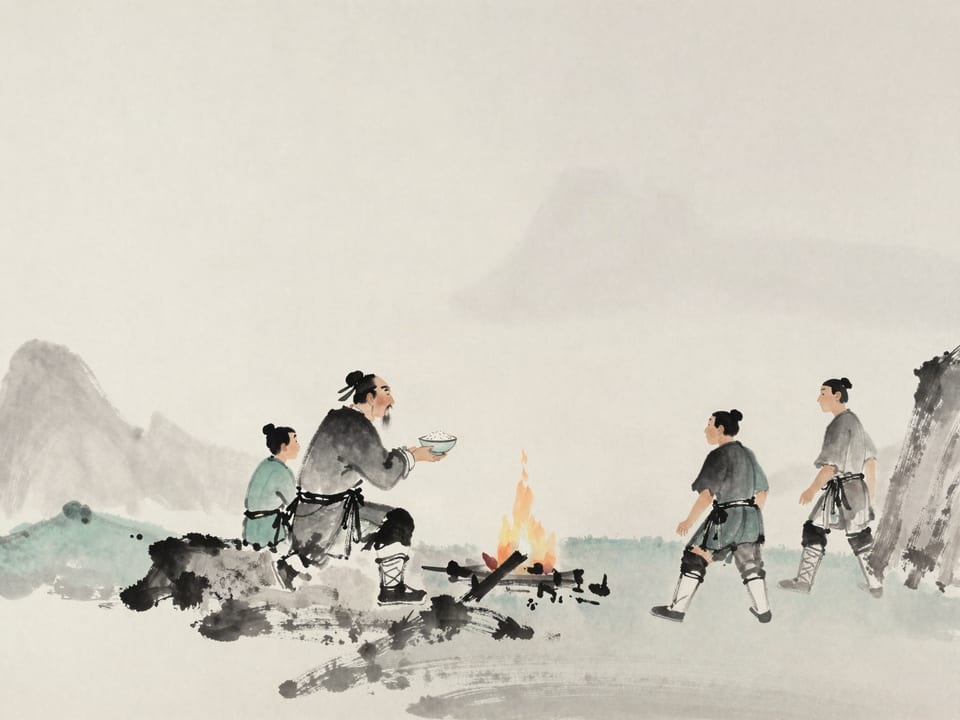
Authority without care produces compliance, not loyalty. Sun Tzu’s advice is that people will follow through hardship when they feel genuinely cared for. Leadership is a relationship of trust, not just the issuing of orders.
Chapter 10 reads like a field manual on terrain until this verse suddenly addresses the general’s heart. In a chapter preoccupied with ground and distance, Sun Tzu inserts the human engine of the whole machine: soldiers who are treated as beloved sons follow into the deepest valleys — the terrain the chapter spends everywhere else classifying. It is also a warning in disguise, for the very next verses turn to the disasters a general creates himself.
Two engineering managers run the same deadline crunch. One extracts the weekend with a reminder about commitments; the other is there Saturday, orders dinner, shields the team from a scope change, and gives the credit away in writing on Monday. Both ship. Six months later, when offers arrive, one team quietly stays and the other quietly leaves — and the managers each believe their leadership style "worked."
Care is not coddling, and Sun Tzu is no sentimentalist — the same book orders generals to keep discipline so hard that troops move on command. The verse is about the direction of the bond: you can compel obedience down the org chart, but the deep-valley kind of loyalty only flows toward someone who visibly puts the team’s welfare first.