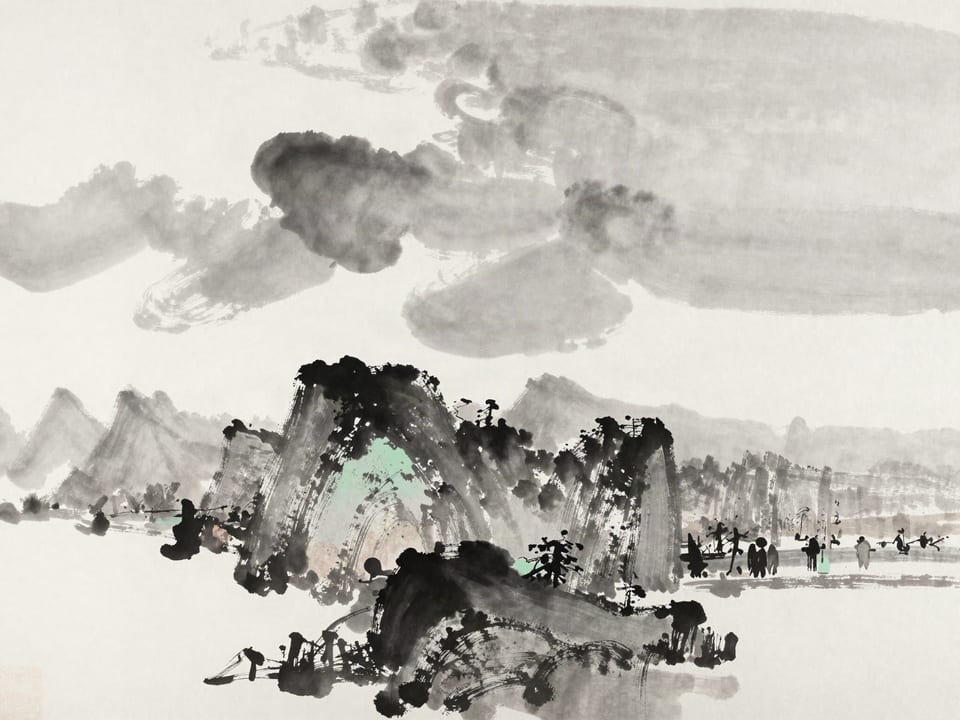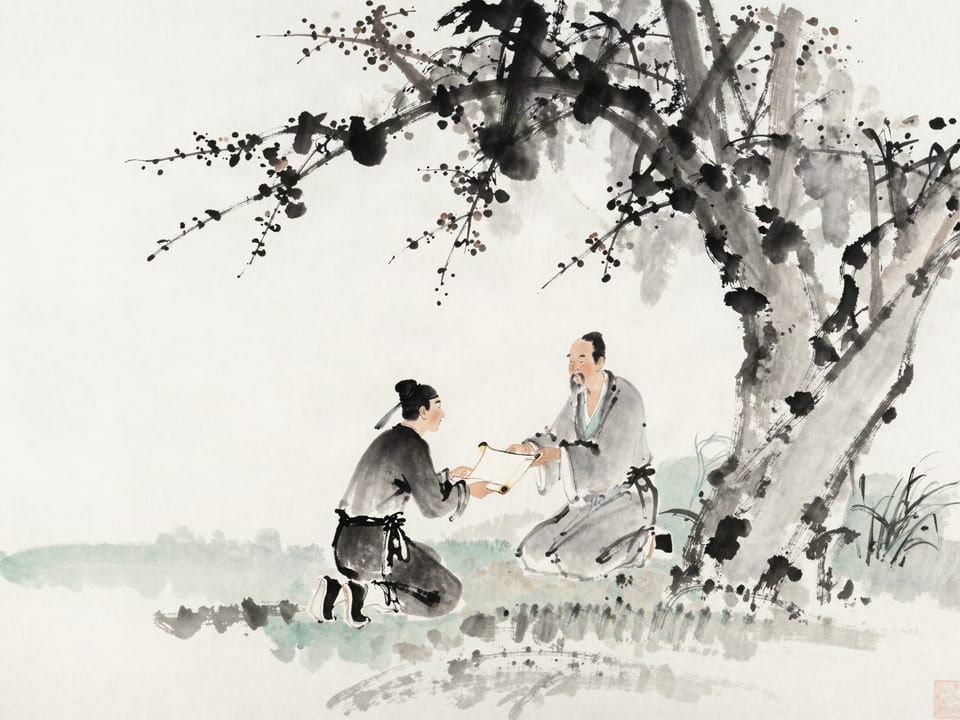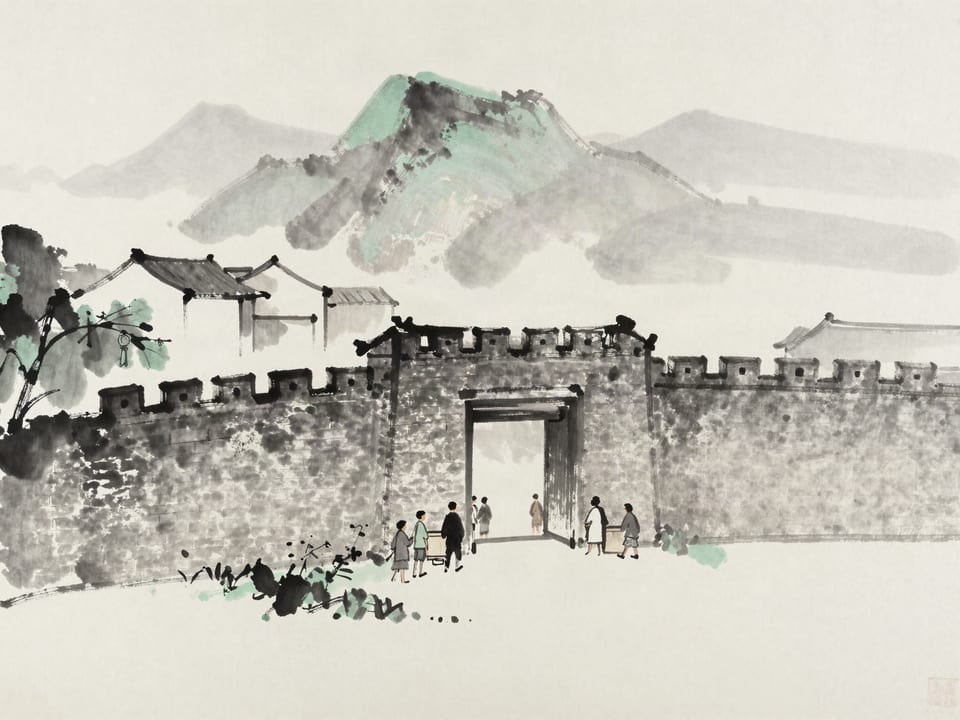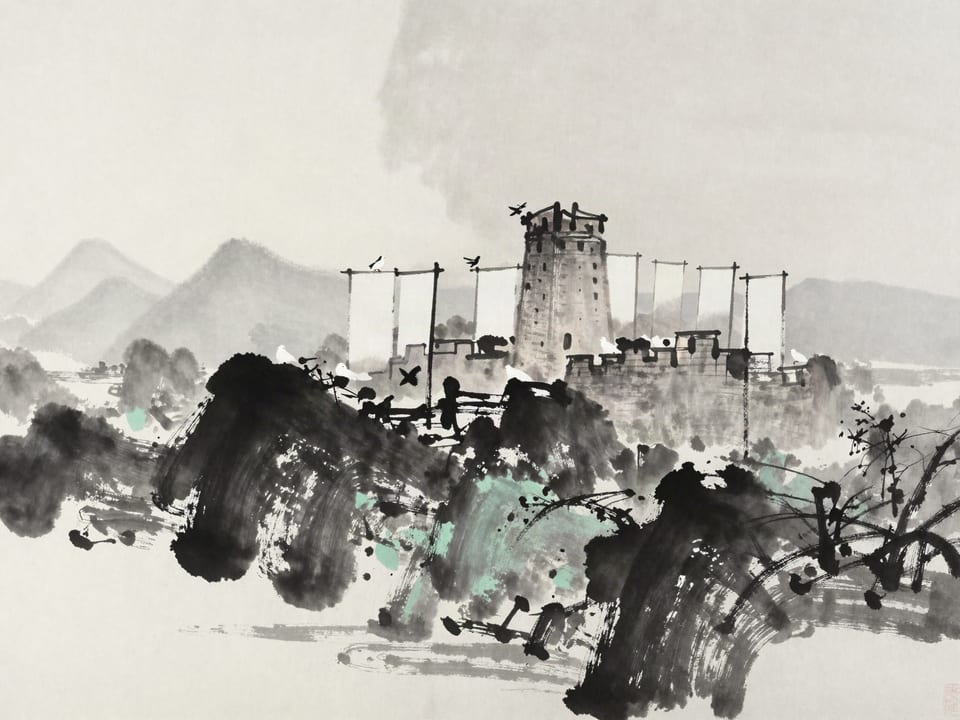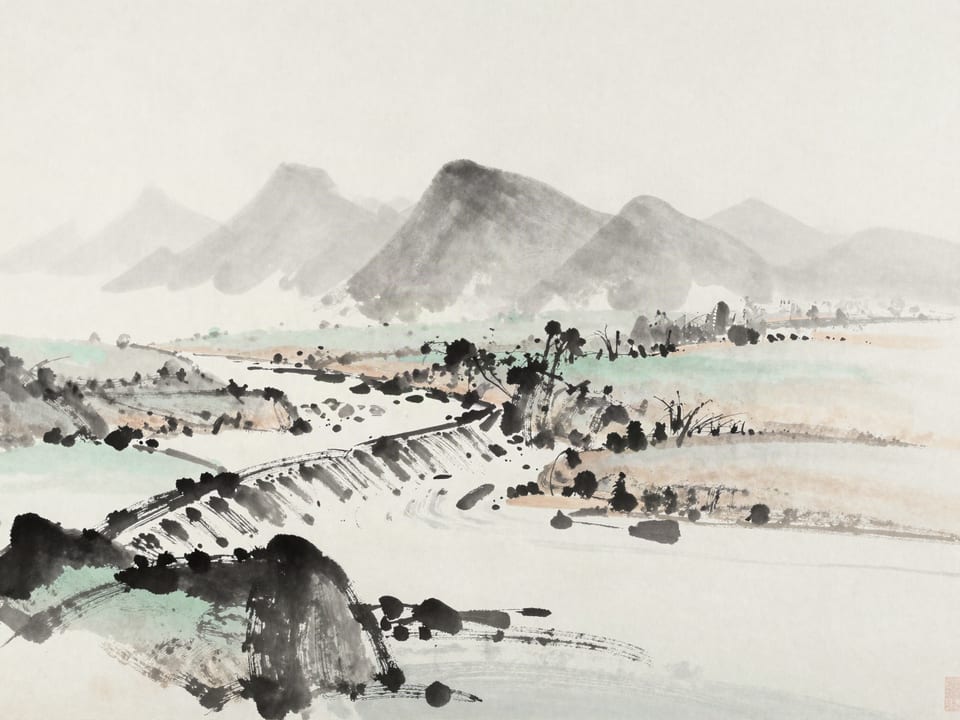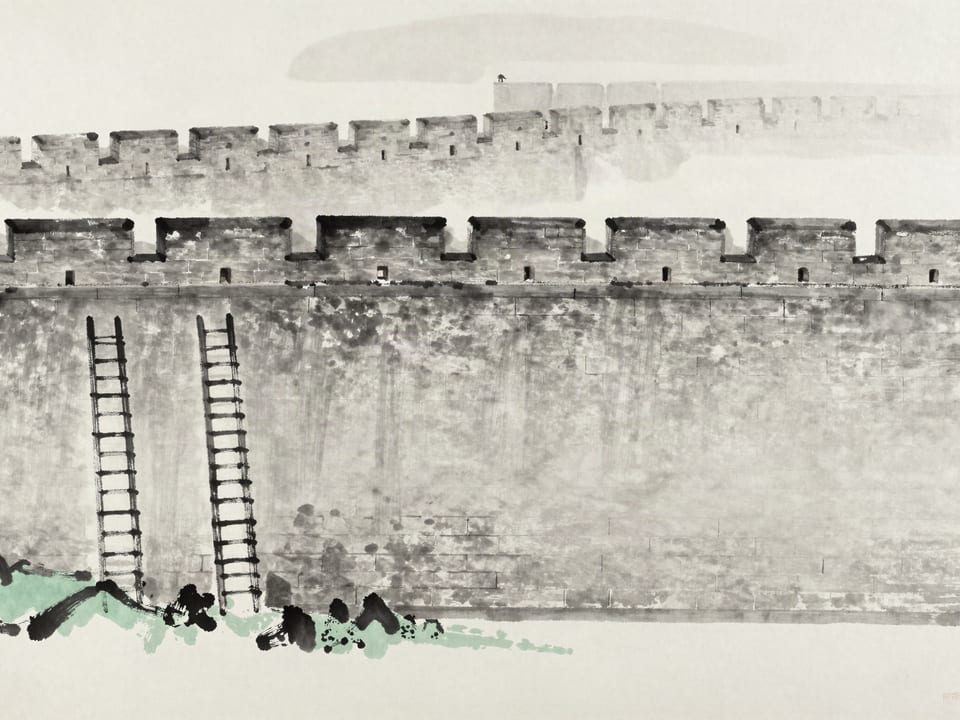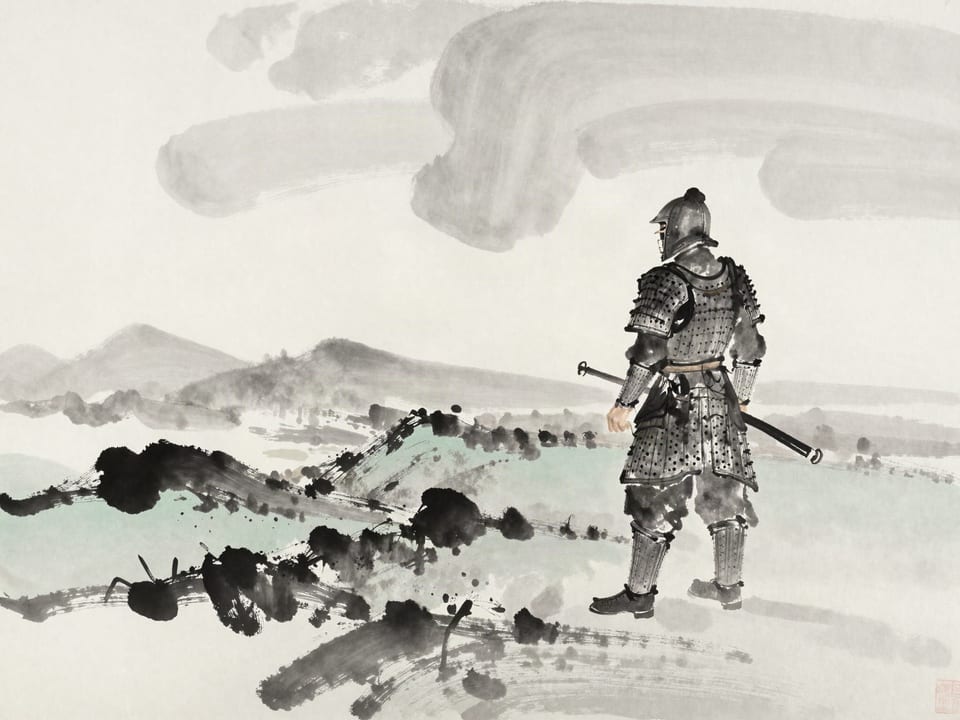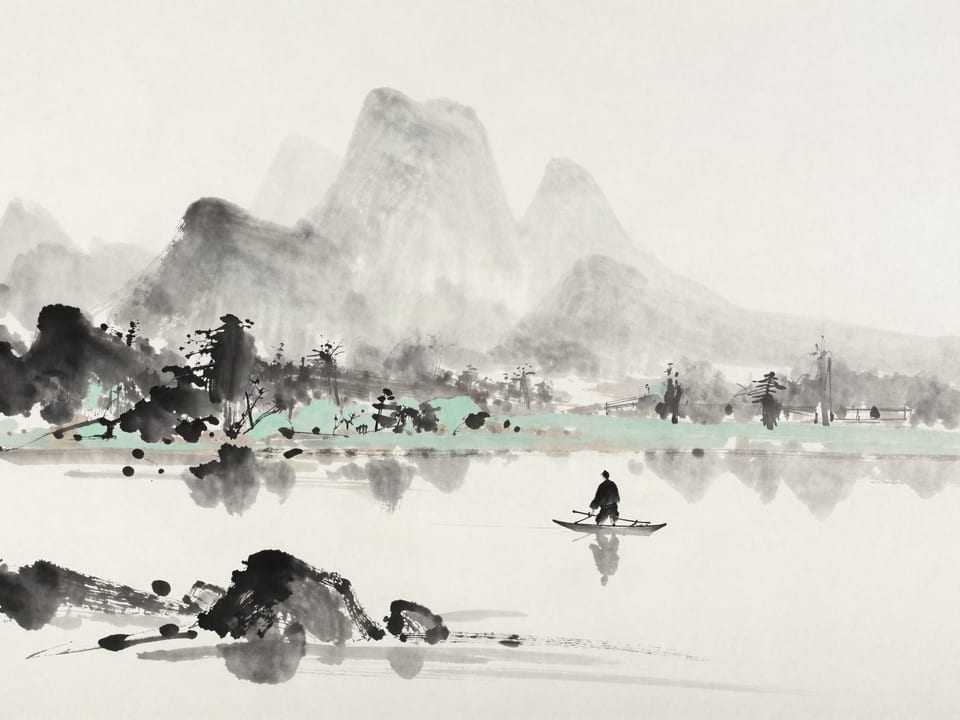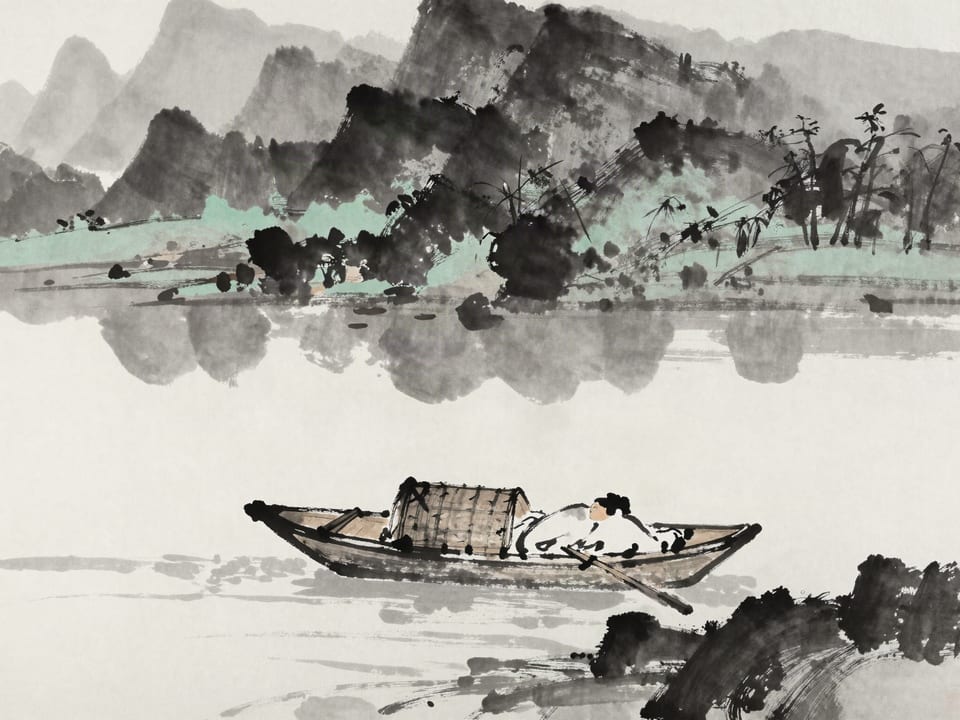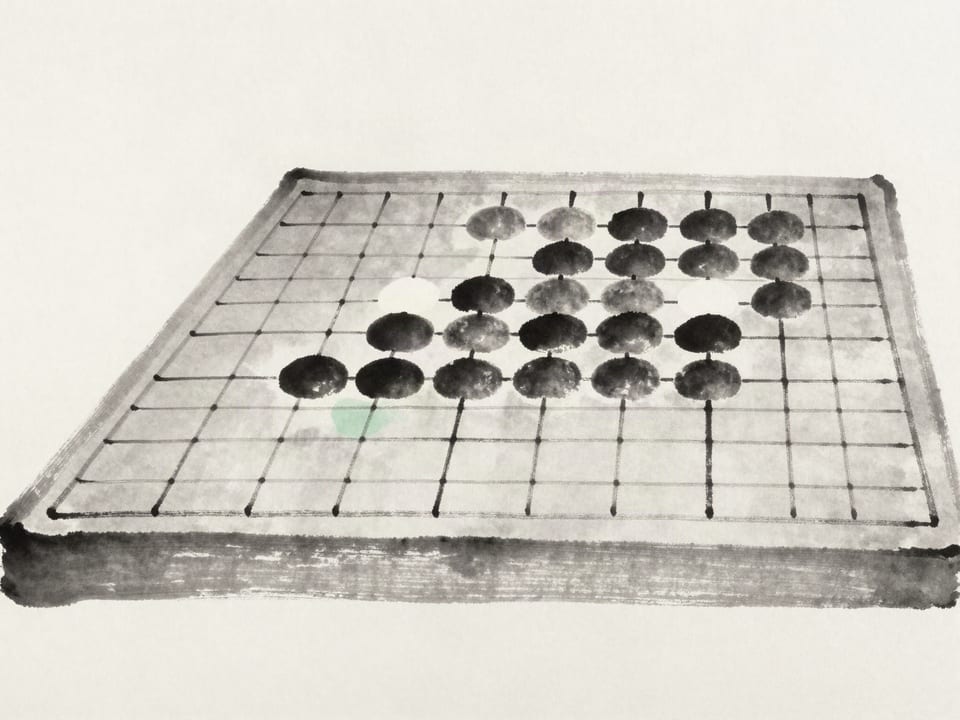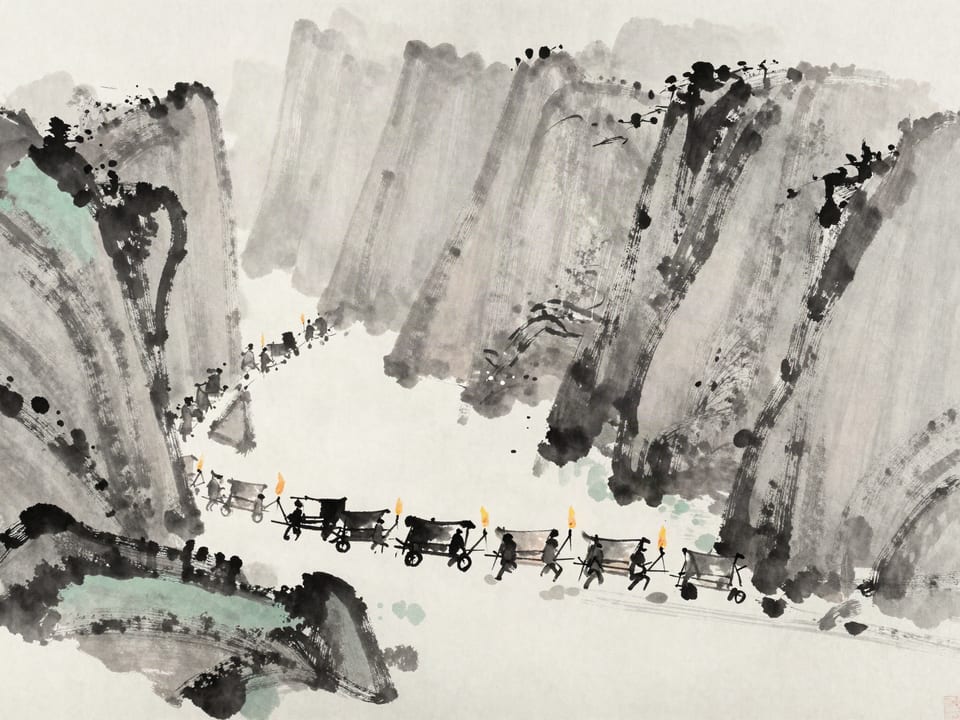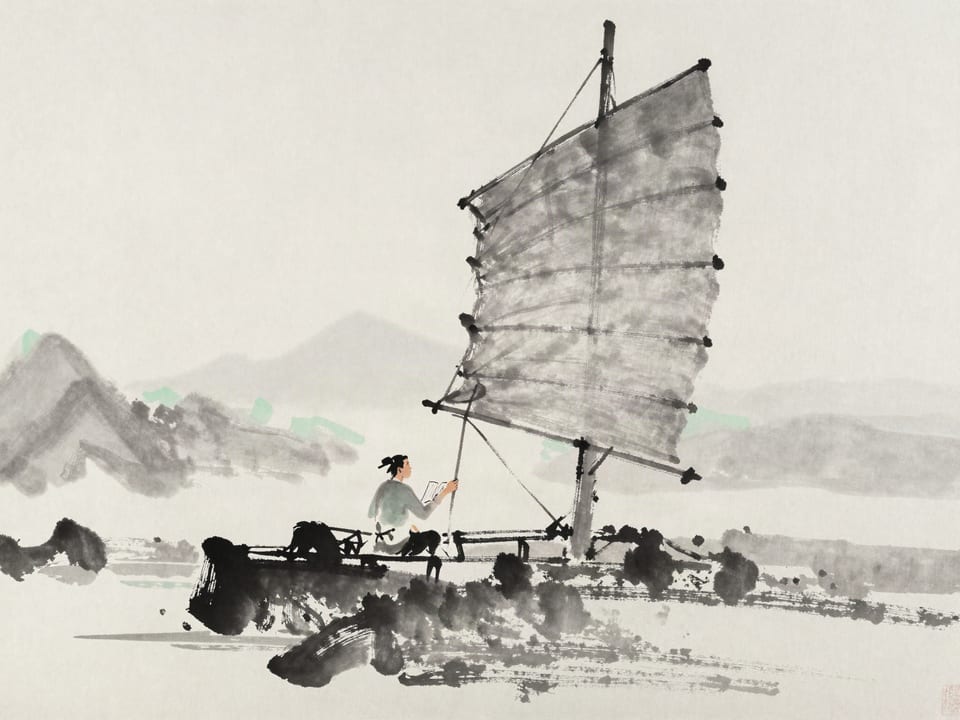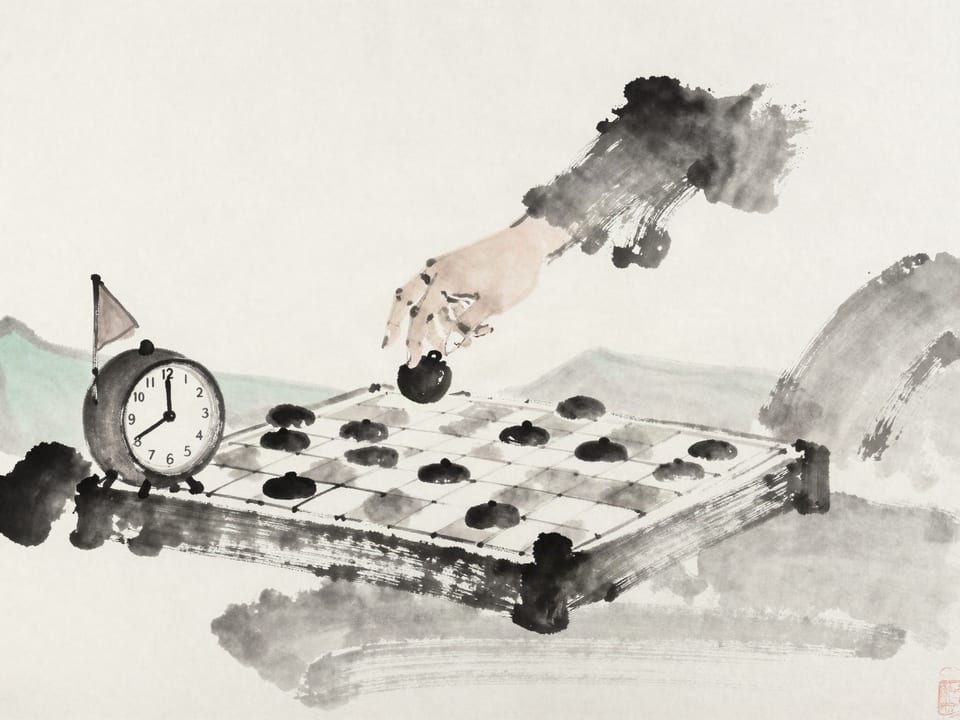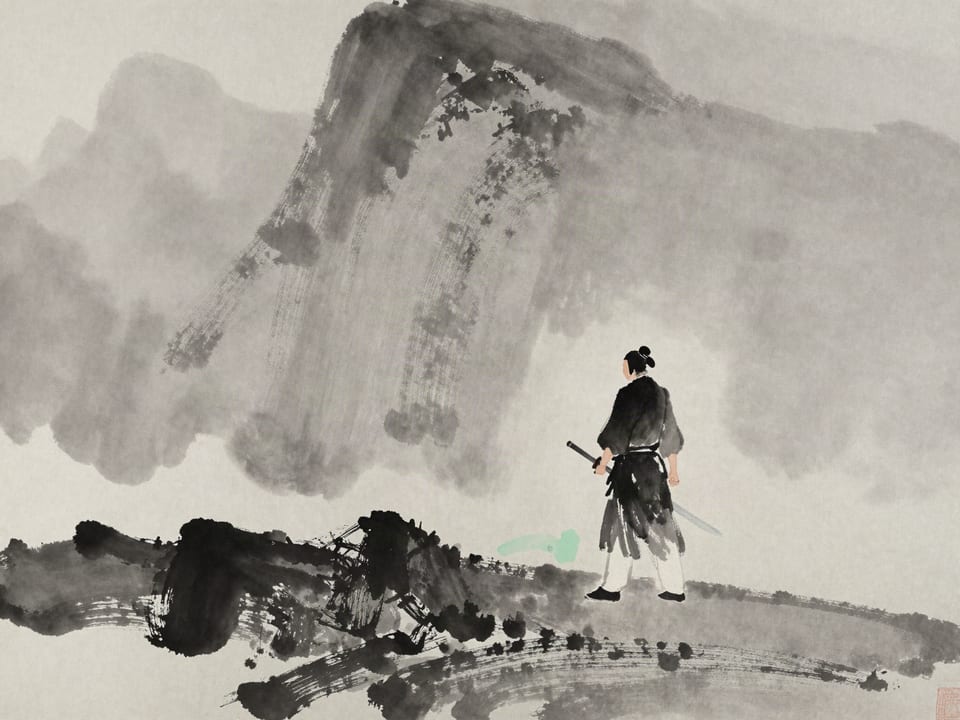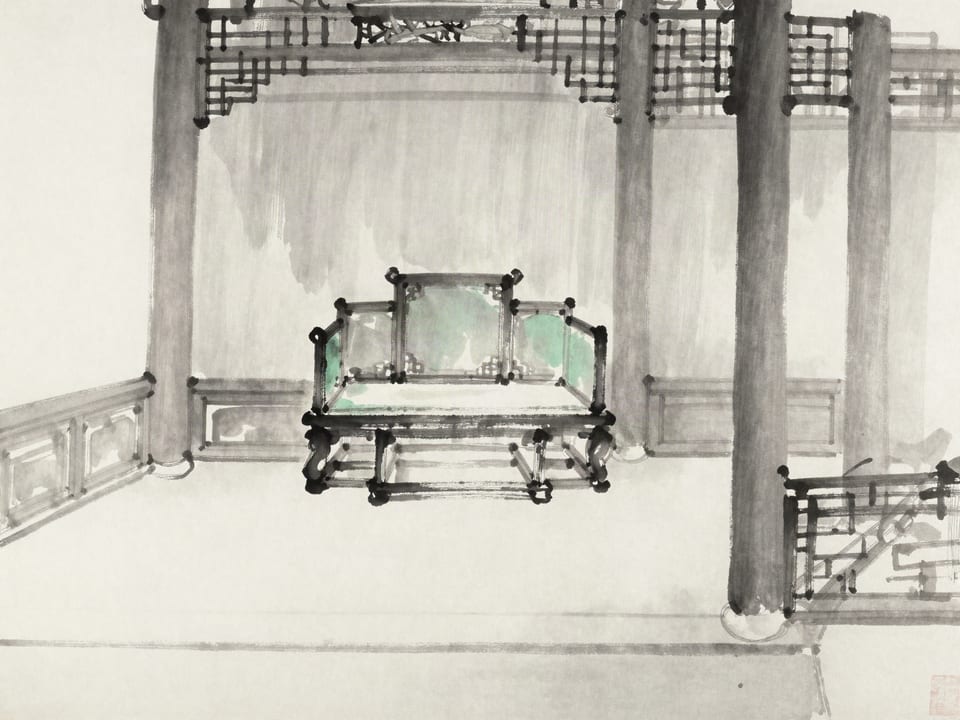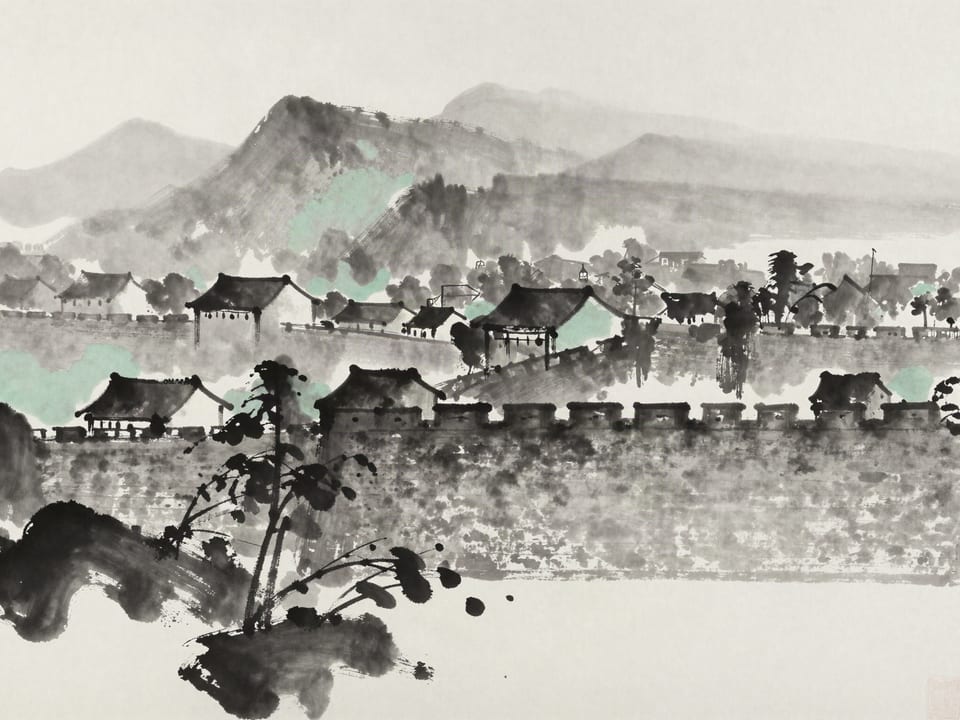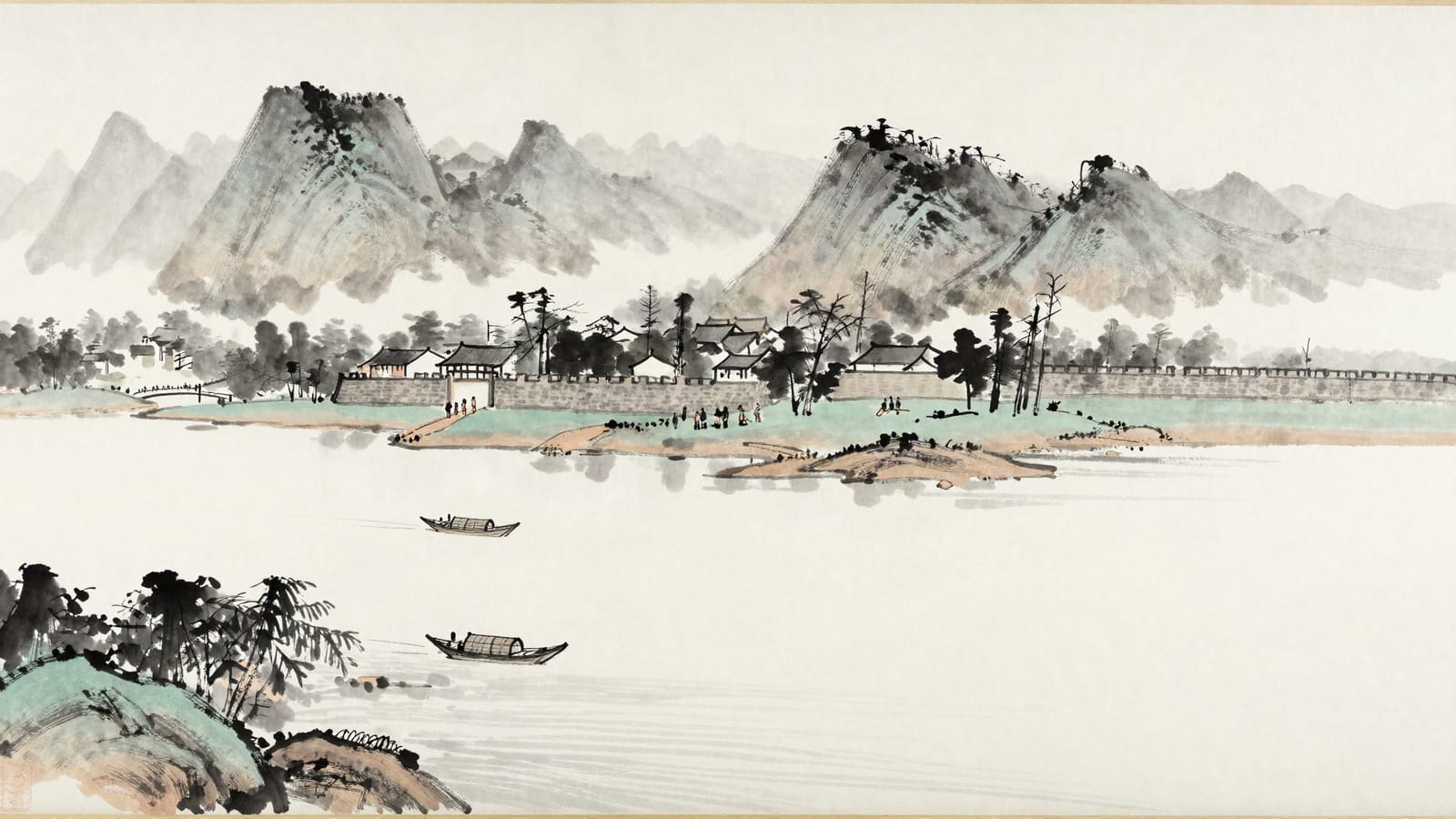
Ink wash handscroll: a river journey from misty mountains past a walled city to distant sails, rendered as one continuous scroll.

The complete text, arranged for reading

Read the whole thing.

Sun Tzu’s Art of War — all thirteen chapters, every passage in the classic Lionel Giles translation, each with its Chinese text, an ink-wash illustration, and a plain-English reading. One continuous scroll. Come back anytime; it remembers where you stopped.

13 chapters242 lessons242 illustrations≈ 1 h 45 min total
Begin with Chapter I →

Chapter I · 始計

Laying Plans

The opening chapter argues that victory is decided before battle. Sun Tzu lays out the five fundamentals a commander must calculate — the Way, weather, terrain, command, and discipline — and insists on knowing yourself and the enemy before committing.

25 lessons · ≈ 11 min · lessons 1–25 · chapter page →

The chapter’s chain of assessmentMoral law 道Heaven 天Earth 地Commander 將Method 法Seven comparisons,side against sidewhich sovereign · which general · whose disciplineForecastvictory or defeat —before any battle多算many calculationswin; few, loseChapter I argues the war is decided at the desk — assessment first, movement second.
001Control what others can see and believe.
“All warfare is based on deception.”
兵者,诡道也

Strategy begins with managing perception. Your opponent — or the market — reacts not to your true position but to what it can see. Sun Tzu makes deception foundational: conceal your intent, misdirect attention, and act from a position the other side cannot read.

Go deeper
Where this sits in the chapter

Chapter 1 spends most of its length measuring things — the five factors, the seven comparisons — and then closes by explaining how a measured war is actually fought: through managed perception. 兵者,诡道也 is the hinge of the whole chapter. All the calculation in the world still has to be executed by an opponent who can only react to what you let him see, so the final instrument of strategy is not force but appearance.

A modern example

Two startups compete for the same enterprise account. One publishes every feature launch and hiring update; the other goes quiet for a quarter while it rebuilds its platform for the client’s exact use case. When the contract is decided, the loud company is competing against a version of its rival that is six months stale. Nothing false was said — the rival simply controlled which facts reached the decision-maker, and when.

The common misreading

This line is often read as a license to lie. Sun Tzu’s deception is the managed perception of capability and intent — feints, concealment, timing — not fabricated facts, and never toward your own side. You deceive the competitor about your position; you owe your own ledger brutal honesty.
This lesson →
Ink wash painting: A dense bamboo grove with mist rolling through, the path ahead obscured and vanishing into white.
002Shape perception before you act.
“When able to attack, we must seem unable; when using our forces, we must seem inactive; when we are near, we must make the enemy believe we are far away; when far away, we must make him believe we are near.”
能而示之不能,用而示之不用,近而示之远,远而示之近

Your actual capability and your apparent capability are two different levers. Sun Tzu advises you to look weak when strong, and distant when near, so the other side misjudges and moves against an illusion.

Go deeper
Where this sits in the chapter

This is the first concrete device in Chapter 1’s closing catalogue of deceits — able seem unable, active seem inactive, near seem far. After announcing that war runs on deception, Sun Tzu immediately gets practical: these four reversals are the starter set. The pattern in every pair is the same: your real state and your displayed state are deliberately offset, so the enemy plans against a position you no longer hold.

A modern example

A supplier believes its customer would find switching logistics providers too painful to attempt. The customer, meanwhile, has quietly built the alternative in-house — but keeps renewing softly, complaining about budget pressure. When the supplier pushes a 30% increase, the customer does not negotiate: it flips, and the supplier loses the account it thought was captive. The customer’s strength was real; its displayed weakness was the strategy.

The common misreading

Read as a one-off bluff, this gets people labelled unreliable. The instruction is sustained misdirection during the approach, not habitual false modesty. Signal weakness constantly and the market reprices you as weak — the offset only works while you can drop it at the moment of contact.
This lesson →
Ink wash painting: A calm lake at dusk hiding strong currents beneath, only faint ripples betraying the depth.
003Prepare and calculate before you commit.
“The general who wins a battle makes many calculations in his temple ere the battle is fought. The general who loses a battle makes but few calculations beforehand.”
多算胜,少算不胜

Victory is decided in planning, not in the moment of contact. The person who thinks through scenarios, resources, and risks in advance wins; the person who improvises under pressure loses. Calculation is the quiet work that precedes confident action.

Go deeper
Where this sits in the chapter

Chapter 1 ends where it began, but with the argument completed. It opened by asking which sovereign is stronger, which general more able — the seven comparisons — and closes by naming where that comparison happens: in the temple, before the army marches. 多算胜,少算不胜. The chapter’s quiet claim is that battles are decided in the planning room and merely collected on the field.

A modern example

Two agencies pitch the same client. One rehearses the client’s stated decision criteria, prices against the rival’s known rates, and writes down its walk-away number beforehand. The other brings energy and improvises the numbers in the room. From the client’s chair the pitches look equally polished — but the first agency already knew what it would accept, so the negotiation was over before the meeting started.

The common misreading

This is not an argument for analysis paralysis. Temple calculation has a deadline — before the battle — and an output: a decision. Planning that never terminates is its own form of losing, because Sun Tzu’s many calculations are made precisely so that action, when it comes, is unhesitating.

This lesson →
Ink wash painting: A scholar’s abacus with a few beads moved, resting beside an empty teacup on a plain wooden desk.
004Prepare and wait for the unprepared opponent.
“He who is prudent and lies in wait for an enemy who is not, will be victorious.”

Patience is a weapon. The prepared party who waits for the right moment beats the unprepared party who rushes in. In markets and business, discipline — preparing and waiting — is itself an edge.

Go deeper
Where this sits in the chapter

Back in Chapter 1, among the verses on deception and assessment, sits this quiet definition of where victory actually comes from: the prudent commander lying in wait defeats the imprudent one. It is the chapter’s answer to the impatient reader — all this calculation and concealment is not passivity, it is loading the spring. Prudence here means preparation sustained under stillness.

A modern example

An investor spends eighteen months studying an industry without buying anything — mapping who must sell, which balance sheets are fragile, what a distressed asset would be worth intact. Colleagues call it sitting out. Then a credit squeeze arrives, the prepared list of targets is already ranked, and the purchases happen in six weeks at prices the unprepared cannot believe. The waiting was the strategy; the buyers were merely its delivery mechanism.

The common misreading

Patience is not the virtue here — prudence is. Sun Tzu does not bless waiting in general; he blesses the prepared party waiting for the unprepared one. Waiting without preparation is just latency: when the moment arrives, the unprudent waiter is as helpless as the rusher.

This lesson →
Ink wash painting: A fisherman seated motionless under a straw hat, rod steady, morning mist on an empty river.
005Incentives and misdirection shape behavior.
“Hold out baits to entice the enemy. Feign disorder, and crush him.”
利而诱之,乱而取之

People and opponents move toward incentives and react to appearances. Sun Tzu advises using bait — an attractive option, an apparent weakness — to pull the other side into a position of your choosing. Shape the game before it is played.

Go deeper
Where this sits in the chapter

Chapter 1’s closing catalogue of stratagems includes the pair 利而诱之,乱而取之 — bait him with advantage, take him in disorder. Before Sun Tzu discusses armies at scale, he assumes this: opponents move toward what they want. The bait is not a trick layered on top of the contest; it is how you choose the contest’s location, because a well-placed incentive relocates the enemy on your schedule.

A modern example

A firm wants a key partner’s attention but cannot outbid bigger suitors. Instead of bidding higher, it offers the one thing money rarely buys in that industry — first rights to a data set the partner genuinely needs, for two quarters, exclusive. The partner reorganizes its quarter around the alliance. The bait cost the firm almost nothing; its value came entirely from what the other side was missing.

The common misreading

The bait must be real. Feigned disorder works only if the enemy believes the disorder; a hollow incentive teaches the other side that your offers are theater, and that lesson is permanent. Sun Tzu’s baits are honest about being desirable — what they hide is the trap’s existence, never the prize’s substance.

This lesson →
Ink wash painting: A single ripe persimmon hanging low over still water, its reflection perfect beneath it.
006Strike where and when you are least expected.
“Attack him where he is unprepared, appear where you are not expected.”
攻其无备,出其不意

The advantage goes to whoever chooses the time and place of the contest. Act where the other side is unprepared and where they do not expect you — and you force them to fight on your terms.

Go deeper
Where this sits in the chapter

The final line of Chapter 1’s stratagem catalogue — 攻其无备,出其不意 — and the bridge into everything that follows. Having listed the deceits and the baits, Sun Tzu states their shared purpose: arrive unopposed because you arrived unlooked-for. The whole chapter about calculation ends on the operational payoff of all that preparation: you, not the enemy, hold the pen that writes when and where.

A modern example

An indie author cannot win the bookstore endcap, so she does not contest it. She launches where publishers are structurally absent — a niche community whose podcast ad slots cost less than one endcap poster — and arrives there with a book written for that audience specifically. The publisher’s sales team never sees the attack; the category’s numbers simply rearrange themselves one quarter.

The common misreading

Being unexpected is not the same as being sneaky toward customers — the surprise belongs to competitors, not to the people you serve. And the trick decays with use: the second author in that podcast is now expected, and the advantage is gone. Sun Tzu’s phrase implies motion — you keep choosing fresh ground, because yesterday’s surprise is today’s battlefield.

This lesson →
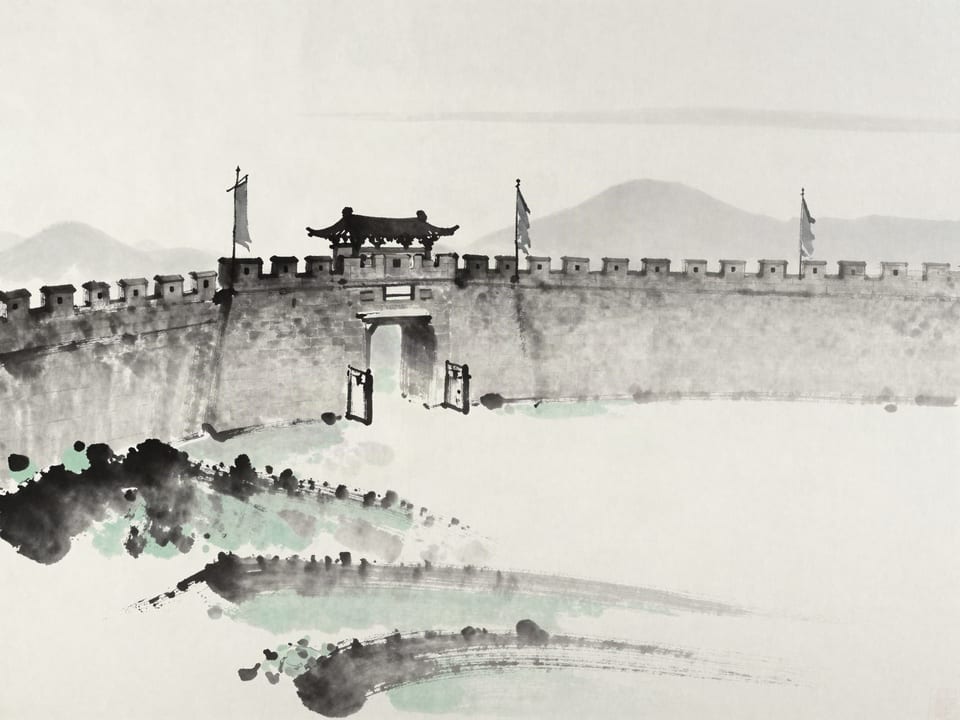
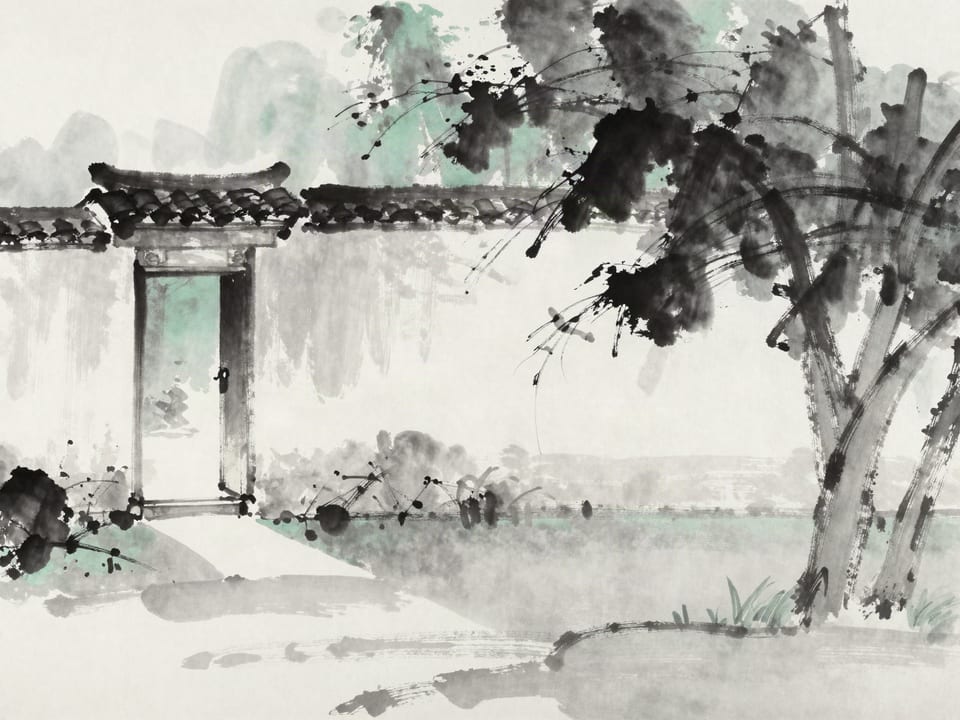
Ink wash painting: A quiet unguarded side gate in a long garden wall, slightly ajar, while the great gate stands fortified far away.
007Treat strategy as a matter of survival, not routine.
“The art of war is of vital importance to the State.”

War shapes the fate of the state; it deserves deliberate, top-level attention rather than being left to chance or habit.

Go deeper
Where this sits in the chapter

The very first sentence of the entire book — and it is a sentence about attention, not combat. Sun Tzu opens The Art of War by ruling on priority: strategy is a matter of vital importance to the State. Before any maxim about enemies or terrain, he establishes the stakes that justify everything that follows — this is the subject a ruler cannot delegate, cannot treat as routine, and cannot afford to learn casually.

A modern example

A company treats office-vendor selection with three committee meetings and a scoring matrix — and enters its most important market with a memo and a hunch. The asymmetry is backwards: the consequential, hard-to-reverse choices are the ones that deserve the slow, deliberate treatment, and the reversible ones should be fast and cheap. Auditing which is which is itself a strategic act.

The common misreading

The line is not a call to agonize over everything with equal gravity — that inverts it. If strategy is vital, then the correct allocation of scarce seriousness matters more, not less: maximum focus on the few decisions that shape the enterprise, brisk confidence everywhere else. Sun Tzu’s opening sentence is about ranking, not anxiety.
This lesson →
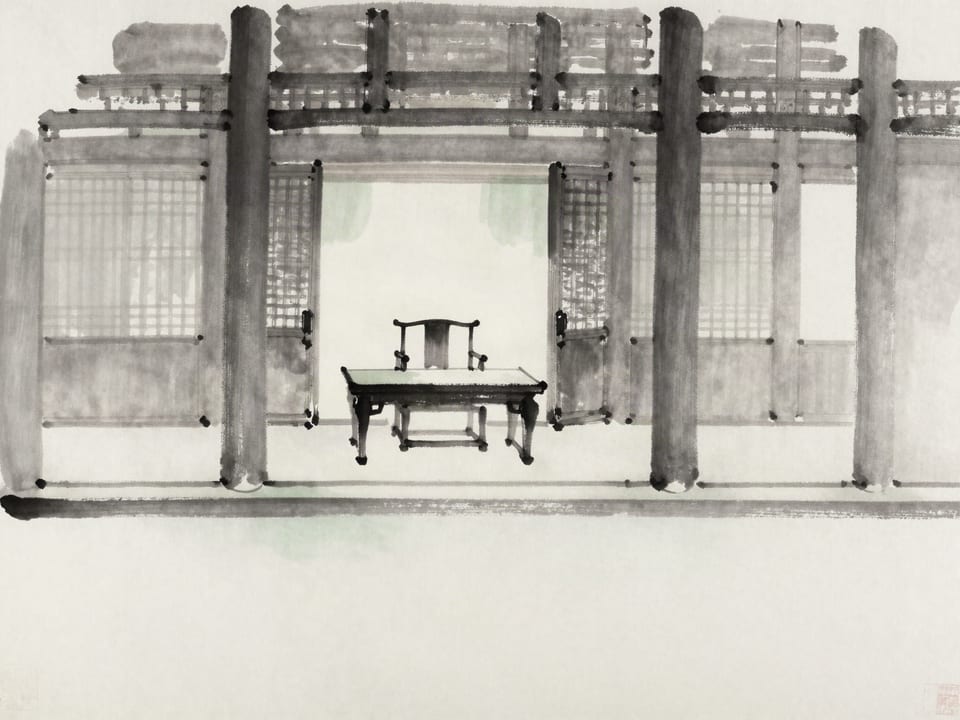
Ink wash painting: A grand hall of state with a single low table, an empty seat of authority, morning light through tall doors.
008Strategic error has irreversible consequences.
“It is a matter of life and death, a road either to safety or to ruin.”

Some choices cannot be undone; treating them lightly invites catastrophe that no later effort can reverse.

Go deeper
Where this sits in the chapter

The book’s second sentence sharpens the first: war is a road either to safety or to ruin — 生死之地, the ground of life and death, as the Chinese has it. Sun Tzu is defining the category before offering any method: some decisions are one-way doors, and the entire apparatus of calculation he is about to build exists because this category exists. Everything in Chapter 1 is downstream of these two sentences.

A modern example

A founder can change pricing weekly, rewrite the roadmap monthly, and replace a vendor tomorrow — all two-way doors. But burning the bridge with a co-founder, spending the last runway on one channel, or signing personal guarantees on a five-year lease: those doors swing one way. The habit that saves companies is writing the two lists separately and noticing how often the irreversible list gets the reversible treatment.
The common misreading

Treating every decision as life-or-death is the failure mode, not the lesson — constant stakes-inflation paralyzes exactly when real ones appear. The discipline is calibration: irreversibility is a property of specific doors, and the art is knowing which list a choice belongs to before walking through it.

This lesson →
Ink wash painting: A fork in a mountain road at a cliff edge, one path descending to safety, one disappearing into fog.
009Assess the five constants before acting.
“The art of war, then, is governed by five constant factors: the Moral Law, Heaven, Earth, the Commander, and Method and discipline.”

Victory depends on enduring elements — purpose, timing, ground, leadership, and discipline — not on luck or isolated brilliance.

Go deeper
Where this sits in the chapter

Having declared the stakes, Chapter 1 immediately provides its instrument: five constant factors — Moral Law, Heaven, Earth, Commander, Method and discipline — through which every contest must be read. The word "constant" is doing quiet work: these are the factors that do not change with fashion or technology, which is why a 2,500-year-old checklist still discriminates good bets from bad ones.

A modern example

An entrepreneur evaluates a new venture: the product is brilliant (Commander), the timing is right (Heaven), the niche defensible (Earth) — but nobody has asked whether the early team would follow the mission through an unpaid quarter (Moral Law), or whether the operation can bill, hire, and ship without heroics (Method). Two of five factors scored high, and the venture was funded on a 40% assessment.

The common misreading

The five factors are not a vibe-check to run once. Sun Tzu builds them into the seven comparisons — the same five, weighed against the other side — because factors only mean something relatively. A disciplined team is an advantage only until you face a more disciplined one; the checklist ends in comparison, not in self-congratulation.

This lesson →
Ink wash painting: Five standing stones in a circle on a hilltop, each a different height, balanced in arrangement.
010Align purpose before asking for effort.
“The Moral Law causes the people to be in complete accord with their ruler, so that they will follow him regardless of their lives.”

People sustain sacrifice only when they believe in the cause; shared conviction beats coercion every time.

Go deeper
Where this sits in the chapter

The first of the five constant factors gets defined immediately, and it is telling that Sun Tzu starts there — before terrain, before generals, before logistics. Moral Law (道) is accord: the people in complete agreement with their ruler, following regardless of their lives. In a book famous for cunning, the foundational factor is the least cunning thing imaginable — genuine shared purpose.

A modern example

Two teams hit the same crisis: a nine-month delay, pay frozen, a rival poaching. One team’s people were bought with salary and stay Bought — they update their résumés. The other had spent two years explaining why the work mattered, in the founder’s own words, weekly — and half the team rides out the delay on reduced pay. Nothing in the second team’s spreadsheet explains this. 道 does.

The common misreading

Alignment is not enthusiasm, and it cannot be manufactured at the moment it is needed — that is morale theater, and everyone can tell. Moral Law is the slow accumulation of honest answers to "why are we doing this?" A leader who never gave the reason cannot invoke the reason later; the accord was never built.

This lesson →
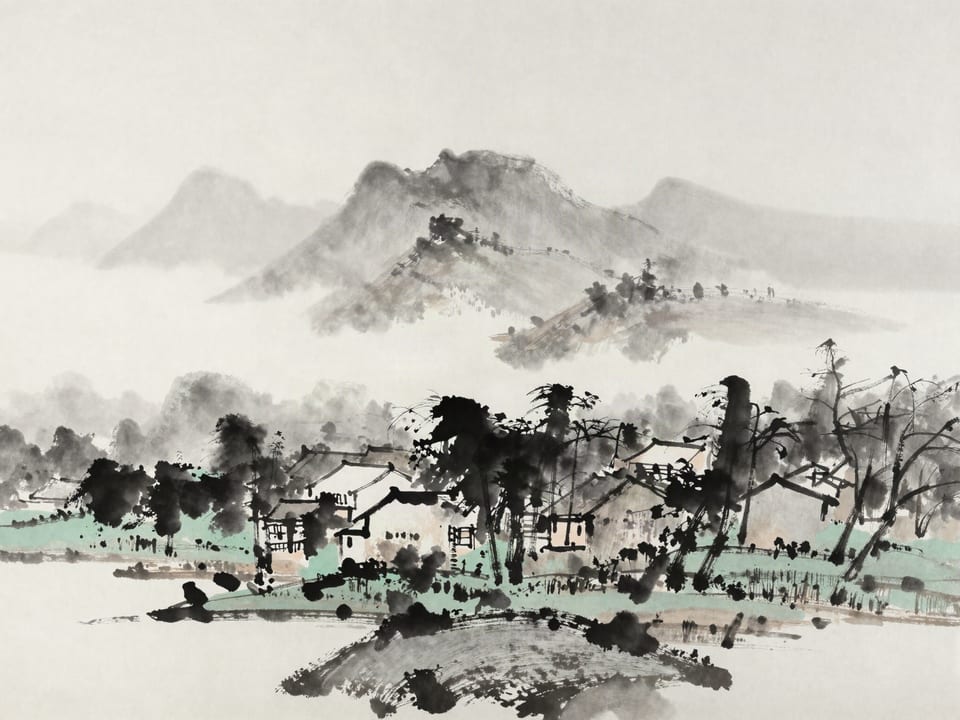
Ink wash painting: A village where every rooftop faces the same direction, smoke rising in unison from the chimneys.
011Read the environment you cannot control.
“Heaven signifies night and day, cold and heat, times and seasons. Earth comprises distances, danger and security, open ground and narrow passes.”

Timing and terrain shape outcomes as much as skill; ignore weather and ground and you fight at a disadvantage.

Go deeper
Where this sits in the chapter

Factors two and three of the five arrive as a pair: Heaven is time — night and day, cold and heat, seasons — and Earth is space: distance, danger, open ground, narrow passes. Together they define everything about the contest you did not choose. Sun Tzu lists them second because no amount of the other factors rescues a plan that argues with the clock or the ground.

A modern example

A retailer expands with the same store format into two regions. In one, the format matches the season — climate, foot traffic rhythms, local holidays; in the other, the identical playbook fights all three. Same capital, same training, same discipline: the second region bleeds. When the post-mortem says "execution," it usually means Earth was never read — the environment was treated as neutral when it was the opponent’s best general.

The common misreading

Reading the environment is not obeying it fatalistically. Heaven and Earth constrain everyone — including the other side — which makes them playable: winter that halts your logistics also halts his, and a narrow pass that blocks your advance can be the place his advance dies. The factors are fixed; positions within them are not.

This lesson →
Ink wash painting: A vast sky of moving clouds above a range of crags and valleys, the two mirrored in scale.
012Leadership is a bundle of virtues, not a single trait.
“The Commander stands for the wisdom, sincerity, benevolence, courage and strictness.”

Effective command blends insight, honesty, care, nerve, and discipline; over-indexing on one warps the whole.

Go deeper
Where this sits in the chapter

Fourth of the five factors, the Commander is defined as a bundle — wisdom, sincerity, benevolence, courage, strictness — listed in that order. The ranking is careful: judgment before trustworthiness, trust before kindness, and only then nerve and hardness. Sun Tzu’s implicit warning is that these virtues fail as a set: any one of them alone, over-developed, becomes the leader’s signature flaw.

A modern example

A CTO has wisdom and courage in surplus — brilliant calls, delivered bravely in every crisis — but sincerity is thin: the team never quite learns the real reasons behind decisions, and benevolence is thinner. Result: heroic leadership over a rotating door. The company hires for his strengths and loses people to his missing virtues, exactly as the 2,500-year-old checklist predicts.

The common misreading

The five virtues are not a personality test to score high on evenly — no such person exists. They are an audit list for the specific command you hold: a wartime turnaround may need courage and strictness turned up; a research lab lives on wisdom and sincerity. The discipline is noticing which virtue your situation is currently starving for, and which of your strengths is quietly crowding it out.
This lesson →
Ink wash painting: A single tall pine on a ridge, its trunk straight, branches balanced, enduring all seasons at once.
013Discipline turns resources into capability.
“Method and discipline are the marshalling of the army, the gradations of rank, the maintenance of roads, and the control of expenditure.”

Order, hierarchy, logistics, and cost control are what convert raw strength into reliable execution.
Go deeper
Where this sits in the chapter

The fifth and humblest factor closes the framework: Method and discipline — the marshalling of the army, gradations of rank, maintenance of roads, control of expenditure. After purpose, seasons, terrain, and character, Sun Tzu ends on plumbing. The placement is the point: the first four factors decide whether you should fight; this one decides whether anything you promised actually happens.

A modern example

Two consultancies win the same caliber of clients. One has standard onboarding, a real project ladder, invoicing that goes out on the 1st, and a travel policy; the other runs on each partner’s personal habits. Same talent, same market — but the second leaks a third of its margin to untracked hours and re-negotiated scope, and calls the difference "the cost of staying flexible." The roads and the rank exist or they do not.

The common misreading

Discipline here does not mean bureaucracy — Sun Tzu elsewhere warns against generals who fuss processes into paralysis. Method is the minimum structure that makes strength deliverable: know who decides, know where the supplies move, know what things cost. Below that floor, flexibility is just another name for leakage.

This lesson →
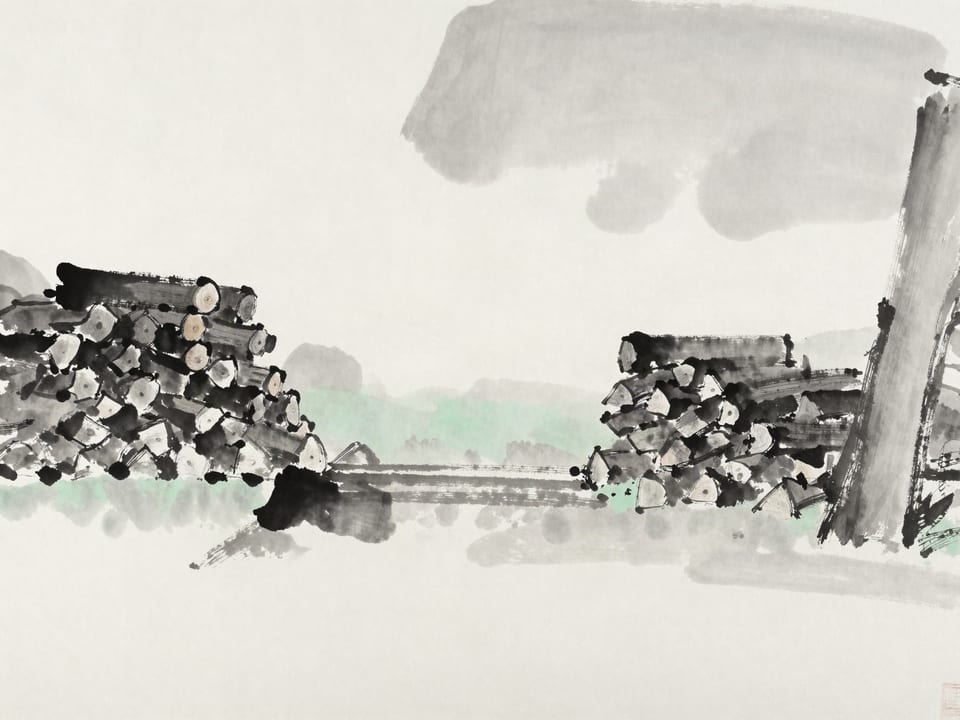
Ink wash painting: Neatly stacked firewood beside a swept courtyard, every piece cut to the same length.
014Mastery of the basics is the prerequisite, not the bonus.
“These five heads should be familiar to every general: he who knows them will be victorious; he who knows them not will fail.”

The fundamentals are not elementary; knowing them deeply is what separates winners from the merely busy.

Go deeper
Where this sits in the chapter

The chapter now turns its five factors into a pass/fail gate: every general must know them — he who knows them wins, he who knows them not fails. Between this verse and the seven comparisons that follow, knowing the five shifts from theory to entrance exam. It is the first appearance of the pattern that recurs through the whole book: mastery of a short, unglamorous list beats brilliance that skips it.

A modern example

A trader with a decade of experience still marks up his checklist every morning — the same items he wrote out as a trainee: what moved overnight, what the position limits are, what would have to be true to change the thesis. A newer colleague finds it charming, almost naive. In the March that everyone else spent improvising, the checklist trader was the only one whose losses stopped where the checklist said they must.

The common misreading

Knowing the fundamentals is not having once learned them. The verbs matter: these five heads are to be familiar — present tense, ongoing. The professional’s danger is not ignorance but atrophy, the quiet retirement of basics that feel beneath a senior title. Sun Tzu’s gate has no seniority exemption.

This lesson →
Ink wash painting: A scholar’s desk with five brushes laid in a perfect row, ink stone ready, paper waiting.
015Compare on the dimensions that decide outcomes.
“Which of the two sovereigns is imbued with the Moral law? Which general has most ability? With whom lie the advantages of Heaven and Earth?”

Victory is forecast by weighing the same factors on both sides, not by optimism about your own.

Go deeper
Where this sits in the chapter

The five factors now become an instrument: seven questions, each asked comparatively — which sovereign has the Moral Law, which general more ability, whose Heaven and Earth advantages hold, whose discipline is stricter, whose officers and soldiers are stronger, whose men are better trained, whose rewards and punishments clearer. The framework’s power is the word "which": every answer is a comparison, and comparisons cannot be spun.

A modern example

Before pitching against an incumbent, a sales lead runs the seven honestly: better product (yes), better references (no), clearer pricing (no), stronger service team (no), better-known brand (badly no), better-trained reps (tie), better incentives to switch (yes — the incumbent’s contracts are up). Two of seven won, and both are the ones that decide renewals. The pitch was built on exactly those two and conceded the rest — and won on the narrow ground it had chosen.

The common misreading

The seven comparisons are not a vote where 4-3 means advance. Some factors outweigh others in a given contest — one decisive advantage in the factor that matters can beat a sweep of the trivial ones. The exercise builds honesty about where you actually win, so you can refuse the fight everywhere else; it is a targeting instrument, not a scoreboard.

This lesson →
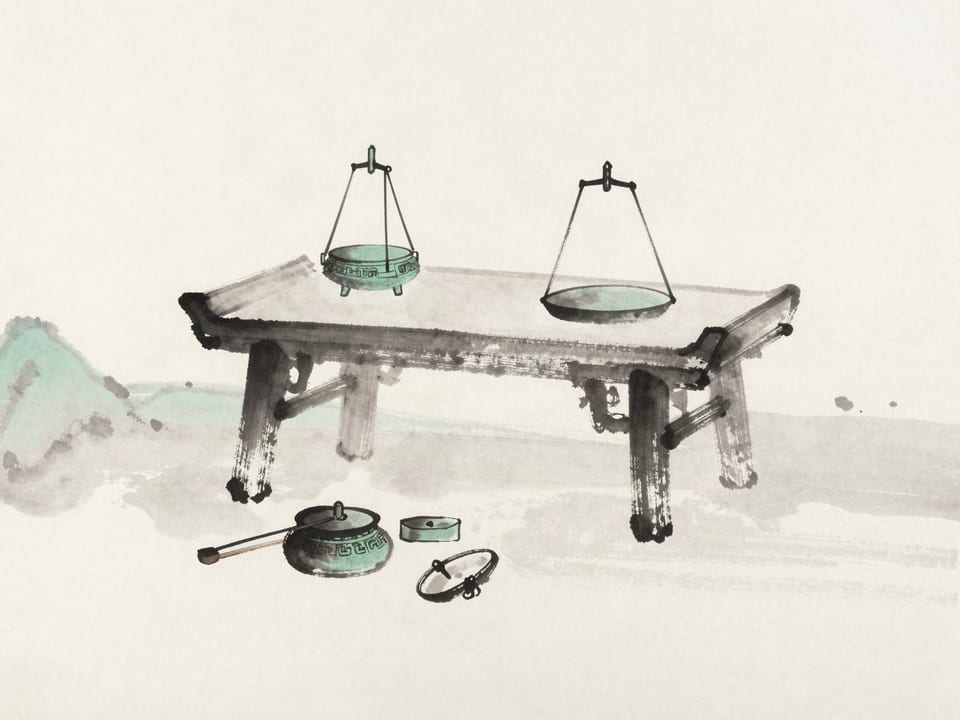
Ink wash painting: Two scales of bronze balanced on a scholar’s table, weights laid out beside them.
016A structured read beats a gut call.
“By means of these seven considerations I can forecast victory or defeat.”

You can predict the result before fighting if you assess the right variables systematically.

Go deeper
Where this sits in the chapter

Chapter 1’s quiet climax: with the five factors known and the seven comparisons made, Sun Tzu can forecast victory or defeat — the assessment itself predicts the battle. Nothing has been fought yet; the entire chapter has taken place in the temple. This verse makes the claim explicit that the rest of the book keeps proving: outcomes are legible beforehand to anyone who does the reading.

A modern example

Before the launch, a team writes the forecast down — units, conversion rate, payback window, and the three assumptions each number rests on. Six months later they reread it. Two assumptions failed, one held, and the miss traces precisely to the failed pair. A rival team that "knew" equally much but wrote nothing learned nothing — their retrospective dissolved into argument, because a forecast that was never stated can never be wrong.

The common misreading

Forecasting is not prediction as prophecy, and Sun Tzu does not promise omniscience — he promises accountability. The written forecast is valuable precisely because it can fail visibly, which is how judgment compounds. The unforecast move teaches nothing even when it succeeds, and that is the misreading’s real cost: hope kept the lesson from ever landing.

This lesson →
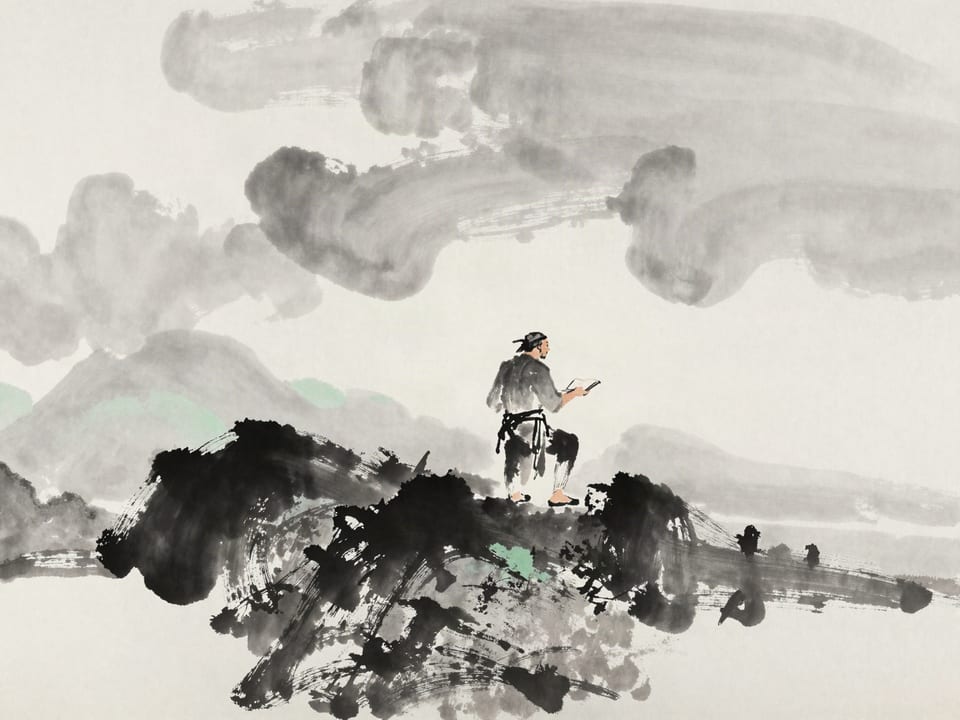
Ink wash painting: A weathered farmer studying the sky at dawn, reading clouds before the day begins.
017Act on good counsel or lose the mandate.
“The general that hearkens to my counsel and acts upon it will conquer; let such a one be retained. The one that hearkens not shall suffer defeat: let him be dismissed.”

Advice unused is worse than no advice; the discipline is to listen, decide, and execute.

Go deeper
Where this sits in the chapter

The chapter pivots from assessment to execution, and its first executive act is a hiring-and-firing rule about listening: the general who hearkens to this counsel and acts on it will conquer — retain him; the one who will not hear it will be defeated — dismiss him. Sun Tzu treats receptivity as a selection criterion for command itself, decided before a single maneuver is discussed.

A modern example

A board keeps a brilliant CEO whose pattern is well known: hear the advice, praise the advisor, do the opposite. Each dismissal of counsel costs less than a crisis — until the quarter the advice was about cash reserves, and there was nothing left to disagree with. The board’s error was reading "hearkens not" as a personality quirk rather than, in Sun Tzu’s terms, a firing offense.

The common misreading

Hearkening does not mean obeying everyone. The verse requires counsel acted upon — which presupposes choosing which counsel, since advisors routinely disagree. What Sun Tzu condemns is the theater of listening: nodding, thanking, and proceeding unchanged. Either use the advice or explain why not to the person who gave it; anything else spends their honesty without paying for it.

This lesson →
Ink wash painting: A young officer kneeling to receive a scroll from an old advisor beneath a plum tree.
018Plans serve reality, not the other way around.
“According as circumstances are favourable, one should modify one's plans.”

A plan is a hypothesis; when the ground shifts, the plan must shift or it becomes a liability.

Go deeper
Where this sits in the chapter

With counsel accepted, Sun Tzu adds the necessary counterweight: modify plans as circumstances prove favourable. The verse rescues Chapter 1 from the misreading it would otherwise invite — the temple calculations are not a doctrine to die for but the best available map, redrawn as the territory reports back. Planning and revision are one continuous act, not phases.

A modern example

A product roadmap commits to an enterprise tier by Q3. In Q2 the data returns something unexpected: the bottom-of-funnel usage that was supposed to be a stepping stone is itself the product. The team that "modifies according to circumstances" kills the roadmap item and doubles the funnel — the team that treats the plan as a promise spends Q3 building the wrong thing well.

The common misreading

Flexibility is not plan-rot. Sun Tzu says modify as circumstances warrant — meaning the circumstances must genuinely warrant it, in evidence, not in mood or in the discomfort of difficulty. The test cuts both ways: a plan never changed is dogma, and a plan changed every week was never a plan. The constant is the assessment discipline; only its output moves.

This lesson →
Ink wash painting: A boatman adjusting his sail mid-river as the wind shifts, the current bending around him.
019Create the opening you want to exploit.
“Hold out baits to entice the enemy. Feign disorder, and crush him.”

You can shape an opponent's choices by what you dangle and what you conceal, then strike the resulting gap.

Go deeper
Where this sits in the chapter

This is the stratagem-catalogue version of Chapter 1’s bait doctrine — the same pair, 利而诱之,乱而取之, placed in the closing list where Sun Tzu files his devices for reuse. In the curated daily entry the bait was framed as incentive design; here, in situ, the verse does different work: it is one item in a sequence of contrivances, teaching that the catalogue itself is meant to be deployed in combination, not memorized as maxims.

A modern example

A job candidate reveals, quite sincerely, that she is weighing an offer from another firm — the bait is true, which is why it works. The employer accelerates: better title, earlier review, the works. What the candidate’s revelation concealed was that the other offer was for a role she had already decided against. The employer walked into her actual aim — a renegotiated package — by chasing the appearance of competition. Revealed fact, concealed frame, captured counterparty.

The common misreading

In the catalogue’s context the danger is mechanical application — running the bait play on schedule rather than reading the ground for it. The verse sits among devices that follow the assessment verses; the bait works when it fits what this particular opponent actually wants, which Chapter 1 has just taught you to determine. Deployed without that reading, the same move is just noise with an ancient pedigree.

This lesson →
Ink wash painting: A fisherman’s line with a single bright lure drifting over dark, still water.
020Match your posture to his readiness.
“If he is secure at all points, be prepared for him. If he is in superior strength, evade him.”

Against a fortified opponent, prepare thoroughly; against superior force, avoid the frontal test.

Go deeper
Where this sits in the chapter

The stratagem catalogue turns conditional: if he is secure at all points, be prepared for him; if he is in superior strength, evade him. Two ifs — the device depends on a reading of the opponent before the verb is chosen. In a list otherwise full of unconditional tricks, this entry quietly teaches the chapter’s deeper habit: the catalogue is not applied, it is matched.

A modern example

A challenger maps an incumbent segment by segment. Where the incumbent is genuinely secure — locked contracts, deep integration — the challenger prepares: longer sales cycles, compliance work, patience budgets. Where the incumbent is merely large but thin — a legacy product sustained by inertia — the challenger evades and redirects demand rather than contesting. Same rival, two verbs, chosen per position. Competitors who apply one verb everywhere discover that preparing against the thin and evading the secure loses both ways.

The common misreading

Evading superior strength is not cowardice — it is routing, and Chapter 6 will build a whole doctrine of it. Nor is preparing against the secure a mandate for grinding: preparation is what you do while you wait for the position to change. The verse’s gift is the permission to refuse contests you cannot win, which most strategy ego quietly revokes.

This lesson →
Ink wash painting: A walled farmhouse at dusk, gates shut, harvest stored, lanterns lit within.
021Provoke the undisciplined to act against their interest.
“If your opponent is of choleric temper, seek to irritate him.”

A hot-tempered rival can be moved to mistake if you stroke the right nerve; composure is a weapon.

Go deeper
Where this sits in the chapter

The catalogue’s psychological entry: if your opponent is of choleric temper, seek to irritate him. Sun Tzu’s insight is not about temper at all — it is that temper is an exploitable load path, a channel through which inputs become the opponent’s decisions. The choleric general stops being the author of his own moves; the irritation is. Chapter 8 will later list this fault from the inside; here it is weaponized from the outside.

A modern example

A procurement negotiation stalls against a vendor known for pride in his engineering. The buyer’s team, quite deliberately, lets slip a technical review that calls the architecture "dated but serviceable" — an assessment they do not fully hold. The vendor arrives at the next session angry, over-explaining, and eventually discounting to prove the engineering’s worth. Nothing false was claimed; the temper was real; and the discount was authored by the buyer’s two-word plant.

The common misreading

Exploiting temper is not license for abuse — the buyer’s probe was about architecture, not the man, and the line between provocation and harassment is where strategy ends and pathology begins. Note also the verse’s quiet warning to readers: everyone is someone’s choleric opponent, and the fault being exploited is one Chapter 8 tells you to fix in yourself.

This lesson →
Ink wash painting: A thundercloud gathering over one sharp peak while the rest of the range stays clear.
022Divide a strong whole into weaker parts.
“If his forces are united, separate them.”

Concentrated opposition is hard to beat; fragment it and you face pieces you can handle one at a time.

Go deeper
Where this sits in the chapter

The catalogue’s structural entry: if his forces are united, separate them. The device targets connection rather than strength — a united opponent is a system, and systems are beaten by cutting their links, not by hammering their nodes. Sun Tzu files it among the stratagems because division rarely looks like attack; it looks like offers, disagreements, and drift.

A modern example

A standard is contested by a coalition — three companies whose combined weight decides the vote. The challenger cannot out-argue three, so it out-deals one: a royalty arrangement with the smallest member that makes the coalition’s unified position expensive for that member to hold. The abstention that follows is called partnership, not battle — but the coalition is now two, and two is a majority that can be argued with. The whole was never beaten; it was un-wholed.

The common misreading

Separating is not destroying trust in general — the target is the specific bond that makes this opponent stronger than its parts, and the modern translation must stay lawful: no lies, no inducements to breach. What the verse really teaches is attention: most strategists attack masses, and masses are almost always coalitions with seams. Find the seam, price the seam, act at the seam.

This lesson →
Ink wash painting: A flock of geese breaking into two groups against the sky, drifting apart above the wetlands.
023Strike the unguarded point.
“Attack him where he is unprepared, appear where you are not expected.”

Advantage comes from hitting where defense is absent and showing up where you were not predicted.

Go deeper
Where this sits in the chapter

The catalogue’s closing crescendo — the stratagem that completes the chapter: attack him where he is unprepared, appear where you are not expected. This is the curated version’s twin, filed in the list; placed last, it functions as the catalogue’s summary device. Every prior entry — the baits, the irritation, the separation — exists to create the unpreparedness that this verse exploits.

A modern example

A fintech spends its visible energy fighting for bank partnerships — the expected front, complete with conference keynotes announcing the commitment. Its actual launch arrives through bookkeeping firms: unglamorous, unwatched, and collectively serving the same small businesses the banks were slow to serve. When the banks finally notice, the fintech is the incumbent in a channel they never defended, and the keynote circuit had been the diversion all along.

The common misreading

The unexpected works once per audience — bookkeeping firms are now an expected channel, and the verse itself implies the motion: appear where you are not expected, and having appeared there, you are expected. This is why it crowns a chapter about variation: the device is not a place but the act of finding the next one, which no list can hold.

This lesson →
Ink wash painting: Rain falling suddenly on one side of a valley while the other side remains dry and bright.
024Keep your method quiet until it lands.
“These military devices, leading to victory, must not be divulged beforehand.”

Revealing your plan lets the other side adapt for free; secrecy preserves the edge of surprise.

Go deeper
Where this sits in the chapter

The catalogue ends by sealing itself: these military devices, leading to victory, must not be divulged beforehand. Sun Tzu closes the stratagem list with the handling instructions — the tricks work by surprise, and surprise has a shelf life that disclosure spends. The verse also guards the list as a whole: an opponent who knows your catalogue can count its entries against you.

A modern example

A firm pre-announces a platform change with a two-quarter runway — customers, partners, and competitors all briefed early for "ecosystem alignment." The runway is the leak: competitors ship the change first, partners re-negotiate around it, and the announcement’s advantage is fully consumed before the product exists. The same change, announced with the release, kept its surprise and its terms. Identical strategy; the disclosure schedule decided it.

The common misreading

Non-divulgation is not institutional secrecy — Chapter 5 built the signals that let your own army execute; the verse seals the devices against the opponent, not the troops against their general. And "beforehand" is the operative word: after the strike lands, disclosure is free and often mandatory. The discipline governs the window between conception and effect — which is exactly the window strategy most loves to talk about.

This lesson →
Ink wash painting: A closed scroll bound with cord, resting in a wooden box lined with plain cloth.
025Preparation depth predicts the result.
“The general who wins makes many calculations before the battle. The general who loses makes but few.”

Wins are earned in the thinking beforehand; thin deliberation is a quiet tax on every later outcome.

Go deeper
Where this sits in the chapter

Chapter 1’s final verse, in its catalogue position — and the book’s first chapter ends by counting: the general who wins makes many calculations before the battle; he who loses, few. This is the temple-calculation doctrine stated as an audit. Where the curated daily entry emphasized the planning room, the placement here matters differently: it is the last thing said before hostilities begin, a parting reminder that the ratio of calculations is already the ratio of the war.

A modern example

Two teams enter the same acquisition. Team A’s diligence list has two hundred items — many calculations, literally. Team B runs forty, "focusing on what matters." The deal closes; the two hundred items include one line — the target’s top customer contract has a change-of-control clause triggered by this exact deal structure — that Team B’s forty never touched. Many versus few was not bureaucratic padding. It was coverage, and one uncovered line repriced the whole acquisition.

The common misreading

Many calculations is not slow calculations — Sun Tzu’s temple work concludes before the battle, bounded by the campaign. The verse measures thoroughness within a deadline, not deliberation instead of one. Teams that use it to justify endless analysis have confused the counting with the deciding; the general who makes many calculations still, at the end, marches.

This lesson →
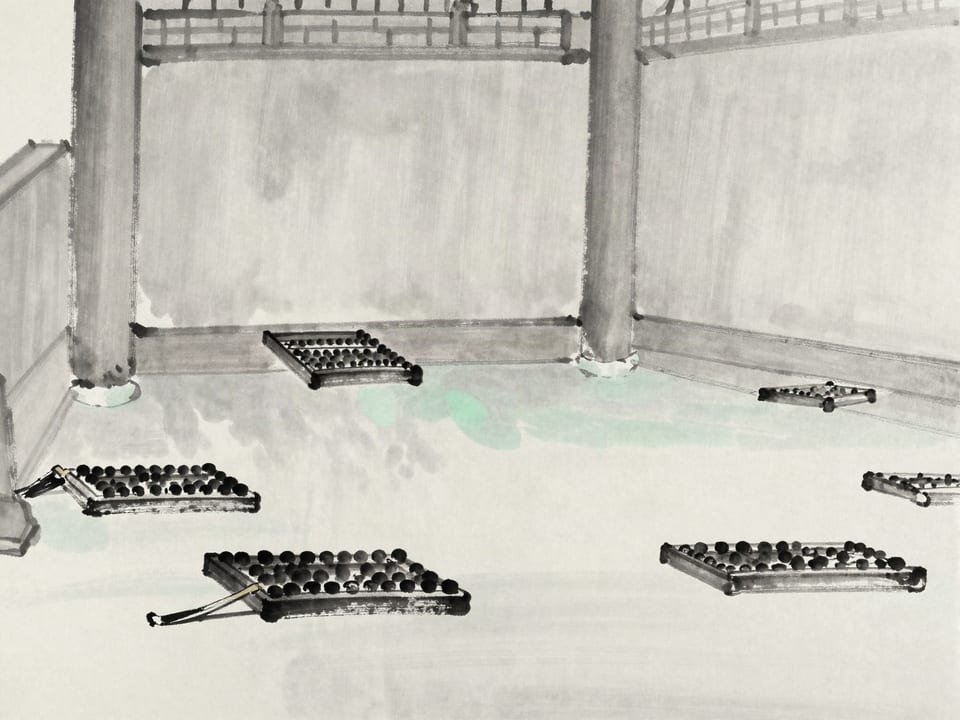
Ink wash painting: A temple interior scattered with counting rods arranged in careful patterns across the floor.

Chapter II · 作戰

Waging War

A chapter on the economics of conflict. Sun Tzu warns that prolonged war exhausts the state: speed, living off the enemy’s supplies, and avoiding stalemate matter more than sheer force.

12 lessons · ≈ 5 min · lessons 26–37 · chapter page →

Cost of war against durationduration of the campaign →cost to the statethe state’s resourcespast this point the war eats itselfswift, decisivethe only affordable war“There is no instance of a country having benefited from prolonged warfare.”
026Protracted conflict drains you; win quickly or avoid it.
“There is no instance of a country having benefited from prolonged warfare.”

War is expensive in time, resources, and attention, and no one emerges richer from dragging it out. Sun Tzu’s warning applies beyond battlefields: a fight, a lawsuit, a losing investment — the longer it runs, the more it costs, even when you eventually "win."

Go deeper
Where this sits in the chapter

Chapter 2 is the economic heart of The Art of War: sieges drain the exchequer, long campaigns inflate prices at home, and strength spent on the march is strength missing at the decisive point. Where Chapter 1 asked how to plan, Chapter 2 asks what any campaign costs — and this lesson is its thesis. Sun Tzu writes as a quartermaster before he writes as a general: no nation ever profited from a war that dragged on.

A modern example

A founder spends eleven months grinding down a rival over a segment both entered early. He wins the segment — into a market the twelve months of price war has scorched for both players, with margins flattened and a third competitor arriving fresh into the wreckage. The victory is real, the ledger is worse than a quick settlement would have been in month two. The war paid nobody but the war.

The common misreading

The lesson is not pacifism — Sun Tzu spends the rest of the book teaching how to fight. It is a duration constraint: fight only battles that end quickly, and structure every engagement so it cannot become a war of attrition. If winning requires years of draining the enemy, the arithmetic has already vetoed the win.

This lesson →
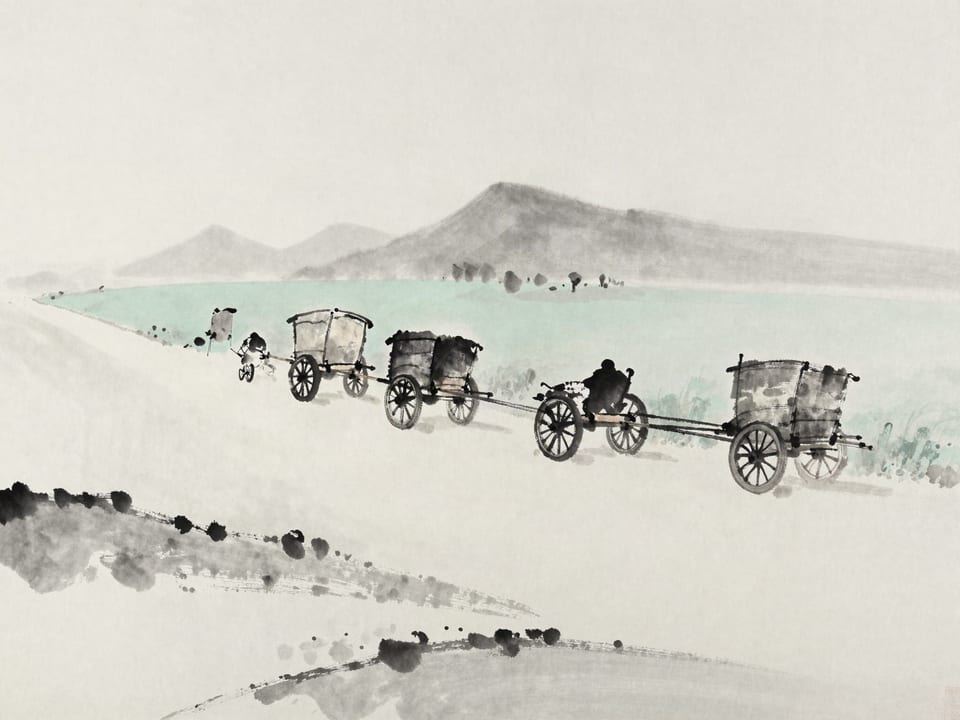
Ink wash painting: A long caravan of carts on an endless dusty road, worn and weary, stretching to a far horizon.
027Protracted indecision costs more than decisive action.
“Though we have heard of stupid haste in war, cleverness has never been seen associated with long delays.”

Haste is a known mistake, but endless delay is worse. Sun Tzu’s point is not to rush, but that dragging things out is rarely clever — it bleeds resources and hands the initiative to the other side. Decide, then move.

Go deeper
Where this sits in the chapter

Chapter 2, having spent its verses enumerating what a long war costs, pauses to name the other failure mode. Stupid haste is a known disease, Sun Tzu concedes — but cleverness has never been associated with long delays. In a chapter whose whole argument is that duration is the silent tax on everything, waiting without purpose is not caution; it is choosing to pay that tax forever.

A modern example

A company "evaluates" a move for three consecutive quarters: the memo matures, the market shifts, the analysis is redone, the decision is re-deferred. The eventual entrant arrives a year later and three times the price, into a market the analysis correctly described at every point. Nothing was wrong with the assessment; the delay itself was the losing move — the one cost the spreadsheet never carried.

The common misreading

This is not a push into the opposite ditch — Sun Tzu condemns stupid haste in the same breath. The standard is tempo: information arrives, a decision point is set, and at that point waiting must itself be justified like any other move. Delay is sometimes right; delay that nobody has to defend is just decay with good manners.

This lesson →
Ink wash painting: A dried-up riverbed with an abandoned boat, cracks spreading through the mud.
028Count the true carrying cost before you start.
“In the operations of war, a thousand chariots and a hundred thousand mail-clad soldiers will cost a thousand ounces of silver per day.”

Every sustained effort has a daily burn; ignoring it hides the moment the venture eats itself alive.

Go deeper
Where this sits in the chapter

Chapter 2 opens its ledger with a single line item: a thousand chariots, a hundred thousand armored soldiers, a thousand ounces of silver a day. Before any advice about enemies or tactics, Sun Tzu states the burn rate. The whole chapter is the book’s finance section, and it opens the way a good CFO does — not with the plan, but with what the plan costs per day simply to exist.

A modern example

A company launches a second product line and budgets the launch: design, marketing, headcount. What the budget misses is the carrying cost — the daily tug of engineering attention, support load on the same team, the standing meeting that outlives the kickoff. Eighteen months later the line is "profitable" by its own P&L while quietly taxing the flagship. The thousand ounces were always being spent; they were just booked elsewhere.

The common misreading

The lesson is not to minimize cost — armies that under-spend lose, and Sun Tzu never confuses frugality with strategy. It is to know the number. A burn rate you can state is a strategic variable: it tells you how long the campaign can run, which is the denominator under every other decision in this chapter.

This lesson →
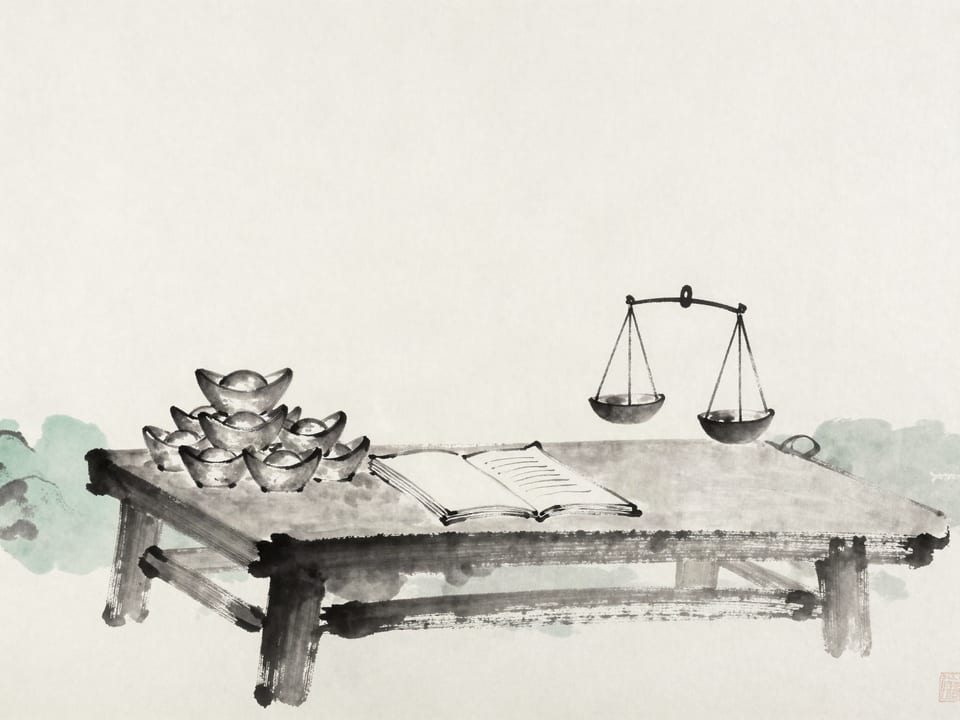
Ink wash painting: A stack of silver ingots on a quartermaster’s table, an open ledger beside them, scales waiting.
029Drawn-out effort erodes its own means.
“If victory is long in coming, the men's weapons will grow dull and their ardour will be damped.”

Campaigns that drag bleed momentum and materiel; speed preserves the force you started with.

Go deeper
Where this sits in the chapter

The ledger continues into time: victory long in coming dulls weapons and damps ardour. Sun Tzu is naming depreciation — of equipment, but far more dangerous, of people. Chapter 2’s costs are not just silver; they are the sharpening a force loses when its campaign has no horizon, which is why the chapter’s remedy throughout is decisiveness, not endurance.

A modern example

A team runs a "temporary" war-room posture for a year: nightly deploys, heroes, pizza. The weapons dull in exactly Sun Tzu’s sense — the senior engineer who used to prevent incidents now only fights them; the ardour damps into gallows humor. Nothing dramatic breaks. The company just slowly loses the people it hired for their sharpness, to a campaign nobody will declare finished.

The common misreading

This verse is not an argument for manufactured urgency — panic is Chapter 1’s "stupid haste" and loses differently. The target is the indefinite middle: campaigns with no decision point, where neither finishing nor cancelling is ever chosen. Dulled weapons are the cost of that non-decision, paid daily.

This lesson →
Ink wash painting: A once-sharp blade left out in the rain, rust blooming along its edge.
030Length is the hidden tax on every campaign.
“If the campaign is protracted, the resources of the State will not be equal to the strain.”

Time, not just money, is the resource that runs out; plan for the duration or be broken by it.

Go deeper
Where this sits in the chapter

Chapter 2’s cost argument reaches its ceiling: a protracted campaign will not merely be expensive — the resources of the State will not be equal to the strain. This is the verse where duration stops being a cost line and becomes a solvency question. Everything Sun Tzu says about speed afterwards rests on this: campaigns do not fail at their planned length, they fail at their actual one.

A modern example

A bridge loan funds six months of runway; the plan needs five. The plan takes eleven — not from any single failure, just the ordinary friction of permits, hiring, and one redo. The company does not die of its losses; it dies of month seven. The strain was never modeled, because the plan was only ever stress-tested at its own happy timeline.

The common misreading

Planning for duration is not padding every estimate — that way lies the plan nobody believes. The discipline is scenario-shaped: run the plan at its expected length, then at twice, and know which commitments break at the boundary. Sun Tzu’s statesman knows the strain point, not just the budget.

This lesson →
Ink wash painting: A deep well being drawn by many buckets, the water line sinking low against the stones.
031Protraction serves no one in the end.
“There is no instance of a country having benefited from prolonged warfare.”

Sustained conflict drains both sides; the winner merely loses less, so end things on your terms fast.

Go deeper
Where this sits in the chapter

Chapter 2’s thesis, stated as a historical audit: there is no instance of a country having benefited from prolonged warfare. Sun Tzu has counted the costs — silver, weapons, ardour, solvency — and now delivers the finding. The verse is deliberately absolute, because its audience is the ruler contemplating a long war in the comfortable belief that victory launders duration. It never has.

A modern example

A partnership dispute enters its third year of litigation. Both sides’ counsel describe the eventual victory in glowing terms; neither deducts the years of management attention, frozen deals, and legal burn that the "winner" also pays. The companies that thrived were the two that settled in month four on imperfect terms — both walked away lighter and whole, which no verdict would have made them.

The common misreading

Read alone, the verse sounds like pacifism. In context it is arithmetic: duration is the destroyer, so the skilled strategist either wins fast or declines the long game entirely — including declining the temptation of a slow war of attrition that "we can afford better than they can." Sun Tzu’s reply is already in the verse: nobody affords it.

This lesson →
Ink wash painting: A scorched battlefield overgrown with weeds, both banners lying torn in the grass.
032Understand the downside to use the upside.
“It is only one who is thoroughly acquainted with the evils of war that can thoroughly understand the profitable way of carrying it on.”

You cannot wield a tool well until you respect its dangers; clarity about cost is what makes gain possible.

Go deeper
Where this sits in the chapter

Chapter 2 pauses its cost-listing for a qualification: only one thoroughly acquainted with the evils of war can understand the profitable way of conducting it. The verse gives the chapter its epistemic key — Sun Tzu’s economics are not pessimism but permission. Knowing exactly how campaigns fail is what licenses fighting them well; the novice’s optimism is simply unpriced risk.

A modern example

Two founders raise for the same expansion. One has written the failure memoir in advance — what a churn spike does to the covenant, which costs are fixed when revenue dips, the month the payroll gets interesting. The other has a deck of upsides. The first negotiates a slightly worse valuation with better covenants and sleeps through the quarter that terrifies the second. Acquaintance with the evils was the edge.

The common misreading

This is not a counsel of caution — Sun Tzu does not say the acquainted general avoids war; he says he alone can run it profitably. Risk literacy that ends in "therefore do nothing" has missed the verse’s point entirely. The instruction is to study failure modes as the prerequisite of aggression, not as an alternative to it.

This lesson →
Ink wash painting: A physician studying a wound carefully by lamplight before choosing from a row of instruments.
033Make the campaign self-sustaining off the opponent.
“Bring war material with you from home, but forage on the enemy. Thus the army will have food enough.”

Live off what you capture; depending only on your own supply caps how far you can go.

Go deeper
Where this sits in the chapter

Chapter 2 shifts from cost to supply design: bring war material from home, but forage on the enemy. The principle is radius — an army that carries everything is capped by its baggage train, while one that draws sustenance from the territory it moves through has no fixed limit. Sun Tzu states it as arithmetic, not romance: thus the army will have food enough.

A modern example

A consultancy funds every new practice out of retained earnings: a year of unbilled research before each launch, and a ceiling of one new practice per decade. A rival builds the same practice inside a client engagement — the research gets paid for by the problem it solves, the case study writes itself, and the second practice launches within the first’s cash flow. Same expertise; one carries its provisions, one forages.

The common misreading

Foraging does not mean draining your customers — an army that strips the territory starves on the return march, and Sun Tzu is explicit elsewhere about winning the population. The modern discipline is structural: does the work generate its own next resource — data, reputation, revenue, learning — or does every step need fresh supply from home?

This lesson →
Ink wash painting: Travelers gathering fruit from wild trees along the road, their empty packs laid open.
034Distance inflates every cost.
“Poverty of the State exchequer causes an army to be maintained by contributions from a distance.”

Supplying far from base multiplies expense; proximity is an economic weapon, not just a tactical one.

Go deeper
Where this sits in the chapter

Chapter 2’s logistics turn specific: when the exchequer runs thin, the army ends up maintained by contributions from a distance — and distance is where money quietly goes to die. Sun Tzu’s numbers elsewhere in the chapter make the point brutally: shipping grain to a distant army multiplies its cost many times over. Proximity is not comfort; it is economics.

A modern example

A company staffs its flagship product with a team nine time zones away to save 40% on salaries. Two years in, the honest accounting: every decision takes a day instead of an hour, a third of the leads’ week is translation, and turnover resets knowledge the office never held. The salary line is genuinely 40% cheaper; the product is more expensive. The exchequer emptied one connection at a time.

The common misreading

The remedy is not reflexive insourcing — distributed operations can work when the work is genuinely independent. The verse targets support lines: the things that must flow constantly between decision and execution. Those either get moved close, made local, or accepted as a permanent tax. What never works is pretending the distance is free.

This lesson →
Ink wash painting: A long line of porters climbing a far mountain path, each carrying a heavy sack toward a distant camp.
035Concentration distorts the market around it.
“The proximity of an army causes prices to go up; and high prices cause the people's substance to be drained.”

Massed effort sucks up local resources and raises the price of everything nearby; plan for the spillover.

Go deeper
Where this sits in the chapter

Chapter 2 notices a second-order effect most strategists miss: the proximity of an army causes prices to go up, and high prices drain the people’s substance. The presence of a large concentrated force distorts the market around it — the army becomes its own inflation. Sun Tzu is describing an externality: the cost a strategy imposes on its own supporting economy.

A modern example

A company declares one priority and organizes everything around it: the best engineers, the budget, the CEO’s attention. Within a quarter, the internal market reprices — every other project now pays a "priority tax" in talent it cannot hire and decisions queued behind the anointed one. Two quarters later the flagship ships, and the post-mortem discovers the quiet carnage in everything that shared its economy.

The common misreading

Concentration is not the sin — Sun Tzu preaches focus throughout the book. The lesson is to price the spillover: a priority that ignores what it does to the price of everything nearby is not concentrated, it is subsidized by an unacknowledged tax on the rest. Real focus budgets for the distortion it creates.

This lesson →
Ink wash painting: A market stall where a single cabbage sits beneath a high price tag, buyers turning away.
036Captured resources compound your reach.
“One cartload of the enemy's provisions is equivalent to twenty of one's own.”

What you take from the opponent multiplies your range far more than what you haul yourself; seek the capture.

Go deeper
Where this sits in the chapter

Chapter 2 closes its supply argument with an exchange rate: one cartload of the enemy’s provisions is worth twenty of one’s own. The multiple is the arithmetic of distance — twenty cartloads consumed on the road to deliver one — turned into strategy: capture beats carriage. Sun Tzu makes the general an economist of scarcity, choosing where a unit of effort buys the most.

A modern example

A startup spends heavily to build features its competitor’s users keep requesting — hauling provisions to a foreign market. Then it builds an importer: one command migrates the rival’s data, templates, and settings. Every new customer now arrives pre-provisioned by the competitor’s own ecosystem. The importer cost one sprint; it replaced a marketing budget — the cartload taken beats twenty shipped.

The common misreading

The exchange rate is about logistics, not looting. Sun Tzu’s captured provisions feed the campaign; they do not entitle you to strip the other side bare and call it strategy. In modern terms: absorb what the environment offers — data, tooling, ecosystems, momentum — without destroying the value or the people you will need on the far side of the victory.

This lesson →
Ink wash painting: An ox cart loaded high with grain standing beside a small pile of loose handfuls on the ground.
037Plan the whole line of supply up front.
“The skilful soldier does not raise a second levy, neither are his supply-waggons loaded more than twice.”

Competence shows in not needing repeated rescues; design the support so you do not return hat in hand.

Go deeper
Where this sits in the chapter

Chapter 2’s supply section ends with a standard of competence: the skilful soldier does not raise a second levy, nor load his wagons more than twice. The measure is not brilliance but self-sufficiency — the campaign was sized, from the start, to finish on what it began with. A general who needs repeated rescue is announcing that his original plan was a wish.

A modern example

A studio pitches a game with a two-year budget and ships in four, after two emergency rounds — each framed as "finishing the vision." A rival studio sizes the same ambition into a core game plus expansions: version one finishes on its original budget, and the expansions fund themselves from its sales. Neither studio lacked talent. One designed its supply line; the other raised levies and called it passion.

The common misreading

This is not a ban on raising more capital — Sun Tzu’s own statesman sends reinforcements when the campaign deserves them. The verse condemns the structural rescue: plans that only ever worked if nothing went wrong, where the second levy is not a response to events but the missing first half of the real plan.

This lesson →
Ink wash painting: A storehouse sealed with paper seals over the doors, grain jars full and ranked in rows.

Chapter III · 謀攻

Attack by Stratagem

The most quoted chapter: the highest form of generalship is to defeat the enemy’s strategy without fighting. Sun Tzu ranks outcomes — subdue by strategy, then by diplomacy, then by siege, last by battle.

18 lessons · ≈ 8 min · lessons 38–55 · chapter page →

The ladder of victory — best to worstrising cost, falling skill →Win without fighting不戰而屈人之兵Baulk the enemy’s plans上兵伐謀Prevent the junction of forces其次伐交Attack the army in the field其次伐兵Besiege walled cities其下攻城Supreme excellence breaks resistance without a battle; the siege is the worst policy of all.
038Information is the foundation of confidence.
“If you know the enemy and know yourself, you need not fear the result of a hundred battles.”
知彼知己,百战不殆

Confidence without information is recklessness. Sun Tzu’s most famous line is a discipline of two-sided knowledge: understand your own strengths and limits, and understand the other side’s. With both, uncertainty shrinks and decisions become less fearful.

Go deeper
Where this sits in the chapter

Chapter 3 argues the best victory leaves the loser intact, then sets the standard for any engagement you do enter. The famous line is really the top of a ladder most quoters never climb down: know neither side and you lose every battle; know one side and you win one for every one you lose; know both and a hundred battles hold no terror. Sun Tzu is grading information completeness, not offering reassurance.

A modern example

An investor spends a quarter researching a company — moat, margins, management — and never once audits her own behavior in a drawdown. She buys at the top of her conviction, the position doubles then halves, and she sells at exactly the wrong moment. The company was understood perfectly. The other combatant in that trade — her own risk tolerance — was never scouted at all.

The common misreading

The line is quoted as optimism: knowledge banishes fear. Read the ladder beneath it and it says the opposite — two-sided knowledge is rare and expensive, which is exactly why it is an edge. The working version of this lesson is a written list: what I know about them, what I know about me, and what I am merely assuming on both sides.

This lesson →
Ink wash painting: Two mountain peaks facing each other across a still river, perfectly mirrored in the water, equally matched.
039The highest victory is won without force.
“To fight and conquer in all your battles is not supreme excellence; supreme excellence consists in breaking the enemy’s resistance without fighting.”
不战而屈人之兵,善之善者也

The best outcome is not beating the opponent; it is making the fight unnecessary. Through positioning, incentives, and reputation, you can achieve your goal without the cost and damage of open conflict. This is the peak of strategy.

Go deeper
Where this sits in the chapter

Chapter 3 opens by ranking victories, and this is the top of the ladder: to subdue the enemy without fighting is the acme of skill — above winning battles, above capturing cities, far above besieging them. The ranking is economic before it is moral. Every rung down the ladder spends more of your own force for the same prize, so supreme excellence is simply the best return on power.

A modern example

A company wants a market standard changed. Option one: litigate and lobby for years, buying the change with cash and goodwill. Option two: build the product so much better that the market moves on its own and the old standard dies of irrelevance. The second company never fights the incumbent — it repositions the ground until the contest the incumbent prepared for never occurs.

The common misreading

It does not mean conflict can always be avoided, and Sun Tzu never says the strong should lie down. It means exhausting every form of positioning — alliances, standards, ground, perception — before committing force, because the fight you do not have is the only one with a guaranteed zero cost. Fighting is the fallback of strategy, not its proof.

This lesson →
Ink wash painting: A fortress gate standing open and unguarded, banners hanging still in calm air, nothing disturbed.
040Preserve value; winning does not require destruction.
“In the practical art of war, the best thing of all is to take the enemy’s country whole and intact; to shatter and destroy it is not so good.”
全国为上,破国次之

Victory that destroys what you were fighting for is defeat in disguise. Sun Tzu ranks taking assets intact above crushing them. In business, an acquisition that preserves a team and brand is worth more than a scorched-earth win.

Go deeper
Where this sits in the chapter

Chapter 3’s ranking of victories continues at the scale of the state: the worst policy is to attack walled cities, the best is to take the state whole and intact. The reasoning runs through the entire book — the object of victory is the value on the other side of it. Destroy the towns, the fields, the people’s capacity, and you have conquered a ruin that must now be rebuilt at your expense.

A modern example

An acquirer buys a boutique agency mostly for its senior team and client relationships, then replaces its leadership in week one to "integrate quickly." The clients follow the departed partners out the door, and two years of retention payments later the acquirer owns a brand and an office lease. The country was taken shattered — the purchase price paid for an intactness the new owner then removed personally.

The common misreading

Intact is not a synonym for gentle. Sun Tzu is explicit that parts may have to go — docks burned, divisive factions removed — for the whole to survive. The principle is about preserving the value you are fighting for, which sometimes means being unsentimental about exactly the pieces that threaten it.

This lesson →
Ink wash painting: A walled city with its gates open, willow branches leaning over the wall, entirely unharmed under soft mist.
041Preserve value while you capture it.
“In the practical art of war, the best thing of all is to take the enemy's country whole and intact.”

The highest win keeps what you take usable; destruction spends effort and loses the prize.

Go deeper
Where this sits in the chapter

Chapter 3 opens with its founding distinction: in the practical art of war, the best thing is to take the enemy’s country whole and intact; to shatter and destroy it is not so good. The chapter about method thus begins with the definition of a good outcome — one measured by what remains usable afterward. Every tactic the book teaches downstream is graded against this.

A modern example

A negotiating team "wins" a supplier into a contract so punishing that the supplier under-invests for years — deliveries slip, quality drifts, and the buyer quietly rebuilds a second source at full price. The paper victory was complete; the country arrived shattered. The team that paid 10% more for a contract the supplier could profit from kept the value it captured compounding instead of decaying.

The common misreading

Intact does not mean painless, and this is not a courtesy rule. Sun Tzu besieges cities when he must — the ranking is economic, not ethical: the prize’s post-capture productivity is part of the prize. The misreading is scoring the win at the moment of surrender instead of a year later, when the bill for the shattering arrives.

This lesson →
Ink wash painting: A general receiving the keys of a city at its open gate, walls unbroken, people watching calmly from doorways.
042Win before the battle starts.
“To fight and conquer in all your battles is not supreme excellence; supreme excellence consists in breaking the enemy's resistance without fighting.”

The best victory needs no fight; shape the situation so resistance collapses on its own.

Go deeper
Where this sits in the chapter

Chapter 3 states its thesis right after defining the intact prize: fighting and conquering in every battle is not supreme excellence — breaking the enemy’s resistance without fighting is. The word "breaking" is carefully chosen. The opponent’s will collapses; his forces never engage. This is the chapter’s promise that the highest skill operates on the contest’s structure, not inside it.

A modern example

A regional grocer learns a national chain will open across the street. It cannot out-price, out-advertise, or out-shelve the coming war — so it pre-empts it: exclusive deals with the local farms the chain’s distribution cannot match, a prepared-foods program built on them, and community ties a HQ playbook cannot replicate. The chain opens, underperforms, and closes in two years. The grocer never won a battle; it made the battles unnecessary.

The common misreading

Breaking resistance without fighting is not the same as avoiding conflict through appeasement — surrender also prevents battles. The distinction is who ends up positioned. Sun Tzu’s non-fighting victories still require the full apparatus of preparation, alliance, and ground; the clash is prevented because the other side’s rational calculation, not their comfort, says stand down.

This lesson →
Ink wash painting: A city surrendering under white banners at dawn, no smoke, no broken walls, doves circling the tower.
043Stop the plan, not the army.
“The highest form of generalship is to baulk the enemy's plans; the next best is to prevent the junction of his forces.”

Defeating intent before it becomes action is cheaper than defeating force after; intercept the design.

Go deeper
Where this sits in the chapter

Chapter 3 begins ranking victories, and this is the ladder’s upper rungs: the highest generalship baulks the enemy’s plans; next best, prevents the junction of his forces; only lower down does one win the battle. Sun Tzu orders the ladder by how early the intervention lands — attacking intentions, then concentrations, then armies. The earlier the layer, the cheaper the win.

A modern example

A retailer hears a rival is planning a flagship on the same block — a fight it would have to win at rents it cannot afford. Instead of outbidding, it signs the long lease on the side lot the rival needed for parking, and quietly locks the block’s two best anchor tenants into renewals. Months later the rival’s site study concludes the location no longer works; its plan dies in a spreadsheet. No battle — the plan itself was baulked.

The common misreading

Baulking plans is not sabotage or dirty tricks — the modern equivalents are positioning, pre-emption, and making the ground unattractive, all inside the rules. Nor is it passive: the retailer acted more decisively than a fight would have required. The ladder’s lesson is timing, not aggression — the same effort buys more the earlier it is spent.

This lesson →
Ink wash painting: A dam holding back a river before it can form, dry channels downstream where the flood never came.
044Avoid the most expensive form of contest.
“The worst policy of all is to besiege walled cities.”

Sieges drain time, treasure, and men for marginal gain; avoid them by every other means first.

Go deeper
Where this sits in the chapter

Chapter 3’s victory-ladder inverts at the bottom: the worst policy of all is to besiege walled cities. Sun Tzu knows his audience — the temptation of a siege is certainty. The wall is visible, the victory imaginable, the honor maximal. And so the chapter pauses to name the most prestigious form of fighting as the worst use of force, because it spends everything for the least.

A modern example

A software firm spends four years trying to win a Fortune 100 account — the walled city of its industry, complete with an annual RFP ritual that looks like progress. Meanwhile a mid-market motion lands hundreds of smaller clients at a fraction of the cost, and a competitor quietly becomes the standard inside those companies as they grow. The enterprise "siege" produced two logos and a decade’s worth of engineering detours.

The common misreading

Sieges are sometimes necessary — some walls must be taken, and Sun Tzu elsewhere devotes verses to how. The verse condemns the default: choosing the siege because the target is prestigious rather than because no other route exists. The test is whether alternatives were genuinely exhausted or merely inconvenient.

This lesson →
Ink wash painting: Siege ladders leaning against a vast unbroken wall, tiny figures far below, the wall’s shadow swallowing them.
045Anger is the enemy's cheapest weapon.
“The general, unable to control his irritation, will launch his men like swarming ants, with one-third slain and the town untaken.”

Acting from pique wastes your force on the other side's chosen ground; discipline beats rage.

Go deeper
Where this sits in the chapter

Chapter 3 shows what the siege looks like when ego runs it: the general, unable to control his irritation, launches his men like swarming ants — a third slain, the town untaken. The image completes the previous verse from inside the general’s own head. The wall was never the problem; the irritation is, and the enemy holds it rent-free.

A modern example

A founder reads a competitor’s mocking launch post and redirects two engineers for a sprint to build the feature being mocked. The feature ships to applause; the roadmap slips a month; the competitor — whose post was bait — now knows exactly how to move the founder’s chess pieces. One irritated sprint, one-third of a quarter spent, the town untaken.

The common misreading

The remedy is not emotional flatness — Sun Tzu elsewhere recommends provoking choleric opponents precisely because passion is universal. The discipline is ownership of the trigger: irritation can arrive uninvited, but acting on it is a decision. Between the provocation and the ant-swarm stands exactly one person who can call it off.

This lesson →
Ink wash painting: Ants swarming up a garden wall in a dark line, being washed away by a single wave of water.
046Make the cost of resistance too high to bear.
“The skilful leader subdues the enemy's troops without any fighting; he captures their cities without laying siege.”

Position so the opponent's best move is to yield; domination without battle conserves everything.

Go deeper
Where this sits in the chapter

Chapter 3 restates its ideal at the operational level: the skilful leader subdues the enemy’s troops without fighting and captures cities without besieging. Where the earlier verses ranked forms of victory, this one describes the mechanism — resistance is made pointless before it is made painful. The city falls the way ripe fruit does: the outcome was decided in how the tree was grown.

A modern example

A standard body is deciding between two rival protocols. One vendor spends on lobbying; the other ships a free implementation so complete, documented, and widely embedded in the ecosystem’s tools that adopting anything else would mean rewriting working software. The committee’s vote is a formality — the technical reality already voted. No argument was won; the counter-position simply became unmaintainable.

The common misreading

Making yielding rational is not the same as coercing. The line between dominance and bullying is whether the other side genuinely retains a choice — they yield because their own judgment prefers it, not because you have made their alternative existentially impossible. Sun Tzu’s cleanest captures leave the captured better off than the fight would have, which is why the victory lasts.

This lesson →
Ink wash painting: A chess master resting his hand quietly on a finished board, opponent already bowing.
047Win while keeping your strength whole.
“With his forces intact he will dispute the mastery of the Empire, and thus, without losing a man, his triumph will be complete.”

A clean win leaves you strong for the next round; spent victories are half-defeats.

Go deeper
Where this sits in the chapter

Chapter 3’s reward structure made explicit: with his forces intact he will dispute the mastery of the Empire, without losing a man, his triumph complete. Sun Tzu is describing compounding — a victory that costs nothing feeds the next campaign, and the strategist who wins this way accumulates position while the battle-winners accumulate casualties. The Empire goes to whoever is still equipped to contest it.

A modern example

Two agencies land the same marquee client. One bleeds for it — discounts, scope creep, its best people on a death march to look good in year one. The other prices honestly, staffs sanely, and delivers slightly less spectacle. Year two: the first agency "won" a client it now cannot afford to serve and has lost two seniors; the second has the case study, the team, and the renewal — and is bidding for the client’s parent company.

The common misreading

Intact does not mean bloodless at any price — Sun Tzu accepts losses when the position demands them. The question the verse forces is what the victory bought relative to what it spent. Pyrrhus won every battle and lost the war by exactly this arithmetic; a triumph that consumes the triumphant is a well-dressed defeat.

This lesson →
Ink wash painting: A whole empire’s map laid flat on a table, every province in place, no border torn.
048Match the method to the ratio.
“If our forces are ten to the enemy's one, surround him; if five to one, attack him; if twice as numerous, divide our army into two.”

Force application depends on the odds; the same move is right or wrong by a factor of two.

Go deeper
Where this sits in the chapter

Chapter 3 turns from aims to arithmetic: ten to one, surround; five to one, attack; twice as numerous, divide your army. The ratios shock modern readers — overwhelming superiority before engaging — because Sun Tzu prices risk at full cost: a battle at par is a coin flip that spends your force either way. The instruction is to let the ratio choose the verb.

A modern example

A firm with one dominant product and triple the competitor’s resources in a category has a 5:1 edge — the verb is "attack": commit marketing, distribution, and pricing to take the category outright. The same firm entering an adjacent category at rough parity has a different verb: divide — probe with a narrow wedge, learn, and never commit the main force to a coin flip. Most strategy failures are verbs applied at the wrong ratio.

The common misreading

The numbers are ancient field arithmetic, not modern doctrine — translate the principle, not the ratios. The lasting instruction is that advantage is method-specific: the same edge that justifies one move forbids another. And the ladder runs downward too: below parity, the correct verb — as the next verses say — is avoid or leave.

This lesson →
Ink wash painting: Ten fishermen with nets arrayed in a wide circle around a small pond, one fish beneath the surface.
049Know when not to fight.
“If equally matched, we can offer battle; if slightly inferior, we can avoid the enemy; if quite unequal, we can flee.”

Courage is not the same as folly; retreat or avoidance is sometimes the only rational play.

Go deeper
Where this sits in the chapter

Chapter 3 completes its ratio table with the losing rows: equally matched, offer battle; slightly inferior, avoid; quite unequal, flee. The shocking word is the last one. In a manual written for the rulers of warring states, Sun Tzu says run — because survival is position too, and an army that flees today exists to choose its ground tomorrow. Pride is listed nowhere in the calculations.

A modern example

A consultancy keeps a bitter, going-nowhere engagement alive for a year because withdrawing would "look like defeat" — while its two best people burn out holding it. A rival walks away from the same kind of engagement in week six, eats the awkward conversation, and deploys those months into the client relationship that later doubles the firm. One of them fled. It was the correct verb.

The common misreading

Avoidance is a tactical verb, not a character trait — Sun Tzu is not counseling a life of retreat, and his book prescribes plenty of attacking. The verse simply refuses to let honor book the fight: if the ratio is wrong, the fight is wrong, whatever the story you would have to tell afterward. Courage appears in the list as "knowing when not to fight."

This lesson →
Ink wash painting: Two mountain goats facing each other on a narrow ridge, neither moving, a long drop between them.
050The leader is the load-bearing wall.
“The general is the bulwark of the State: if the bulwark is complete, the State will be strong; if defective, the State will be weak.”

An organization is only as sound as the judgment of its commander; invest in the role, not just the title.

Go deeper
Where this sits in the chapter

Chapter 3 pivots from ratios to the org chart: the general is the bulwark of the State — complete, the State is strong; defective, weak. After chapters of terrain and arithmetic, Sun Tzu locates structural integrity in a person. The building metaphor is exact: a bulwark is not decoration, it is the component the whole structure loads through.

A modern example

A company "upgrades" from a founder-CEO to a professional one and treats the seat as a title to fill rather than a wall to maintain: no onboarding into the customer relationships, no coaching, board meetings quarterly at most. Two years of defective bulwark later — strategy drifts, the senior team turns over, and everyone blames the market. The State was never stronger than the wall everyone assumed would hold by itself.

The common misreading

The bulwark is the role, not the individual — which is why investing in it can mean developing a leader, hiring a better one, or building the support around one. What the verse forbids is the assumption that command integrity is self-maintaining. Walls inspected and repaired hold; walls that are merely load-bearing get discovered only in the earthquake.

This lesson →
Ink wash painting: A single massive gate-tower holding firm against a storm, the city behind it sleeping peacefully.
051Interference from above destroys execution.
“There are three ways a ruler can bring misfortune upon his army: hobbling it, governing it like a kingdom, and employing officers without discrimination.”

Distant authority meddling in detail cripples the force; trust the commander with the ground truth.

Go deeper
Where this sits in the chapter

Chapter 3 names the ruler’s own failure modes: hobbling the army, governing it like a kingdom, employing officers without discrimination. After defending the general as bulwark, Sun Tzu turns to the sovereign’s three ways to ruin him from above. It is one of the oldest statements in literature of what managers now call the cost of meddling — distance plus authority minus accountability.

A modern example

A founder retains veto over every design detail while also running fundraising and sales. The design team learns to wait; the founder grows angrier at the waiting; decisions queue behind his calendar. His summary — "nothing moves unless I push" — is accurate, and is the problem. The army was hobbled by its sovereign, then blamed for limping.

The common misreading

The verse is not a brief for absent leadership — Sun Tzu assigns the ruler vital work in this same chapter, and the five victories end with a commander "not interfered with," implying interference was the default danger. The line to hold is the one between aim and method: set the objective, resource it, inspect it; do not reach through it to move the pieces yourself.

This lesson →
Ink wash painting: A puppeteer’s hands tangled in his own strings above a stage, the puppets slumped.
052Victory is a list of five disciplines.
“He will win who knows when to fight and when not to fight; who handles both superior and inferior forces; whose army is of one spirit; who is prepared and waits for the unprepared; who has capacity and is not interfered with.”

The five conditions are repeatable and learnable; master them and wins stop being lucky.

Go deeper
Where this sits in the chapter

Chapter 3 closes its argument with the checklist of who wins: the one who knows when to fight and when not to; who handles both superior and inferior forces; whose army is of one spirit; who is prepared and waits for the unprepared; who has capacity and is not interfered with. Five conditions, each learnable — the chapter’s final claim is that victory is a discipline, not a gift.

A modern example

A startup scores itself honestly: strong on timing (knows when to fight), strong on spirit, mediocre on preparation, weak on handling inferior forces (it bungles the small competitors it dismisses), and bleeding on the fifth — a board that interferes weekly. The scorecard’s value is not the diagnosis but the ordering: the board problem caps everything else, and no amount of spirit compensates for condition five being broken.

The common misreading

The five are not equally weighted at all times — that is the point of scoring rather than reciting them. Which one binds changes with the season: a young team’s binder is usually preparation; a mature one’s is interference or spirit. The discipline is re-scoring when the situation changes, not laminating last quarter’s answer.

This lesson →
Ink wash painting: Five lanterns burning steadily on a temple wall, one guttering, a monk trimming its wick.
053Self-knowledge plus opponent-knowledge is decisive.
“If you know the enemy and know yourself, you need not fear the result of a hundred battles.”

With clear sight of both sides, outcomes become predictable; ignorance on either side guarantees loss.

Go deeper
Where this sits in the chapter

Chapter 3 ends where it began — with the same ladder of knowledge, now given its full three rungs. The famous line appears here as the top of the sequence: know the enemy and know yourself, and a hundred battles hold no terror. The repetition is deliberate architecture, not padding: the chapter that opened with breaking resistance without fighting closes with the knowledge that makes every one of its methods executable.

A modern example

A sales leader knows exactly how his own company evaluates tools — the CFO’s veto points, the pilot-to-contract lag, the features that actually get used. When he sells, he models the prospect’s buying process with the same skepticism he applies to his own purchases — and his win rate reflects it. The discipline is symmetrical honesty: the buyer across the table is as risk-averse, political, and budget-bound as you are.

The common misreading

The line is a standard, not a promise — "need not fear" describes what full knowledge removes, and full knowledge is expensive. The rungs below exist because most contests are fought with partial sight. Treating the famous sentence as a talisman ("we did our research!") while ignoring the ladder’s lower rungs is how confident people lose anyway.

This lesson →
Ink wash painting: A mirror standing on a battlefield between two empty suits of armor, reflecting the sky.
054Half the picture still loses.
“If you know yourself but not the enemy, for every victory gained you will also suffer a defeat.”

Knowing only yourself leaves you blind to the other side's moves; every win is paid for elsewhere.

Go deeper
Where this sits in the chapter

The ladder’s middle rung, and the one that stings: knowing yourself but not the enemy wins you a defeat for every victory. Sun Tzu’s arithmetic is exact — half the information, half the outcomes. The verse exists because this is the seductive failure: self-knowledge feels like diligence, produces real strengths, and still leaves the record at .500.

A modern example

A startup knows its own unit economics cold — CAC, payback, churn to the decimal. It enters a market certain the incumbent is slow and hated, because that is what its own customers say. The incumbent was slow and hated — and also three years into a platform rewrite, with contracts its buyers cannot exit. Every win against the old product lost to the renewal cycle nobody had studied.

The common misreading

The remedy is not more competitor dashboards — most companies drown in rival data and still lose. The rung is about the specific facts that decide your contest: what binds their customers, what their cost base allows, where their incentives actually point. One uncomfortable, decision-changing fact about the other side outweighs a filing cabinet of comfortable ones.

This lesson →
Ink wash painting: A swordsman examining his own reflection in still water, the far bank lost in fog.
055Ignorance on both sides is fatal.
“If you know neither the enemy nor yourself, you will succumb in every battle.”

Without knowledge of either party, every engagement is a gamble you will lose; information is the first move.

Go deeper
Where this sits in the chapter

The ladder’s bottom rung closes Chapter 3: knowing neither the enemy nor yourself, you succumb in every battle. After two chapters of sophisticated method, Sun Tzu ends with the elementary case — and the implication is sobering: no tactic, formation, or stratagem rescues double ignorance. The book’s machinery all assumes its reader has at least begun the climb.

A modern example

An investor buys a complicated instrument because a podcast explained it — knowing neither the mechanism that pays him nor the counterparty’s incentive to sell it. A manager adopts a methodology because a rival company did — knowing neither what made it work there nor what his own team would have to unlearn. Both then experience the market’s tutoring, which is priced precisely for people who skipped the reading.

The common misreading

Nobody believes they are this person — which is what makes the rung dangerous. The honest test is behavioral: could you write down, right now, the three things that would have to be true for your current bet to fail, on both sides? If the list is actually about vibes, the chapter’s last line is quietly addressed to you, as it was to the sovereigns.

This lesson →
Ink wash painting: A traveler asleep in a boat drifting on a dark river, oars shipped, current deciding the course.

Chapter IV · 軍形

Tactical Dispositions

On defense and the preparation of victory. Sun Tzu says the skilled commander is first invulnerable, then seizes the moment the enemy becomes vulnerable — you can only count on the latter, never force it.

15 lessons · ≈ 7 min · lessons 56–70 · chapter page →

Invulnerability first — then the win1Put yourself beyond defeatsecure the position — losing becomes impossible2Wait for the openingthe enemy provides the opportunity himself3Strike, and take itthe victory was arranged in advance“The victorious strategist only seeks battle after the victory has been won.”safety · patience · decision — in that order, never reversed
056Put yourself in a winning position before you act.
“Victorious warriors win first and then go to war, while defeated warriors go to war first and then seek to win.”
胜兵先胜而后求战,败兵先战而后求胜

The outcome is largely determined before the contest begins. Sun Tzu separates "winning" (creating favorable conditions) from "fighting" (the visible contest). If you only start trying to win once the fight has begun, you have already lost the advantage.

Go deeper
Where this sits in the chapter

Chapter 4 reframes everything the first three chapters built. Victorious warriors, Sun Tzu says, create the conditions of victory first and then go to war; the defeated start the fight and then try to conjure victory out of it mid-battle. The chapter is about dispositions — the position you hold before contact — and its teaching is that by the time anyone can see the contest, it has usually already been decided.

A modern example

One product launch "goes well" — and the work behind it was a quarter of pre-launch: one hundred committed users, the pricing tested, distribution partners signed, the narrative rehearsed. Another launch the same day ships into silence and spends its first month "figuring out demand." The market reads both as luck and timing. The dispositions were the difference, and they were settled before either product appeared.

The common misreading

Read carelessly this sounds like fatalism — winners predestined, effort pointless. It is the opposite: winning first is work you do, on purpose, in the window nobody is watching. The defeated warrior is not weak; he is merely someone who started the visible contest before finishing the invisible one.

This lesson →
Ink wash painting: A go board mid-game, one side’s stones settled into quiet, inevitable order across half the board.
057Make defeat impossible first.
“The good fighters of old first put themselves beyond the possibility of defeat, and then waited for an opportunity of defeating the enemy.”

Secure your own position before reaching for the win; survival creates the chance to strike.

Go deeper
Where this sits in the chapter

Chapter 4 opens with its governing idea, and it is an ordering principle rather than a tactic: the good fighters of old first put themselves beyond the possibility of defeat, and then waited. Everything in the chapter is a consequence of this sequence. Where Chapter 3 asked how to break the enemy, Chapter 4 asks what makes you unbreakable — because only an undefeatable position can afford to wait for the offensive half of the book’s program.

A modern example

A boutique agency lives or dies by one client — 60% of revenue. Its founder is brilliant at pitching new work and terrible at the unglamorous move: diversifying. The year the anchor client is acquired and the retainer dies, brilliance turns out not to be a strategy. The rival agency of equal talent had capped any client at 20% two years earlier — beyond the possibility of that particular defeat — and simply waited out the same market.

The common misreading

Being undefeatable is not being invincible everywhere — no such position exists, and Sun Tzu spends whole chapters on ground where even good armies lose. It is removing the specific defeats you cannot survive: the single point of failure, the unacceptable concentration, the fatal dependency. The standard is categorical only about the risks that would end you.

This lesson →
Ink wash painting: A stone fortress on a cliff, walls settled into rock, banners calm, storm breaking harmlessly below.
058The opening comes from the other side.
“The opportunity of defeating the enemy is provided by the enemy himself.”

You cannot manufacture the win alone; it appears when the opponent errs, so be ready to receive it.

Go deeper
Where this sits in the chapter

Chapter 4 pairs its first command with its corollary: secure yourself, then wait — because the opportunity of defeating the enemy is provided by the enemy himself. The verse quietly reassigns agency. Victories are not manufactured by genius alone; they are received, and only by those already standing in position when the error arrives. Patience, in this design, is not passive — it is readiness under discipline.

A modern example

A systems integrator spends two slow years becoming the only vendor certified on a niche platform everybody considered too small to matter. Then the platform’s maker stumbles into a compliance crisis, and every major customer must migrate within months. The integrator that had "wasted" those years takes on forty accounts in a quarter. It created nothing; it collected a mistake at scale, because it was the only one standing there.

The common misreading

Waiting for the enemy’s error is not a substitute for your own excellence — the integrator’s certification was hard, deliberate work. Nor does the verse license vulture ethics: exploiting a blunder means serving the need the blunder created, not kicking the fallen. The misreading is treating patience as the strategy; it is only the delivery schedule.

This lesson →
Ink wash painting: A stag stepping onto ice that cracks behind it, the safe path visible only ahead.
059Knowing and doing are different capacities.
“One may know how to conquer without being able to do it.”

Understanding victory is not the same as being able to impose it; capability must be built, not just seen.

Go deeper
Where this sits in the chapter

Chapter 4 inserts a sober separator between seeing and having: one may know how to conquer without being able to do it. Coming between the verses on invulnerability and opportunity, this line defines the chapter’s hidden subject — capability as distinct from insight. Sun Tzu’s book is often read as wisdom; this verse admits that wisdom alone does not win, and that the gap must be built across, deliberately.

A modern example

An analyst sees the turn six months early — the data is unambiguous to him and he says so in every meeting. But his fund’s mandate cannot hold the position that long, its risk desk will cut it at the first drawdown, and his track record cannot carry the argument. He was right, fully right, and captured none of it: the knowing was real, the ability to act on it had never been constructed.

The common misreading

The verse is not an argument for pessimism about knowledge — knowing how to conquer remains the prerequisite. It is an audit instruction: for each insight you hold, ask what structure — capital, authority, skills, alliances — would let you act on it, and whether you have built that structure. Knowing without capability is a spectator sport.

This lesson →
Ink wash painting: An archer who has set his bow down, studying the far target he cannot yet reach.
060Defense and offense are different tools.
“Security against defeat implies defensive tactics; ability to defeat means taking the offensive.”

First make safe, then make progress; confusing the two leaves you exposed while attacking or stagnant while hiding.

Go deeper
Where this sits in the chapter

Chapter 4 names its two modes and refuses to blend them: security against defeat implies defensive tactics; ability to defeat means taking the offensive. The line reads like a definition but functions as a diagnostic — most strategic mush is one mode wearing the other’s clothes, attacking from insecurity or fortifying when the moment demands the lunge.

A modern example

A profitable niche software firm keeps "exploring" new markets — trade shows, pilots, experiments — while its core product quietly rots: support queues, aging architecture, one departure from crisis. It feels aggressive; it is actually undefended and wandering. The corrective was vulgar and unheroic: two years of consolidation, rebuilding the moat — after which expansion, when it resumed, was itself defensible.

The common misreading

The modes are sequential in a campaign, not exclusive in a portfolio — Sun Tzu defends one ground while attacking another. The error is mixing them within a single decision: the half-committed launch that is neither safe nor striking, the hedge that dulls both. Pick the mode per front, and resource it like you mean it.

This lesson →
Ink wash painting: A turtle crossing a riverbank, shell closed against a heron, head extended toward the water.
061Hidden defense, sudden attack.
“He who is skilled in defence hides in the most secret recesses of the earth; he who is skilled in attack flashes forth from the topmost heights of heaven.”

Defense should be invisible; attack should be unexpected and overwhelming from above.

Go deeper
Where this sits in the chapter

Chapter 4 renders its two modes as imagery: the defender hides in the most secret recesses of the earth, the attacker flashes forth from the topmost heights of heaven. The pictures carry the doctrine — defense that can be seen is an invitation, and attack that can be seen is a warning. Between concealment and suddenness lies the whole tempo of the chapter.

A modern example

A company telegraphs its attack by hiring: twenty engineers recruited openly into a new division named after the market it intends to take. Rivals have four quarters of warning and a year of pricing moves. The counter-example built quietly — a small team under an innocuous project name, vendor contracts signed quietly, launch announced with the product already shipping. Same market, same ambition: one flashed from the heights, one climbed in plain clothes.

The common misreading

Hidden defense does not mean ashamed or unacknowledged strength — investors and talent still need to know you are sound. The concealment is tactical: which specific readiness you keep unadvertised, so it cannot be probed or priced. And the heights’ flash requires having actually climbed — drama without altitude is just noise.

This lesson →
Ink wash painting: A cave mouth hidden behind a waterfall, the falling water revealing nothing.
062Obvious wins are late wins.
“To see victory only when it is within the ken of the common herd is not the acme of excellence.”

Victory visible to all is already priced in; the master wins where others could not yet see it.

Go deeper
Where this sits in the chapter

Chapter 4 begins its argument about what excellence looks like: to see victory only when it is within the ken of the common herd is not the acme. The verse sets up the book’s most counterintuitive claim, arriving next — that the greatest victories win no reputation at all. First comes the premise: if everyone can see the win, its price already includes everyone.

A modern example

Every firm in the sector can see the same "obvious" opportunity — the demographic wave, the regulatory change, the hot category. Capital floods in, and the wave is competed away before it crests. Meanwhile one quiet company spends the same years accumulating the boring prerequisite — the licenses, the data, the relationships the visible opportunity will eventually require. When the obvious arrives, it discovers the ground was already owned invisibly.

The common misreading

This is not contrarianism as identity — reflexively fleeing whatever is popular is just the herd wearing a different jersey. The standard is temporal, not social: the master sees earlier, not differently for difference’s sake. The test is what you saw before it was obvious, not whether you can explain your distance from the crowd afterward.

This lesson →
Ink wash painting: A single plum blossom opening on a bare branch weeks before the rest of the tree.
063Easy wins look like nothing.
“His victories bring him neither reputation for wisdom nor credit for courage.”

The best victories appear effortless and earn no praise; do not confuse recognition with effectiveness.

Go deeper
Where this sits in the chapter

Chapter 4 completes its inversion of heroism: the true victor’s wins bring him neither reputation for wisdom nor credit for courage. The previous verse said obvious victories are late; this one explains the corollary — victories won before they were visible look, to observers, like nothing happened. The strategist’s reward structure is thus misaligned with his skill, and Sun Tzu wants his reader reconciled to that early.

A modern example

Two executives run the same region. One is famous: firefighting brilliantly, rescuing accounts, visible in every crisis — promoted twice. The other spent the same years quietly removing the causes: the onboarding fix, the dependency untangled, the churn never happened. Her P&L is better; her reputation is quieter; her promotion case is "hard to point to." Chapter 4’s warning is to the organization as much as the person — it keeps rewarding the arsonist-firefighter.

The common misreading

The verse is not career advice to hide your light — documentation and fair attribution are legitimate. Its actual edge is diagnostic: if your victories require an audience to count, they may be theater. The consummate test of a win is the counterfactual P&L, not the applause, and strategists who need applause will eventually choose it over the quiet optimum.

This lesson →
Ink wash painting: A quiet gardener’s pond with perfect lotus blooms, no visitors, the path untrodden.
064Error-free beats brilliant.
“He wins his battles by making no mistakes. Making no mistakes establishes certainty of victory.”

Reliable wins come from avoiding mistakes, not from occasional genius; consistency is the strategy.

Go deeper
Where this sits in the chapter

Chapter 4 states its theory of victory plainly: he wins by making no mistakes, because making no mistakes establishes the certainty of victory — which then meets the enemy’s inevitable error. It is a shocking demotion of brilliance. Sun Tzu’s winning general is not the one who improvises marvels but the one whose process does not leak, standing intact when the other side spills.

A modern example

Two traders hold the same views and the same positions. One loses money year after year to the same three errors — averaging down, sizing up after losses, exiting winners early — each hand-written in a journal that never changes anything. The other converts the identical journal into mechanical rules: stops sized before entry, position caps, exits scheduled. Same market, same insights. One has genius and a leak; the other has a hull.

The common misreading

Making no mistakes is not perfectionism — freezing to avoid all error is itself the error Chapter 2 condemned as delay. The verse targets repeatable, known mistakes: the ones already in your journal. The bar is systemic, not psychological; willpower is what you use until the system exists.

This lesson →
Ink wash painting: A mason laying bricks in a wall, each course level, the plumb line hanging true.
065Set the position, then take the moment.
“The skilful fighter puts himself into a position which makes defeat impossible, and does not miss the moment for defeating the enemy.”

Engineer the situation so you cannot lose, then act the instant the chance appears.

Go deeper
Where this sits in the chapter

Chapter 4 gathers its threads into one sentence: the skilful fighter puts himself into a position which makes defeat impossible, and does not miss the moment. Both halves are required, and their order is the teaching. Position first — structural, patient, boring. Moment second — watched for, recognized, seized. The chapter began with invulnerability and ends here with the synthesis: safety plus alertness equals the whole game.

A modern example

A craft brewery survives its first decade neither by the best beer nor the boldest bets, but by structure: owned equipment, no single distributor above a fifth of volume, cash reserve equal to a year of payroll. Rivals brew better and die faster. Then a distribution slot opens in a bankruptcy sale — a moment lasting nine days — and only the structured brewery can move instantly without financing. The position had been waiting years for that moment to exist.

The common misreading

Positions that make defeat hard are not conservative by nature — the brewery example is all offensive capacity in disguise (the reserve is ammunition). The misreading reads "defeat impossible" as small or safe. Sun Tzu’s own armies were aggressive; their invulnerability was in structure, which is precisely what let them accept risks others could not.

This lesson →
Ink wash painting: A temple built on bedrock above a floodplain, floodwaters parting around its foundations.
066Win in the plan, then fight.
“The victorious strategist only seeks battle after the victory has been won, whereas he who is destined to defeat first fights and afterwards looks for victory.”

Fight only after the victory is already arranged by preparation; the loser hopes to find it mid-battle.

Go deeper
Where this sits in the chapter

Chapter 4’s most quoted formulation — and its last word on sequencing: the victorious strategist seeks battle after the victory has been won; the destined loser fights first and looks for victory afterward. It is the same teaching as the book’s famous fourth-chapter idea, stated as a biography: winners and losers are distinguishable by where in time they did their winning work.

A modern example

Two consultants walk into the same pitch. One spent the prior month with the client’s team, unpaid, understanding the real decision — so the "pitch" is a confirmation of work already jointly done. The other prepared magnificently for the meeting itself: slides, presence, improvisation. The first wins routinely and looks lucky. The second loses elegantly and blames the chemistry. Both fought; only one had already won.

The common misreading

This is not a brief for over-preparation as procrastination — the victorious strategist does eventually fight, and decisively. Nor does pre-arranged victory mean rigging outcomes; it means doing, in advance and unglamorously, the work that the fight only ratifies. The loser’s error is believing the contest happens at the contest.

This lesson →
Ink wash painting: A calligrapher’s finished scroll already complete in his mind, brush hovering before the first stroke.
067Virtue and method together control outcomes.
“The consummate leader cultivates the moral law, and strictly adheres to method and discipline; thus it is in his power to control success.”

Character and discipline are not soft extras; they are the levers that let a leader shape results.

Go deeper
Where this sits in the chapter

Chapter 4 closes its first movement by returning to Chapter 1’s first and fifth factors: the consummate leader cultivates the moral law and strictly adheres to method and discipline, and thus controls success. The chapter that began with invulnerability ends it by naming its materials — alignment above, systems below. Between those two, the leader holds the levers; everything else in war is weather.

A modern example

A restaurant group’s third location fails like the first two — the same staff churn, the same food-cost drift, the same "bad market." The owner who turns it around stops blaming geography and starts cultivating: a purpose the kitchens actually repeat back to him, and a discipline of weekly numbers every manager runs identically. Locations four through nine open into the same "bad markets" and do not fail. Same cuisine, same city — different moral law and method.

The common misreading

Control of success is not guaranteed success — Sun Tzu spends chapters on enemy, terrain, and fortune. The verse says virtue and method are the levers you actually hold, the difference between an organization whose failures teach it and one whose failures repeat. Character without system is charisma on a leaking hull; system without shared belief is bureaucracy waiting to be deserted.

This lesson →
Ink wash painting: A grove of trees planted in ordered rows by a farmer, years of care visible in their even height.
068Victory is the last link in a chain.
“Measurement, Estimation, Calculation, Balancing of chances, Victory: such is the sequence.”

Victory is the output of a sequence — measure, estimate, calculate, weigh — not a single act of will.

Go deeper
Where this sits in the chapter

Chapter 4’s grand finale is a flowchart: Measurement, Estimation, Calculation, Balancing of chances, Victory — such is the sequence. After all its poetry about hidden ground and flashing heights, the chapter ends in arithmetic, deliberately. Victory is not a climax but a terminal value, the last link of a chain each earlier link of which is unglamorous work.

A modern example

A failed product launch, autopsied honestly: the "measurement" was anecdote (three friendly customers), the "estimation" was hope (the TAM slide), the "calculation" was skipped (no unit economics under pessimism), the "balancing" was binary (ship or die). Victory was the only link that got full effort — which is like strengthening the last link of a chain and calling it strategy.

The common misreading

The sequence is not a waterfall to be worshipped — Sun Tzu elsewhere orders plans modified as circumstances change. What cannot be skipped is the existence of each link, not a particular ritual per link. Teams that "measure" for six months and never balance chances have broken the sequence at the other end; the chain demands all five, in order, every time.

This lesson →
Ink wash painting: A carpenter’s ink line snapped taut across a long beam, marking the straight path.
069Concentration decides the local ratio.
“A victorious army opposed to a routed one is as a pound's weight placed in the scale against a single grain.”

Overwhelm at the point of contact; a small force absolutely concentrated beats a large one spread thin.

Go deeper
Where this sits in the chapter

Chapter 4’s closing movement turns from sequence to magnitude: a victorious army opposed to a routed one is as a pound’s weight against a single grain in the scale. Sun Tzu’s point is not that big armies beat small ones — it is that the ratio at the point of contact is a choice. A force spread evenly meets every local enemy at parity; the same force concentrated meets each at a pound-versus-grain.

A modern example

A marketing team spreads a fixed budget across nine channels "for coverage" — and wins nowhere, losing each channel to rivals who spend only there. The same budget concentrated into two channels, chosen for winnability, produces two dominant positions and a halo that leaks into the other seven for free. Nothing about the total resources changed; only the scale pan did.

The common misreading

Concentration means accepting losses elsewhere — the seven unresourced channels will underperform, visibly, and that must be defended internally. The common failure is the hedge: strong-ish everywhere, pound-nowhere. Sun Tzu’s scale is honest about the trade; a pound on one pan is made of the grains you declined to spread.

This lesson →
Ink wash painting: A large bronze weight on one side of a scale, a single grain of rice dropping toward the other pan.
070Release stored force decisively.
“The onrush of a conquering force is like the bursting of pent-up waters into a chasm a thousand fathoms deep.”

Accumulated advantage, released at once, is overwhelming; hoard then strike, do not dribble.

Go deeper
Where this sits in the chapter

Chapter 4’s final image: the onrush of a conquering force is like the bursting of pent-up waters into a chasm a thousand fathoms deep. The verse answers the natural objection to the whole chapter — all this hiding and securing sounds passive. Sun Tzu’s reply is hydraulic: the same water that trickles harmlessly becomes irresistible when released at once, and the depth of the fall is the height of the restraint.

A modern example

A legal team spends six months in quiet, unglamorous discovery — depositions, documents, expert reports — while the opponent tries the case in the press, leaking daily. The drip-drip wins the news cycle for a season. Then the motion lands: forty exhibits at once, filed together, and the case settles in three weeks. The press strategy had spent itself in dribbles; the waters were banking the entire time.

The common misreading

Pent-up is not held-back-forever — the image is of bursting, not hoarding, and the release must actually come. Teams that accumulate endlessly "until we’re ready" are Chapter 2’s prolonged war wearing Chapter 4’s clothes. The discipline is the pairing: restraint with a defined trigger for release.

This lesson →
Ink wash painting: A swollen river breaking through a narrow gorge in one great white rush.

Chapter V · 兵勢

Energy

On the use of force and alignment. Sun Tzu contrasts the direct and the indirect (ch’i and cheng), and compares a well-led army to a whetted stone or a drawn bow — small effort, concentrated effect.

16 lessons · ≈ 7 min · lessons 71–86 · chapter page →

Energy is the bending of the bow; decision, the triggertime →force availablethe draw — store energy quietlycombinations, momentum, positionrelease — the trigger其疾如風 — swift as windBuild slowly, release once: the falcon’s strike works because gravity plus position plus timing combine.
071Right timing makes the decisive strike possible.
“The quality of decision is like the well-timed swoop of a falcon which enables it to strike and destroy its victim.”

A decision is not just about what to do, but when to do it. The falcon does not strike at every opportunity; it waits and strikes once, at the perfect moment. Timing is what converts a good move into a decisive one.

Go deeper
Where this sits in the chapter

Chapter 5 is about energy — momentum accumulated and released — and the falcon is its illustration of release. The bird does not beat its wings harder than other birds; it circles high, and the swoop works because gravity plus position plus moment combine into a strike no effort could match. Sun Tzu’s point is that decision quality has this same structure: the same move, made at a different instant, is a different move.

A modern example

A sales lead goes cold for a month. One rep sends a polite follow-up on schedule and gets nothing. Another notices the company just posted a job for the exact role his product serves — and writes one email referencing that role. The reply comes in an hour. Same product, same buyer, same rep’s skill: the second email simply fell from the right height.

The common misreading

The falcon is not an argument for waiting for perfection. A falcon that never swoops starves, and the bird commits fully the instant it commits. The lesson distinguishes the strike from the circling — circle deliberately, strike decisively — and warns only against swapping the two: circling urgently, striking hesitantly.

This lesson →
Ink wash painting: A lone falcon high above a misty valley, wings folding into a single decisive dive, a winding river far below.
072Scale is a management problem.
“The control of a large force is the same in principle as the control of a few men: it is merely a question of dividing up their numbers.”

Large and small are governed by the same principle; the only added difficulty is organization, which is solvable.

Go deeper
Where this sits in the chapter

Chapter 5 — Energy — opens with a reassurance disguised as a claim: controlling a large force is the same principle as controlling a few men; it is merely a question of dividing up their numbers. Sun Tzu is demystifying scale before he builds his theory of momentum on top of it. Size adds no new physics, only the organizational work of subdivision.

A modern example

A design studio of eight runs on everyone knowing everything — a shared table, one conversation. At thirty people the same habit becomes the bottleneck: every decision waits for a meeting that now has eleven attendees. Nothing about the craft changed; the division did not. The studio that thrived at scale did one thing: split into squads with named decisions, and kept the shared table for lunch instead of workflow.

The common misreading

Dividing numbers does not mean multiplying hierarchy — Sun Tzu’s divisions are fighting units, not layers of approval. The test of a good division is whether each part can act, not whether each layer can veto. Organizations that "divide" by adding signature chains have mistaken bureaucracy for structure.

This lesson →
Ink wash painting: A great flock of starlings wheeling as one body across an evening sky.
073Communication scales command.
“The control of a large army is nowise different from a small one: it is a question of instituting signs and signals.”

Order at scale comes from clear signals, not louder voices; build the system that carries intent.

Go deeper
Where this sits in the chapter

Chapter 5’s second verse gets mechanical about the first one’s promise: controlling a large army is a question of instituting signs and signals. Flags by day, drums by night, in the original. Sun Tzu asserts — stunningly, for 500 BC — that communication bandwidth is the binding constraint on scale, and that the answer is building the channel before you need it.

A modern example

A fast-growing retailer discovers its signal system has rotted: headquarters "intent" arrives at stores as contradictory memos, and clerks improvise policy in front of customers. The fix is not more communication — everyone is drowning — but better signals: one weekly number per store made public company-wide, and a single channel where policy is declared final. Twelve months later, the same headcount executes like a smaller company.

The common misreading

Signals are for coordinating action, not broadcasting sentiment — mission-statement posters are noise, not flags. The verse’s signals are few, unambiguous, and acted upon: advance, halt, wheel. A modern signal system earns its name only if the edge of the organization changes behavior when the flag moves.

This lesson →
Ink wash painting: A line of watchtower beacons stretching over mountains, the nearest lit, the next catching.
074The direct meets, the indirect wins.
“In all fighting, the direct method may be used for joining battle, but indirect methods will be needed in order to secure victory.”

Frontal contact starts the fight; the win comes from the indirect angle the opponent did not watch.

Go deeper
Where this sits in the chapter

Chapter 5 states the thesis its metaphors will elaborate: in all fighting, the direct method may be used for joining battle, but indirect methods are needed to secure victory. The division of labor is precise — direct forces make contact and fix the enemy’s attention; indirect forces arrive where that attention is not. Neither wins alone; the pairing is the engine.

A modern example

A company contests the market’s mainstream head-on: the direct sales force, the feature parity releases, the conference presence — all meeting the incumbent where he is strongest, exactly as he prepared for. Meanwhile its real growth comes from the indirect element nobody watches: an open-source library its rivals’ own engineers adopt, quietly seeding the standard. The frontal contest was real — it is what kept everyone looking there.

The common misreading

Indirect does not mean sneaky or dishonest — it means arriving from an angle the defense did not cover, and the defense can always have covered it. Nor is the direct method a feint to be despised: without the fixing force, the indirect arrives at an enemy with full freedom of response. The misreading is choosing one method as an identity instead of orchestrating both.

This lesson →
Ink wash painting: A main road running straight through a valley while a small path curls over the ridge above.
075The indirect well never runs dry.
“Indirect tactics, efficiently applied, are inexhaustible as Heaven and Earth, unending as the flow of rivers.”

Variation is limitless; a single direct move exhausts, but combinatorial indirectness sustains pressure forever.

Go deeper
Where this sits in the chapter

Chapter 5 begins defending its central claim with scope: indirect tactics, efficiently applied, are inexhaustible as Heaven and Earth, unending as the flow of rivers. The poetry carries an operational point — the indirect is not a trick you use once but a space you move through, and the number of paths through it does not diminish with use. Only the direct exhausts; only the frontal goes stale.

A modern example

A chess club player knows one strong opening and loses every rematch — by game three the opponent has prepared for exactly that line. The master plays the same handful of sound ideas from ever-different move orders, and the preparation burden shifts: it is now the opponent who must study infinity before the match, and cannot. Options are not extra plans; they are tax on the other side’s attention.

The common misreading

Inexhaustible options do not excuse never committing — Sun Tzu’s falcon, later in this chapter, strikes once and decisively. Variation is what happens before the hinge, keeping the enemy spread while you choose. The misreading treats flexibility as a permanent lifestyle and never converts it; the rivers reach the sea.

This lesson →
Ink wash painting: A river delta seen from high above, channels splitting endlessly toward the sea.
076Few elements, infinite combinations.
“There are not more than five musical notes, yet the combinations give rise to more melodies than can ever be heard.”

Master a small set of moves and combine them without limit; depth comes from combination, not inventory.

Go deeper
Where this sits in the chapter

Chapter 5 argues its combinatorics with music: not more than five musical notes, yet more melodies than can ever be heard. The same argument recurs with colors and tastes in the following verses — Sun Tzu stacking analogies because the claim is so counterintuitive to ambitious readers. The amateur believes mastery means acquiring more notes; the master knows it means deeper combination of a few.

A modern example

A chef with twenty techniques on the menu delivers mediocrity in all of them; another works five — a perfect roast, a clean sauce, one great dough — and produces an infinite-seeming cuisine by recombination. The same law runs companies: the best product firms own a small vocabulary (a distribution trick, a pricing model, a design language) recombined across every launch, while the tool-collectors ship novelty that tastes of nothing.

The common misreading

Few elements is a claim about depth of mastery, not an excuse for minimal effort — the five notes must be played perfectly before the melodies appear. Novices quote this verse to justify knowing less. Sun Tzu’s musicians practiced scales for years; the combinations are infinite only above a floor of real command.

This lesson →
Ink wash painting: A guqin resting on a scholar’s table, five strings, a single note hanging in the air.
077Two methods, endless sequences.
“There are not more than two methods of attack — the direct and the indirect; yet these two in combination give rise to an endless series of manoeuvres.”

The whole art is in how direct and indirect lead into each other; study the transition, not the categories.

Go deeper
Where this sits in the chapter

The musical analogy narrows to its sharpest form: not more than two methods of attack — the direct and the indirect — yet together an endless series of manoeuvres. Sun Tzu has reduced all of tactics to two notes and is promising the whole of music anyway. The profundity is in the "in combination": the endless series lives in the transitions, where a direct move sets up an indirect one and vice versa, each borrowing the other’s credibility.

A modern example

A negotiator opens direct — honest terms, plain value, sincerely meant — and watches which part the other side dismisses. Her indirect second move arrives through that dismissal: the "throwaway" clause they ignored becomes the pivot of the deal, because it was drafted to matter. Next quarter the same two moves run in reverse order. Two methods, a career of manoeuvres.

The common misreading

Direct and indirect are not "honest and dishonest" — both are fully legitimate, and the direct is not a costume. The error is playing them in alternation by rote: patterned alternation is just another pattern, and Chapter 7 will warn that repeated tactics lose. The combination must be composed for the position, not shuffled from habit.

This lesson →
Ink wash painting: Two brushstrokes on white paper — one straight, one curved — composing a single character together.
078Momentum carries what effort cannot.
“The onset of troops is like the rush of a torrent which will even roll stones along in its course.”

A moving force sweeps obstacles that static strength cannot; build motion, then let it do the work.

Go deeper
Where this sits in the chapter

Chapter 5 turns from combination to physics: the onset of troops is like the rush of a torrent which will even roll stones along in its course. Momentum enters the book here as a first-class strategic quantity — force in motion accomplishes what the same force stationary cannot, and heavy things (stones) join a current they could never start. Sun Tzu’s army is not a wall but a river.

A modern example

A newsletter starts as a trickle — one post a week, twenty readers. But each issue is designed to be forwarded: genuinely useful, no login, clean formatting. By month six, forwarding is doing the acquisition; by year two, the "marketing budget" is the momentum itself, and launches to the list move markets the way a torrent moves stones. The heavy objects — product launches, a book, a conference — get rolled along by a current the author merely maintains.

The common misreading

Momentum is not busyness — a furious hamster wheel rolls nothing. The torrent verse requires directional flow: motion that accumulates and carries, not activity that repeats and dissipates. Before crediting your "momentum," ask what stone it has actually moved lately; if the answer is none, you have churn wearing the costume of a current.

This lesson →
Ink wash painting: A spring freshet rolling boulders downstream through a narrow channel.
079Decisiveness is timing, not speed.
“The quality of decision is like the well-timed swoop of a falcon which enables it to strike and destroy its victim.”

The strike works because it is timed, not merely fast; decide at the hinge of the moment.

Go deeper
Where this sits in the chapter

The falcon returns at Chapter 5’s hinge between energy and decision — and this time the verse is paired with what follows it: the crossbow. In Chapter 4’s version the bird illustrated seeing victory before others; here it illustrates the conversion of stored energy into strike, immediately before Sun Tzu splits that conversion into two parts: the bending of the bow (energy) and the releasing of the trigger (decision). The falcon is the bridge between them.

A modern example

An acquirer has done the work — diligence complete, financing arranged, integration mapped. Every day the deal sits, the target shops itself and the market moves; every premature signature buys a company whose numbers are about to change. The hinge is a specific, watchable moment: the quarter’s bookings report. The team that decides on the report’s morning gets the company they diligenced; the teams deciding on either side of it get surprises.

The common misreading

Waiting for the hinge is not indecision dressed up — the acquirer had already decided; only the release was timed. Nor is the hinge mystical: it is the observable moment when the marginal value of waiting turns negative. Teams that cannot name what they are waiting for are not timing a decision; they are avoiding one, and the falcon does not bless avoidance.

This lesson →
Ink wash painting: A falcon’s shadow crossing the field a heartbeat before the bird itself.
080Be feared in starting, fast in deciding.
“The good fighter will be terrible in his onset, and prompt in his decision.”

A reputation for decisive starts deters; pair it with quick judgment and you control the tempo.

Go deeper
Where this sits in the chapter

Chapter 5’s energy gets a reputation dimension: the good fighter will be terrible in his onset, and prompt in his decision. Terrible here means dreadful to face — arrivals so committed that meeting them is already losing. Paired with promptness, the verse describes tempo as a deterrent: opponents who know you start hard and decide fast prefer not to make you start at all.

A modern example

Two countries respond to the same tariff. One issues a statement, then studies the matter, then issues a stronger statement. The other announces and executes retaliation within seventy-two hours — precisely, proportionately, and obviously prepared in advance. Nothing about the retaliation’s size needed to be large; its promptness told every future negotiator that deadlines placed in front of this country are load-bearing.

The common misreading

Prompt decision is not rash decision — the seventy-two-hour country had its response drafted long before, which is why it could be both fast and proportionate. Terrible onset is preparation revealed, not recklessness performed. The misreading swaps the actor’s discipline for the audience’s shock, and shock without preparation just escalates things you cannot finish.

This lesson →
Ink wash painting: A war drum in a temple courtyard, drumsticks raised, the silence before the first strike.
081Store energy, then release it.
“Energy may be likened to the bending of a cross-bow; decision, to the releasing of the trigger.”

Accumulate potential quietly and release it in a single clean act; do not release before the draw is full.

Go deeper
Where this sits in the chapter

Chapter 5’s most quotable machine metaphor: energy is the bending of the cross-bow, decision the releasing of the trigger. Sun Tzu separates what strategy writing usually blends — the accumulation of capacity and the commitment to use it — and assigns them different disciplines. The bow cannot be hurried; the trigger should not be delayed. Most failure is a mismatch: released triggers on half-drawn bows, or fully-drawn bows no one will fire.

A modern example

A startup announces its platform six months before the API exists — the trigger pulled on an undrawn bow, and the market’s attention arrives to find nothing to strike. Its rival says nothing for a year while integrations quietly accumulate, then opens with twenty partners live on day one. The public mistake is reading the second company as lucky; the private truth is that they were drawing while everyone watched the other’s misfire.

The common misreading

The metaphor splits two acts, not two personalities — the same strategist draws and releases. Teams that institutionalize the split (a "planning group" that never fires, an "action group" that never draws) get the crossbow’s worst property: enormous stored tension with no disciplined release. Sun Tzu’s general holds both because only the drawer knows when the draw is full.

This lesson →
Ink wash painting: A crossbow drawn fully taut on a battlement, the bolt seated, a steady hand on the trigger.
082Apparent chaos can be controlled.
“Amid turmoil and tumult, there may be seeming disorder and yet no real disorder at all.”

What looks like confusion to the enemy may be disciplined order underneath; use the mask.

Go deeper
Where this sits in the chapter

Chapter 5’s energy doctrine takes a deceptive turn: amid turmoil and tumult there may be seeming disorder and yet no real disorder at all. The verse inaugurates the chapter’s closing theme — controlled appearance. The distinction it draws is the whole craft: disorder the enemy sees and disorder that actually exists are independent variables, and mastery is keeping the first high and the second zero.

A modern example

A scrum team’s board looks like chaos to the acquiring company evaluating it — cards mid-swap, priorities scribbling over each other, heated stand-ups. Their consultants note "process immaturity." But the retrospectives, the cycle time, the escape rate: all flawless. The tumult was real interaction; the disorder was costume. The acquirer that mistook appearance for substance reorganized a machine that had been outperforming its own tidy org chart.

The common misreading

This verse does not license actual disorder — the sentence turns on "no real disorder at all." Faking calm is the opposite failure with the same root: letting appearance and substance drift apart in the wrong direction. The discipline is knowing which face you are showing and ensuring the machinery underneath never matches the mask.

This lesson →
Ink wash painting: Reeds bending every direction in the wind while their roots hold firm beneath the water.
083Feigned states require real ones.
“Simulated disorder postulates perfect discipline; simulated fear postulates courage; simulated weakness postulates strength.”

To fake weakness convincingly you must truly hold strength; the pretense is proof of the real thing.

Go deeper
Where this sits in the chapter

Chapter 5 states the prerequisite of every feint: simulated disorder postulates perfect discipline; simulated fear, courage; simulated weakness, strength. Postulates — in the mathematical sense of what must already be true for the thing to work. Sun Tzu is auditing deception for the reader: every convincing false signal is broadcast from a real and opposite capacity.

A modern example

A founder lets a competitor believe the startup is desperate for its next round — quiet layoffs rumored, a slow quarter hinted. The bluff works for a month. Then the competitor tests it, poaching a key engineer with an aggressive offer, and the "weak" company cannot counter — because it was. The simulated weakness that would have masked a fortified balance sheet instead confirmed an empty one; the pretense was a loan against strength that did not exist.

The common misreading

The verse is often read as a license to bluff — it is the opposite: a proof that bluffing fails. Fake it without the underlying capacity and the first contact calls the bluff. The legitimate use is narrower and more interesting: displaying less than you hold, which requires the holding. The poker term is not "lying"; it is "under-betting."

This lesson →
Ink wash painting: A cat arching small before a dog, then walking past it unmolested, tail high.
084Make the enemy dance to your show.
“One who is skilful at keeping the enemy on the move maintains deceitful appearances, according to which the enemy will act.”

Control the opponent by the appearances you project; he will move to counter what you pretend.

Go deeper
Where this sits in the chapter

Chapter 5 names the payoff of maintained appearances: the skilful keeper of the enemy on the move maintains deceitful appearances according to which the enemy will act. Motion is the objective — not deception for its own sake. A false signal that produces no movement is wasted effort; the entire point is that the other side expends its energy answering your theater.

A modern example

A cloud provider announces a conference talk about entering a vertical it has no intention of serving. Two rivals redirect quarters of roadmap to "defend" it — pricing reviews, feature sprints, analyst briefings. The provider never ships; it does not need to. Its real roadmap, undisturbed in an adjacent vertical, lands eighteen months ahead because two competitors spent their best engineers fighting a ghost.

The common misreading

Keeping the enemy moving has a shelf life — enemies learn, and theater discovered is theater reversed, with interest. Sun Tzu’s own standard is economical: the appearances must cost you less than the motion costs them. A misdirection habit that consumes your own roadmap to maintain is the strategy eating itself.

This lesson →
Ink wash painting: A lantern on a pole leading a tiger to pace along a fence line all night.
085Design for combination, not heroics.
“The clever combatant looks to the effect of combined energy, and does not require too much from individuals.”

Systems of energy beat reliance on stars; arrange the parts so the whole delivers.

Go deeper
Where this sits in the chapter

Chapter 5 lands its organizational thesis: the clever combatant looks to the effect of combined energy, and does not require too much from individuals. After chapters of terrain and timing, Sun Tzu names what an army actually is — not a collection of heroes but an arrangement whose output exceeds the sum. The verse is also a hiring doctrine: if your plan requires eleven superstars, it is not a plan.

A modern example

Two rescue squads train for the same floods. One staffs legends — the strongest swimmers, the calmest medics — and coordinates by everyone’s individual judgment. The other drills a rotation: tethered pairs, hand signals, a boat cycle that never stops moving. In the first real flood, the legends each attempt three saves and manage two; the rotation puts forty people ashore by lunch. Combined energy is not the talent; it is the arrangement.

The common misreading

Not requiring too much from individuals is not tolerating mediocrity — Sun Tzu’s armies drilled relentlessly. The verse targets the dependency, not the standard: systems should make ordinary performance extraordinary, not excuse weak performance as systemic. The test of combined energy is whether removing any single person degrades the machine gracefully or catastrophically.

This lesson →
Ink wash painting: Many hands passing buckets along a line from a well to a burning building.
086Height becomes unstoppable force.
“The energy of good fighting men is as the momentum of a round stone rolled down a mountain thousands of feet in height.”

Position determines power; a small mass from height overwhelms a large one on the flat.

Go deeper
Where this sits in the chapter

Chapter 5’s finale: the energy of good fighting men is as the momentum of a round stone rolled down a mountain thousands of feet in height. The chapter that opened with dividing numbers closes by multiplying them through position. Height is accumulated advantage — every unit of it converting to force on release — and the image completes the crossbow: drawn bows store energy, but mountains grant it.

A modern example

Two developers publish the same library. One ships it flat: a repo, a README, a hope. The other spends a month gaining height first — docs site, examples for three frameworks, a launch timed to a conference talk. Same code, same stone; different altitudes. The flat library fights for every star it gets; the mountain library rolls, collecting contributors and search ranking as gravity, and by year two its momentum is the moat.

The common misreading

Height is not luck or virality — the second developer’s month of docs was deliberate altitude, purchasable in units. The misreading treats momentum as a gift some products receive; Sun Tzu’s physics says it is a position some builders construct. And a stone at altitude still needs a push — height amplifies initiative, it does not replace it.

This lesson →
Ink wash painting: A boulder released at a mountaintop, gathering speed down a long clear slope.

Chapter VI · 虛實

Weak Points and Strong

The chapter on maneuver against an opponent’s weaknesses. Sun Tzu tells you to appear where the enemy is not, to attack what they must defend, and to be unpredictable.

29 lessons · ≈ 13 min · lessons 87–115 · chapter page →

Flow to weakness — never batter strengthhis strength實his weak point虛the streams re-converge where he is thin — 兵形象水, the army shapes itself like water
087Drive the situation; do not be driven by it.
“The clever combatant imposes his will on the enemy, but does not allow the enemy’s will to be imposed on him.”

The strategic initiative is everything. The side that sets the tempo and the terms forces the other to react; the side that merely reacts is always one step behind. Win by making your opponent respond to you.

Go deeper
Where this sits in the chapter

Chapter 6 — Weak Points and Strong — is the manual of initiative. Its central image is the soldier who is everywhere undefended because he attacks everywhere the enemy is not. This lesson states the chapter’s premise outright: the skilled fighter imposes his will on the enemy and is never imposed upon. Whoever defines where and when the engagement happens has already won most of it.

A modern example

A consultant lets each client set the meeting agenda, the scope, the timeline — and wonders why every engagement drags into unpaid work. Another opens every project by proposing the frame: the decision to be made, the deadline, the deliverable. Clients rarely reject the frame; they are relieved to have one. Same market, same skills — one consultant fights on ground the client chose, the other chooses it.

The common misreading

Imposing your will does not mean steamrolling. The most durable version is setting the frame so well that the other side prefers operating inside it — the agreement Sun Tzu elsewhere calls winning while the enemy rejoices. Coercion is what strategy looks like when the framing has already failed.

This lesson →
Ink wash painting: A single hand moving a go stone onto the board while all other pieces wait untouched.
088Act rather than react.
“Thus the expert in battle moves the enemy, and is not moved by him.”

The master strategist is the cause of events, not the effect of them. By creating situations the other side must respond to, you keep the initiative and your own freedom of action. Reacting all day means someone else owns your time.

Go deeper
Where this sits in the chapter

In Chapter 6’s catalogue of initiative, this is the cleanest statement: the expert in battle moves the enemy and is not moved by him. The surrounding verses give the mechanics — appear where he must hurry to defend, refuse battle where he wants it — but the principle is attention itself. Whoever reacts spends his forces answering the other side’s questions instead of posing his own.

A modern example

A product team ships on its own quarterly rhythm; a rival ships "response" features weeks later, always one news cycle behind, always answering someone else’s roadmap. Nothing the reactive team releases is bad — but every release is positioned by the competitor’s last move, so the market perceives the follower as the follower, quarter after quarter. Being moved is a strategy, silently chosen.

The common misreading

Not being moved is not stubbornness. Sun Tzu elsewhere insists on adaptation as fluid as water — moving with the ground, not against it. The discipline is about who initiates engagements, not about ignoring new information. React to facts; never let a rival’s theatre schedule your army.

This lesson →
Ink wash painting: A heron standing perfectly still in shallow water while small fish dart all around it.
089Adapt to the terrain and the opponent.
“Water shapes its course according to the nature of the ground over which it flows; the soldier works out his victory in relation to the foe whom he is facing.”
水因地而制流,兵因敌而制胜

There is no fixed recipe for winning; strategy is the art of reading the ground and the opponent and shaping yourself to them. Rigidity is the enemy of effectiveness. Water wins because it takes the shape of what it meets.

Go deeper
Where this sits in the chapter

Chapter 6 closes with its most famous image: as water shapes its course by the ground it flows over, the soldier works out victory in relation to the enemy he faces. Just as water has no constant form, Sun Tzu concludes, war has no constant conditions. After a chapter of specific tactics, the summation is deliberately anti-doctrine: the tactics themselves must change shape with the situation.

A modern example

A recruiting process that worked for a decade — agencies, interviews, offers — starts failing in a tight market. One firm keeps refining each step; another notices the ground has moved and re-shapes entirely: direct outreach, trial projects, offers inside a week. Both are hiring in the same market. The water is identical; only one of them is still flowing downhill.

The common misreading

Adaptation is not improvisation. Water follows gravity — a constant — while varying only its path. Sun Tzu’s constants (know yourself, preserve your force, strike weakness) never bend; what changes shape is the route. Teams that treat everything as variable are not being fluid, they are being formless in the bad sense: no principle to shape around.

This lesson →
Ink wash painting: A mountain stream parting around a large rock and winding downhill, always finding the lowest way.
090Attack where the opponent is vulnerable, not where they are strong.
“In war, the way is to avoid what is strong and to strike at what is weak.”

Do not charge the point where your opponent is strongest. Find the gap, the underserved niche, the weakness, and direct your limited resources there. Small forces win by choosing favorable ground, not by outmuscling the incumbent.

Go deeper
Where this sits in the chapter

This is Chapter 6’s thesis compressed into a single rule — the chapter is literally named for it. Sun Tzu has just shown that an army may be prevented from battle by defending everywhere it is strong, and draws the operational conclusion: your effort goes where the defense is thin. The verse pairs with the one about water finding the low ground: force, like water, flows to the point of least resistance, and that is a choice, not an accident.

A modern example

A two-person firm cannot out-advertise the incumbent in the incumbent’s strongest segment, so it doesn’t try. It maps where the giant is structurally slow — a niche too small for its margins, a region its distributors ignore, a customer type its sales scripts annoy — and becomes excellent there instead. Five years later the niche is "the two-person firm’s market," and the incumbent would now pay more to enter it than to build it.

The common misreading

The lesson is about where to direct force, not who to bully. Striking weakness means choosing the point of engagement for strategic reasons; it never means hunting the weak for sport — Sun Tzu’s economics are about winning cheaply, and cheap wins come from ground, not from cruelty.

This lesson →
Ink wash painting: Water flowing around a massive boulder and cutting a deep channel through soft sand beside it.
091Keep your real intent hidden.
“The whole secret lies in confusing the enemy, so that he cannot fathom our real intent.”

If the other side cannot tell what you actually want or plan, they cannot prepare an effective response. Keeping intent opaque forces them to spread their attention and resources, while you act with clarity.

Go deeper
Where this sits in the chapter

Chapter 6’s game of initiative needs one enabling condition: the enemy must not know your aim. If he cannot fathom your real intent, he must defend every plausible target, which is another way of saying he can defend none of them properly. The verse sits among Sun Tzu’s instructions for appearing where you are not expected — confusion is not a flourish on top of strategy, it is what makes the geometry work.

A modern example

A candidate negotiating with two departments of the same company keeps her real preference unreadable — equally warm meetings, mirrored timelines, no leaked enthusiasm. Each department, unable to rule itself out, keeps improving its offer to stay in the race. The candidate who announces her favorite early collapses her own market: the preferred department relaxes, the other withdraws, and the offers stop moving.

The common misreading

Confusing the enemy does not license lying to partners, clients, or your own team — opacity aimed inward destroys the trust strategy runs on. The tactic belongs on the competitive interface, where the other side is actively modeling you. Even there it has a half-life: eventually intent is revealed by action, so the confusion only has to hold until the strike.

This lesson →
Ink wash painting: Interlocking mountain paths seen from high above, splitting and rejoining, none revealing where they lead.
092Arrive first, fight fresh.
“Whoever is first in the field and awaits the coming of the enemy will be fresh for the fight; whoever is second will arrive exhausted.”

The side that waits on its own ground meets a tired opponent; readiness is a quiet advantage.

Go deeper
Where this sits in the chapter

Chapter 6 opens its manual of initiative with a doctrine of arrival: first in the field and awaiting the enemy, you fight fresh; second, you arrive exhausted. The insight is that contests are partly decided before contact by who set the rendezvous. Sun Tzu begins the weak-points chapter here because every technique that follows — appearing where unexpected, denying comfort — exploits the same asymmetry: one side rests on chosen ground, the other hurries.

A modern example

A candidate treats the interview as a meeting; her rival treats it as the field. The rival has visited the office, tested the commute at the same hour, rehearsed in the same building’s lobby, and arrives with notes typed the night before. By 9:00 a.m. one candidate is warm and rooted, the other is finding the restroom. Nothing on the CV differs; the field position does.

The common misreading

Being first is not haste — the verse’s first arrival "awaits," which requires having arrived early enough to wait. Scrambling in ahead of the enemy by an hour buys exhaustion, not position. The doctrine is about the rendezvous: fix it where and when you are strong, and let the schedule itself do the tiring.

This lesson →
Ink wash painting: An army camp already raised in a meadow at dawn, campfires lit, while a distant column still marches in.
093Set the terms, refuse theirs.
“The clever combatant imposes his will on the enemy, but does not allow the enemy's will to be imposed on him.”

Control the interaction by forcing your rhythm on the opponent while denying them theirs.

Go deeper
Where this sits in the chapter

Chapter 6 restates its initiative doctrine in the language of will: the clever combatant imposes his will on the enemy, but does not allow the enemy’s will to be imposed on him. It is the chapter’s thesis in miniature — every subsequent verse (harass, appear unexpectedly, compel engagement) is a technique of imposition. What Sun Tzu adds here is the refusal half, without which all the technique collapses.

A modern example

A vendor lets each customer set meeting cadence, discount timing, and scope changes — and finds its quarters reshaped by other people’s calendars. Its discipline arrives as two policies with a reason: reviews happen on the vendor’s monthly cycle, and scope changes batch to the same window. Customers grumble for a quarter and then adapt; the vendor’s roadmap, for the first time in years, belongs to the vendor.

The common misreading

Imposing tempo is not rigidity — Sun Tzu adapts like water elsewhere. The will being imposed is narrow and specific: the rhythm and ground of engagement. Confuse it with imposing your will on outcomes — making customers accept terms they hate — and you win tempo battles while losing the field. Set the schedule; earn the result.

This lesson →
Ink wash painting: A single chess hand moving while the opponent’s clock runs, pieces waiting on his untouched side.
094Deny the opponent his comfort.
“If the enemy is taking his ease, he can be harassed; if well supplied, starved out; if quietly encamped, forced to move.”

Do not let the rival rest, eat, or sit still; constant pressure erodes a stronger foe.

Go deeper
Where this sits in the chapter

Chapter 6 gets specific about how the weaker side moves the stronger: at ease, he can be harassed; well supplied, starved out; quietly encamped, forced to move. The verse is a catalogue of comforts — and Sun Tzu’s insight is that comfort is not a luxury but the maintenance system of strength. Deny the maintenance and the strength degrades on its own schedule.

A modern example

A dominant incumbent’s comfort is its renewal cycle: customers auto-renew, reviews are perfunctory, pricing floats upward. A challenger doesn’t attack the product — it attacks the comfort, publishing an honest switching-cost calculator every renewal season and timing its discount window to the incumbent’s renewal quarter. Within two years the incumbent is re-pricing defensively and running its first "value" campaigns in a decade: forced to move, starved of the easy margin.

The common misreading

Harassment here is structural, not personal — denying comfort means removing the conditions a strong rival relies on, not pestering individuals or badmouthing. And it must stay inside the ethics of your market; the moment pressure becomes nuisance, it recruits sympathy for the incumbent. The blade goes into the supply line, never the person.

This lesson →
Ink wash painting: Small birds harrying a hawk high in the sky, striking from every side as it tires.
095Go where you are not expected.
“Appear at points which the enemy must hasten to defend; march swiftly to places where you are not expected.”

Force the opponent to scramble by showing up at the unprepared point; movement beats mass when it is unpredictable.

Go deeper
Where this sits in the chapter

Chapter 6’s first operational rule: appear at points which the enemy must hasten to defend; march swiftly to places where you are not expected. The verse joins two motions into one maneuver — the feint toward the precious point that forces the scramble, and the true movement into the vacated space. Note the causality: you go where he is not because you first made him go where you pointed.

A modern example

An agency wants a client everyone considers unwinnable — the incumbent’s flagship. Instead of pitching the flagship account, it wins the client’s small regional division nobody fights for, and serves it visibly well for a year. At the holding company’s vendor review, the flagship brand’s directors ask why their own sister division uses someone else. The pitch that follows is a formality; the scramble happened twelve months earlier.

The common misreading

This is not blitz-for-its-own-sake — speed serves the unexpected destination, never substitutes for having one. A rival who simply moves fast toward the obvious target is merely arriving early at the defended point. The maneuver only exists as a pair: the point he must defend, and the place you actually go.

This lesson →
Ink wash painting: A column of travelers on a high mountain path no map shows, appearing above the guarded valley.
096Move through empty space.
“An army may march great distances without distress, if it marches through country where the enemy is not.”

The cheapest advance is through uncontested ground; avoid the friction of fighting for every mile.

Go deeper
Where this sits in the chapter

Chapter 6 slips in a logistics verse with strategic consequences: an army may march great distances without distress if it marches through country where the enemy is not. The economics are simple — uncontested ground has no friction. Every mile contested costs men, time, and supply; every mile empty is nearly free. Sun Tzu treats emptiness as a resource most commanders cannot even see, because their eyes are fixed on the enemy.

A modern example

Two consultancies chase the same Fortune 500 logos — the crowded lane, complete with incumbent defenders and RFP rituals. A third takes the same expertise to companies just below that tier: too small for the big firms’ minimums, desperate for that caliber of advice, and utterly uncontested. It marches for years without distress, and arrives at the Fortune tier a decade later with relationships the lane-fighters never built.

The common misreading

Empty ground is not worthless ground — the verse rewards marching through country with value at the end of it, not wandering wilderness to avoid all contest. And some crowded lanes are crowded because they matter: the discipline is cost-aware routing, not conflict-avoidance as identity. Sun Tzu crosses empty ground precisely to strike; the emptiness is the road, not the destination.

This lesson →
Ink wash painting: A boat gliding across an empty stretch of river, sails full, no other craft in sight.
097Attack only the open.
“You can be sure of succeeding in your attacks if you only attack places which are undefended.”

Certainty comes from hitting the unguarded; do not gamble against prepared defense.

Go deeper
Where this sits in the chapter

Chapter 6 converts its routing doctrine into a guarantee: you can be sure of succeeding in your attacks if you only attack places which are undefended. Sure — the strongest word in the book so far. Sun Tzu offers certainty nowhere else, and offers it here on the strictest condition: certainty is a property of target selection, not of effort, courage, or execution quality.

A modern example

A sales team is judged on logos — so it attacks the most defended companies in the market, where certainty goes to die against incumbency and procurement moats. A rival redefines the territory: underserved segments, neglected geographies, the product gaps nobody defends because nobody considers them markets. Same quarter, same commission plan: one team wins heroically sometimes; the other wins boringly always, and its "boring" revenue buys the later war.

The common misreading

Only attacking the undefended does not mean only attacking the easy — undefended points can be hard work that nobody bothered to contest. Nor does it forbid eventual contests for defended ground; it sequences them. You earn the right to besiege the fortress by owning everything around it first — at which point, Sun Tzu notes elsewhere, fortresses tend to open on their own.

This lesson →
Ink wash painting: A gate left open in a garden wall, morning light spilling through, no one watching.
098Obscure your point of pressure.
“He is skilful in attack whose opponent does not know what to defend; skilful in defence whose opponent does not know what to attack.”

Make the opponent guess where the force lands; uncertainty divides their defense for you.

Go deeper
Where this sits in the chapter

Chapter 6 defines skill symmetrically: skilful in attack whose opponent does not know what to defend; skilful in defence whose opponent does not know what to attack. The same condition — the opponent’s uncertainty — serves both modes. Uncertainty is thus a strategic asset in its own right: it divides budgets, stalls decisions, and forces hedging, all before any actual move is made.

A modern example

A company rumors three product directions through different channels — an enterprise version here, a consumer app there, a hardware play in a partner leak. Analysts and rivals each commit resources to the threat they find credible. Two of the three are fiction; the real launch arrives where nobody hedged. The defense was divided precisely to the degree the attack was unreadable.

The common misreading

Unknown-to-defend is not achieved by secrecy alone — perfect silence about everything reads as insignificance and gets ignored. The craft is curated ambiguity: visible enough to compel attention, unclear enough to misallocate it. And it must be honest internally; a company whose own teams cannot tell theater from roadmap has deceived itself first.

This lesson →
Ink wash painting: Fog rolling over a coastline, hiding from the village which shore it will touch.
099Invisibility is power.
“O divine art of subtlety and secrecy! Through you we learn to be invisible, through you inaudible; and hence we can hold the enemy's fate in our hands.”

Secrecy and subtlety let you act on the opponent's fate without his knowledge; the unseen hand rules.

Go deeper
Where this sits in the chapter

Chapter 6 erupts, uncharacteristically, into exclamation: O divine art of subtlety and secrecy! Through you we learn to be invisible, through you inaudible; and hence we can hold the enemy’s fate in our hands. The outburst marks the hinge of the chapter — the moment the weak-points doctrine reveals its enabling condition. Every rule about appearing where undefended works only for a side the enemy cannot see or hear coming.

A modern example

A quantitative fund publishes nothing, speaks at no conferences, and tells even its investors only what regulation requires. Rivals reverse-engineer nothing because there is nothing to reverse — no positions leaked, no thesis previewed, no talent movements interpretable. A decade of invisibility later, its strategies remain un-crowded while every well-marketed peer’s edge decays the standard way: by being watched into extinction.

The common misreading

Invisibility is not ghosting your customers, partners, or market — the fund was fully visible to its investors in everything that mattered to them. The concealment is narrowly aimed: the operational pattern a competitor could model. Total opacity is paranoia with overhead; targeted silence is strategy. Sun Tzu hides the dispositions, not the existence.

This lesson →
Ink wash painting: A single crane standing in white mist, visible and gone with each drift of the fog.
100Hit weakness, move faster.
“You may advance and be absolutely irresistible, if you make for the enemy's weak points; you may retire and be safe, if your movements are more rapid than those of the enemy.”

Irresistibility comes from striking weakness; safety comes from out-pacing pursuit; both are positional, not heroic.

Go deeper
Where this sits in the chapter

Chapter 6 pairs its two guarantees: advance irresistibly by making for the enemy’s weak points; retire safely by moving more rapidly than the enemy. Attack and retreat, issued together — because Sun Tzu’s army is never committed to winning where it stands. Mobility is the license to always fight at the point of weakness and never at the point of pride.

A modern example

A product team loses a head-to-head feature comparison and requests a quarter to close the gap — the instinct to fight on the strong point. The release they actually ship ignores that feature entirely and changes the metric the comparison measured. Reviewers must now rebuild their scorecards from scratch, and the rival’s advantage sits in a category nobody reads anymore.

The common misreading

Rapidity as safety is not speed as virtue — fleeing faster than pursuit is a specific, situational property, not a culture of hustle. A company that is merely fast, but always arriving at defended points, has speed without mobility. The pairing is the point: choose weak ground, and keep the legs to leave strong ground.

This lesson →
Ink wash painting: An arrow in flight finding the one gap between a suit of armor’s plates.
101Force the fight on your terms.
“If we wish to fight, the enemy can be forced to an engagement even though he be sheltered behind a high rampart and a deep ditch.”

You can compel engagement by attacking something he must relieve, regardless of his fortification.

Go deeper
Where this sits in the chapter

Chapter 6 reverses the fortification problem: though the enemy shelter behind high rampart and deep ditch, he can be forced to an engagement — by attacking something he must relieve. The verse is the ancestor of every modern "asymmetric" move: you never break walls, you make the walls irrelevant by threatening what the walls were protecting.

A modern example

A national retailer cannot be beaten on stores — the ramparts are sunk costs, prime locations, decades of leases. A challenger attacks cash flow instead: same-day delivery on the categories people buy weekly, the ones whose margin funds the real estate. The retailer must respond outside its walls, on ground it never chose, with an infrastructure it cannot build quickly.

The common misreading

Forcing engagement is not baiting into traps for sport — the compulsion targets something genuinely vital, and your own exposure is real while you threaten it. The verse also cuts against the impatient: the forced engagement usually arrives after the threat has been established, not in the same move. Point at the thing he must save, and let his necessity do your maneuvering.

This lesson →
Ink wash painting: A hawk stooping not at the pheasant but at the nest it must return to.
102See them, hide you.
“By discovering the enemy's dispositions and remaining invisible ourselves, we can keep our forces concentrated, while the enemy's must be divided.”

Visibility lets you concentrate while forcing the opponent to scatter; information asymmetry is the mechanism.

Go deeper
Where this sits in the chapter

Chapter 6 formalizes the information asymmetry its tactics require: by discovering the enemy’s dispositions and remaining invisible ourselves, we keep our forces concentrated while the enemy’s must be divided. The mechanism is almost hydraulic — sight lets one side pool its strength; blindness forces the other to sprinkle its defense. Intelligence is not a report; it is a concentration device.

A modern example

An e-commerce challenger instruments everything public about the incumbent — pricing feeds, hiring posts, warehouse permits — while revealing nothing of its own next category. The incumbent, seeing only a quiet boutique, defends nothing; the challenger sees exactly where the thin spots are. On launch day the entire assault lands on the one subcategory the incumbent had deprioritized that quarter — concentrated against a fraction.

The common misreading

The asymmetry must be honest to hold — knowing them better does not mean assuming them stupider, and the visibility gap closes the moment you act. Sun Tzu’s version is disciplined: continuous discovery on one side, continuous concealment on the other, both maintained. A one-time intelligence coup spent loudly buys one win and a permanent lesson for the enemy.

This lesson →
Ink wash painting: A net submerged just beneath the river surface, invisible from the bank.
103Unity versus fragmentation.
“We can form a single united body, while the enemy must split up into fractions. Hence a whole pitted against parts, which means we shall be many to the enemy's few.”

Concentrate into one body and you are many against his divided few; unity is a force multiplier.

Go deeper
Where this sits in the chapter

Chapter 6 restates its asymmetry as arithmetic: we form a single united body, the enemy splits into fractions — a whole pitted against parts, many against few. The verse locates superiority not in total numbers but in local ratios you arranged. A smaller army that is always united fights, at every point of contact, a larger one that is always scattered.

A modern example

Three regions of a bank pursue the same fintech partnership independently — three term sheets, three timelines, three internal sponsors — while the fintech negotiates with one team. The bank has more capital, more lawyers, more everything except unity. The deal that emerges prices the fragmentation: the fintech played one whole against three parts and captured terms no united principal would have granted.

The common misreading

Unity is not unanimity — internal disagreement is fine; internal incoherence at the table is not. Nor does unity require centralizing everything: it requires that externally, per engagement, there is one body. Companies achieve this with clear deal ownership, not with cultural monoculture. The whole Sun Tzu wants is a fighting formation, not a hive mind.

This lesson →
Ink wash painting: One closed fist beside an open hand with fingers spread wide apart.
104Hide the battleground.
“The spot where we intend to fight must not be made known; for then the enemy will prepare against a possible attack at several points.”

If the opponent knows where you will strike, he defends everywhere and meets you prepared; keep it secret.

Go deeper
Where this sits in the chapter

Chapter 6 explains exactly why the battleground stays secret: the spot where we intend to fight must not be made known, for then the enemy must prepare against a possible attack at several points. Concealment here is not paranoia — it is multiplication. One hidden intention forces defense of many places; one announced intention faces the one defense that matters.

A modern example

A job candidate announces to everyone — recruiters, colleagues, LinkedIn — that she is targeting three specific companies. Each prepares an appropriate counter: retention offers, cold pipelines, competitive interviews. A quieter candidate interviews nowhere publicly, and when she moves, the announcement and the arrival are simultaneous. Both had the same market value; one of them made three companies prepare, and one made zero.

The common misreading

Hiding the battleground has a clock — the strike must eventually occur, and Sun Tzu’s standard is that secrecy persists until adaptation is impossible ("too late to adapt" is the practical test). Endless concealment without commitment is not strategy but avoidance with a doctrine. Hide the where until the when arrives; then stop hiding.

This lesson →
Ink wash painting: A lake at night hiding where the shore lies, lanterns on the far bank only hints.
105Defending everything weakens everything.
“If he sends reinforcements everywhere, he will everywhere be weak.”

Spreading defense to all points makes every point weak; force the opponent into that dilemma.

Go deeper
Where this sits in the chapter

Chapter 6 states the denominator problem: if he sends reinforcements everywhere, he will everywhere be weak. The converse is the instruction — a threat credible at multiple points forces the defense to divide itself into weakness. Note the economy: you need not be strong everywhere; you need only be ambiguous everywhere, and strong at the one point you actually choose.

A modern example

A challenger brand runs believable signals in three channels simultaneously — retail expansion rumors, an enterprise sales hire, a patent filing — each cheap, none conclusive. The incumbent’s quarterly review spreads its response budget across all three. The challenger’s real move, the fourth one nobody saw, enters a market now defended by a third-strength team. The dilution was purchased with press releases.

The common misreading

Forcing dispersion is not spreading yourself — the challenger concentrated its real effort in exactly one place while manufacturing ambiguity about the rest. The misreading runs the play on itself: signaling everywhere and building everywhere, strong nowhere. Sun Tzu’s version has exactly one true front, and the discipline is never losing track of which one it is.

This lesson →
Ink wash painting: A garden wall with guards at the great gate and a low unwatched stretch in the moonlight.
106Convergence needs known time and place.
“Knowing the place and the time of the coming battle, we may concentrate from the greatest distances in order to fight.”

You can assemble force from far away only if both the when and where are fixed; ambiguity scatters you.

Go deeper
Where this sits in the chapter

Chapter 6 reveals why its knowledge discipline matters: knowing the place and the time of the coming battle, we may concentrate from the greatest distances in order to fight. Convergence — the gathering of scattered strength — is only possible against a fixed coordinate. The enemy who keeps time and place unknown keeps you scattered, which is why the previous verse hid them.

A modern example

A product launch keeps slipping in public ("coming this year") while three teams’ work waits on it — docs, partnerships, support training all held in a loose readiness that decays. A rival fixes the date and hour a quarter out, tells no one outside, and works backward: every dependency gets a countdown instead of a vague alignment. On the day, its scattered strength arrives as one body. The other company is still "aligning."

The common misreading

Fixing the when and where is not waterfall rigidity — the coordinate can be revised by the decision rules of Chapter 1, as circumstances prove favorable. What cannot be lost is the existence of a coordinate. Teams that keep everything open to preserve flexibility pay for it in permanent dispersion, and meet their decisive moments arriving piecemeal.

This lesson →
Ink wash painting: Many small streams converging from far valleys into one deep pool at a precise gorge.
107Neutralize a larger foe by design.
“Though the enemy be stronger in number, we may prevent him from fighting. Scheme to discover his plans and the likelihood of their success.”

A bigger force can be made inert if you read its plan and remove the condition for its action.

Go deeper
Where this sits in the chapter

Chapter 6 addresses the weaker side directly: though the enemy be stronger in number, we may prevent him from fighting — scheme to discover his plans and the likelihood of their success. Prevention, not confrontation. The verse reframes what a smaller force attacks: not the enemy’s army but the enemy’s plan, and specifically the one link in it that makes the numbers usable.

A modern example

A small software vendor learns a giant is bundling a competing product free into a suite renewal. It cannot out-engineer or out-price that. It finds the link instead: the bundle requires a data-migration the giant’s own sales process makes painful. The vendor makes migration to itself one afternoon and migration to the bundle six weeks of forms — and the giant’s overwhelming numbers meet a conversion funnel it never planned to fight.

The common misreading

Preventing the fight is not appeasement or avoidance forever — the vendor fully intends to win the account. The verse’s schemes target the plan’s viability, never the person. And discovery comes first: without genuinely understanding the stronger side’s plan, "neutralization" is just hope with a vocabulary.

This lesson →
Ink wash painting: A mountain road washed out ahead of a marching column, the pass unforced.
108Provoke to reveal.
“Rouse him, and learn the principle of his activity or inactivity. Force him to reveal himself, so as to find out his vulnerable spots.”

Stir the opponent to expose his pattern and his soft spots; action discloses what stillness hides.

Go deeper
Where this sits in the chapter

Chapter 6’s intelligence method is active, not patient: rouse him, and learn the principle of his activity or inactivity; force him to reveal himself, so as to find out his vulnerable spots. Sun Tzu does not wait for information to arrive — he generates it, by applying small stimuli and reading the reflexes. The opponent’s stillness is data he controls; his reaction is data he does not.

A modern example

A buyer floats an aggressive lowball on a business, not expecting acceptance — expecting the rebuttal. The seller’s answer reveals everything: how hastily he counters, which line items he defends hardest, whether he consults anyone first. Two exchanges later the buyer knows the real floor, the real urgency, and the real decision-maker — none of which a polite LOI would ever have surfaced.

The common misreading

Probing has a price and a limit — Sun Tzu rouses to reveal, not to enrage, and the stimuli stay proportionate. Provocation that damages trust forecloses the very engagement you are scouting, and opponents who notice the poking start feeding you noise. The instrument is a tuning fork, not a hammer.

This lesson →
Ink wash painting: A stone dropped into a pond, the ripples revealing every rock beneath the surface.
109Hide your arrangement.
“In making tactical dispositions, the highest pitch you can attain is to conceal them; conceal your dispositions, and you will be safe from the prying of the subtlest spies.”

The peak of planning is invisibility of the plan itself; conceal it and even the clever cannot undo you.

Go deeper
Where this sits in the chapter

Chapter 6 grades concealment explicitly: in making tactical dispositions, the highest pitch you can attain is to conceal them. Not the perfect feint, not the brilliant stroke — the hiding of the arrangement itself. The promise attached is absolute: concealed dispositions leave even the subtlest spies prying at nothing. In an age of competitive intelligence, Sun Tzu names opacity as the summit of planning rather than an afterthought.

A modern example

A company’s every visible move is deliberate chaff: job postings for skills it does not need, conference talks about products it will not build, office leases in cities it will not enter. Meanwhile the real build — one team, one city, unannounced — is contractually invisible inside a partner’s org. Analysts model the chaff confidently and completely. By the time the real move is legible, the position it created is two years old.

The common misreading

Concealment of dispositions is not institutional secretiveness toward your own side — troops cannot execute arrangements they cannot see, and Chapter 5 built the signals for exactly that. The opacity faces one direction: outward. And chaff costs money and credibility; the discipline is worth it only where reverse-engineering your position would actually change an opponent’s behavior. Hide the plan, publish the rest.

This lesson →
Ink wash painting: A magician’s empty silk cloth spread flat, everything beneath it hidden from view.
110Show the tactic, hide the strategy.
“All men can see the tactics whereby I conquer, but what none can see is the strategy out of which victory is evolved.”

People see the move that won but not the deeper design; let them; the stratagem stays yours.

Go deeper
Where this sits in the chapter

Chapter 6’s most quietly arrogant line: all men can see the tactics whereby I conquer, but what none can see is the strategy out of which victory is evolved. The observation doubles as instruction. Tactics are necessarily public — you cannot hide a move while making it. Strategy, the generative logic beneath, is invisible by choice. Sun Tzu keeps it that way and lets the visible half mislead.

A modern example

A restaurant chain’s rivals copy its famous tactic — the limited-time menu item — and run their own drops to diminishing returns. What they cannot copy is the strategy: each "limited item" is a supply-chain experiment, testing an ingredient’s cost curve and a kitchen’s throughput before it becomes permanent. The rivals replicate the theater and learn nothing. The chain happily explains the theater to any journalist who asks.

The common misreading

Hidden strategy is not deceptive marketing — customers experience the tactics honestly and get real value; the concealment concerns competitors reading your engine. Nor is it an argument for mystifying your own team, who must operate the strategy even if rivals must not read it. The boundary is audience: narrate fully inside, narrate only the tactic outside.

This lesson →
Ink wash painting: An open hand showing a coin, then closing — the coin’s resting place unknowable.
111Never reuse the same tactic.
“Do not repeat the tactics which have gained you one victory, but let your methods be regulated by the infinite variety of circumstances.”

A winning move repeated becomes expected and loses; vary with the situation endlessly.

Go deeper
Where this sits in the chapter

Chapter 6’s psychological close begins: do not repeat the tactics which have gained you one victory — let your methods be regulated by the infinite variety of circumstances. The verse follows the water imagery deliberately: the flow that found the low ground once will not find it again, because the enemy has watched it flow. Success publishes your pattern; repetition is how the enemy reads it.

A modern example

A startup wins its first enterprise accounts with a brilliant tactic — the founder-led "reverse demo," building the client’s own use case live. It becomes the company’s signature, requested in every deal. By the twentieth run, procurement teams have a prepared counter and competitors run the same format. The tactic is still executed beautifully. It now loses reliably, because its success is exactly what taught everyone to defend it.

The common misreading

Variety is not novelty-chasing — the verse regulates methods by circumstances, not by fashion. A tactic should repeat when the ground still rewards it; the discipline is checking whether it still does. And principles never rotate: honesty with the ledger, concentration of force, knowing the ground. Only the tactical layer is forbidden from becoming tradition.

This lesson →
Ink wash painting: Water never striking the same rock twice, each flood finding a fresh seam.
112Flow around strength to weakness.
“Military tactics are like unto water; water runs away from high places and hastens downwards. So in war, avoid what is strong and strike at what is weak.”

Like water, take the path of least resistance to the weak point; do not batter the strong.

Go deeper
Where this sits in the chapter

Chapter 6 introduces the image that defines it: military tactics are like unto water — an army avoids strength and hastens to weakness just as water runs from heights and hastens downward. The comparison is not poetic decoration; it is a routing algorithm. Water never negotiates with rock, never grinds heroically uphill. It finds the gradient, and the gradient does the moving.

A modern example

A consultancy loses every bid it contests against the big-four brand — and keeps bidding, refining, losing. A partner finally re-routes: same expertise, aimed where the gradient runs — disputes too small for big-four minimums and too technical for boutique firms. The practice fills in a year. Nothing about the firm’s skill changed; the water simply stopped trying to climb the brand-name cliff.

The common misreading

Flowing to weakness is not avoiding all difficulty — some gradients run through hard ground, and water still takes them. The error is gravitational heroism: meeting the strongest point because it is the most visible one, and calling the battering commitment. Ask of any push: am I here because the ground favors me, or because the enemy is famous here?

This lesson →
Ink wash painting: Rain finding every crack in a courtyard, pooling only where the ground lets it.
113Conditions change; so must you.
“Just as water retains no constant shape, so in warfare there are no constant conditions.”

Fixed forms fail because the ground changes; hold principles, not rigid shapes.

Go deeper
Where this sits in the chapter

The water image resolves into doctrine: just as water retains no constant shape, so in warfare there are no constant conditions. This is Chapter 6’s exit — after pages of specific tactics, Sun Tzu withdraws them all. The verse is the book’s standing warning against doctrine itself: any shape that worked was an answer to yesterday’s conditions, and conditions are under no obligation to repeat.

A modern example

A retailer’s operating shape — big-box stores, weekly deliveries, seasonal catalogs — was an answer to 1995’s conditions. It remains "the model" long after the conditions it answered have been replaced. The companies that survived the change were not the ones with better versions of the shape; they were the ones that noticed shape itself was the liability and let it dissolve into channels, formats, and rhythms fitted to the new ground.

The common misreading

No constant conditions does not mean no constants — gravity does not change for water, and Sun Tzu’s principles (know yourself, preserve force, strike weakness) are the gravity here. What must stay fluid is the shape: org design, channel mix, product form. Leaders who treat principles as fluid have dissolved their strategy entirely; leaders who treat shapes as permanent have embalmed it.

This lesson →
Ink wash painting: Clouds reshaping over a mountain, the peak the same, the sky never twice alike.
114Win by tailoring to the foe.
“He who can modify his tactics in relation to his opponent and thereby succeed in winning, may be called a heaven-born captain.”

The mark of greatness is adapting tactics to the specific opponent; generic play loses to specific play.

Go deeper
Where this sits in the chapter

Chapter 6 crowns its adaptable commander: he who can modify his tactics in relation to his opponent and thereby succeed may be called a heaven-born captain. The ranking is telling — not the bravest, not the best-planned, but the most relationally intelligent. Sun Tzu ends the chapter by making adaptation to the specific foe the measure of genius, because generic excellence meets a specific enemy.

A modern example

A coach with a signature system meets every opponent the same way — the press, the tempo, the philosophy — and beats everyone shaped to lose to it. The semifinal opponent is different: older, slower, unbothered by tempo, vulnerable only to set pieces. The "heaven-born" adjustment is to abandon the identity for ninety minutes and play ugly football — and the genius is measured precisely by how willingly she does it.

The common misreading

Tailoring is not abandoning your strengths — it is aiming them. The coach still uses her players’ fitness; she aims it at set pieces. The misreading treats adaptation as imitation ("play like whoever beats them"), which merely swaps one generic approach for another. The discipline is knowing your capacities, reading this opponent, and building the specific overlap.

This lesson →
Ink wash painting: A skipper turning his junk’s sail into a shifting wind, hull leaning, course correcting itself.
115Everything cycles; nothing dominates forever.
“The five elements are not always equally predominant; the four seasons make way for each other in turn.”

No condition is permanent; what is strong now will weaken, so time your moves to the turn.

Go deeper
Where this sits in the chapter

Chapter 6 closes with cosmology: the five elements are not always equally predominant; the four seasons make way for each other in turn. After teaching hundreds of specific moves, Sun Tzu ends on time. The metaphor insists that dominance is a phase, not a possession — whatever is predominant now is midway through making way, and strategy is partly the patience to let seasons turn.

A modern example

A hardware company watches its component supplier "dominate" the market and plans a decade-long war of substitution — until the cycle turns instead: a process change two years out renders the supplier’s advantage seasonal, exactly as summer makes way. The company that had positioned quietly for the turn inherits the demand overnight. It built less, fought less, and read the calendar better.

The common misreading

Cycles are not an excuse for waiting out every strong rival — seasons turn on their own schedule, but elements also predominate because someone is working. The verse teaches timing, not passivity: know which phase you are in, commit when the turn approaches, and do not spend your force proving a season wrong.

This lesson →
Ink wash painting: The seasons turning on one old tree: half in blossom, half in leaf, half bare, half gold.

Chapter VII · 軍爭

Maneuvering

On the difficulties of moving an army and keeping it coordinated. Sun Tzu warns that haste creates disorder, that discipline beats speed, and that morale and terrain decide real outcomes.

24 lessons · ≈ 10 min · lessons 116–139 · chapter page →

Four postures — know which one this moment needs林Forestslow · ordered山Mountainstill · immovable風Windfast · light火Firefast · fiercespeed of movementintensity of engagementAll four are the same army in different moments — the failure is wearing the wrong posture at the wrong time.
116Conceal intent; strike decisively when the moment comes.
“Let your plans be dark and impenetrable as night, and when you move, fall like a thunderbolt.”
难知如阴,动如雷震

Two phases, one doctrine: in planning, stay opaque so the other side cannot prepare; in execution, move with sudden, overwhelming speed so there is no time to react. Secrecy before, speed after.

Go deeper
Where this sits in the chapter

Chapter 7 is about maneuvering — the movement of real armies across real ground — and its recurring warning is that visible motion invites counter-maneuver. Let your plans be dark and impenetrable as night, Sun Tzu writes, and when you move, fall like a thunderbolt. The pairing is the lesson: secrecy exists to protect speed. Concealment without the capacity to strike decisively is just hiding.

A modern example

A company preparing a pivot says nothing publicly for six months — no blog post, no conference talks, no leaks to friendly journalists — while contracts are signed, the team is retrained, and the code is rebuilt. Then the new product ships in full in a fortnight, announced and available on the same day. Competitors who were writing rebuttals to its old direction have nothing to rebut; the announcement and the arrival were one event.

The common misreading

Secrecy here is sequencing, not a lifestyle of silence. Sun Tzu is not advising permanent opacity toward customers, partners, or your own team — a strategy nobody can see cannot be executed by anyone. The discipline is narrower: the plan stays dark only while it is vulnerable, and only until the moment it can arrive as thunder.

This lesson →
Ink wash painting: A mountain pass in deep night, layered ridges black against a dark sky, a single unlit lantern by the path.
117Match your tempo to the moment — fast, ordered, fierce, or still.
“Let your rapidity be that of the wind, your compactness that of the forest. In raiding and plundering be like fire, in immovability like a mountain.”
其疾如风,其徐如林,侵掠如火,不动如山

Different moments demand different qualities: speed when opportunity opens, order when coordinating, intensity when striking, and stillness when defending. Mastery is knowing which posture the moment calls for.

Go deeper
Where this sits in the chapter

Chapter 7’s most-quoted image describes an army on the march: swift as the wind in movement, orderly as the forest in approach, devastating as fire when it raids, immovable as a mountain when it stands. The lines are usually quoted as poetry, but in context they are operating instructions — four named postures for four phases of the same maneuver, and disaster comes from wearing the wrong one at the wrong moment.

A modern example

A product team is strongest when its phases have postures: discovery moves fast and loose like wind; the approach to launch compacts into forest-order — review, test, rehearse; release week strikes like fire, everything shipped at once; and the following month stands like a mountain, holding support and stability while competitors churn. The team that is all fire permanently burns its own people; the one that is all mountain never ships.

The common misreading

Read as "be adaptable," the line loses its teeth. The four postures are distinct and to some extent exclusive — wind is not careful, fire is not patient, and a mountain cannot chase. The discipline is committing fully to one posture per phase, not blending all four into a cautious average that is none of them.

This lesson →
Ink wash painting: A pine bending in strong wind in the foreground, an unmoving mountain rooted solid behind it, mist between.
118Make the crooked path straight.
“After collecting an army, comes tactical manoeuvring, than which there is nothing more difficult. The difficulty consists in turning the devious into the direct, and misfortune into gain.”

The hard part is converting indirect routes and bad luck into advantage; reframing is the skill.

Go deeper
Where this sits in the chapter

Chapter 7 opens by naming its difficulty: after collecting an army comes tactical manoeuvring, than which there is nothing more difficult — turning the devious way into the direct, and misfortune into gain. Two conversions, not one. Sun Tzu promises no avoidance of detours and disasters; he promises they are the raw material of the chapter. The skill is alchemy applied to setbacks.

A modern example

A data breach cripples a mid-size firm: churn, lawsuits, a dark quarter. Two years later that same firm is the category’s security leader — the incident rebuilt its engineering culture, and the postmortem it published became the industry’s reference document, landing it clients who chose it because of the breach. The misfortune was not overcome; it was metabolized, which is what turning means.

The common misreading

Turning misfortune into gain is not silver-lining rhetoric — the firm did real, expensive engineering and made real disclosures that cost real revenue first. The verse describes a conversion with inputs, not a reframe with adjectives. Leaders who "learn from everything" but change nothing have mistaken commentary for the art of deviation.

This lesson →
Ink wash painting: A porter carrying a heavy load up a switchback trail, turning hardship into the only road forward.
119Indirect can beat direct.
“To take a long and circuitous route, after enticing the enemy out of the way, and though starting after him, to contrive to reach the goal before him, shows knowledge of the artifice of deviation.”

A longer, feinted route can arrive first if it misleads the opponent; the detour is the shortcut.

Go deeper
Where this sits in the chapter

Chapter 7 defines its signature maneuver with a paradox: take a long and circuitous route, after enticing the enemy out of the way, and though starting after him, reach the goal before him — this shows knowledge of the artifice of deviation. The detour wins because of the enticement, not despite it. Distance is only a cost when both sides travel it; the feint makes the enemy travel his.

A modern example

A chipmaker wants a flagship design win every competitor is courting directly. It spends a year on a seemingly unrelated detour — co-developing a small component with the flagship’s second-tier supplier. When the flagship’s lead vendor stumbles on delivery, the chipmaker’s component is already qualified, already inside the supply chain, already trusted. It entered the big contract through a door the direct competitors never knew existed, having "started later."

The common misreading

The artifice is in the combination, and removing either half breaks it: a detour without the enticement is just being slow, and an enticement without the detour is theater with no destination. Sun Tzu’s paradox has been misread as permission for elaborate indirection on its own — but deviation only "contrives to reach the goal before him," and the goal is the test.

This lesson →
Ink wash painting: A winding canal cut through the plain, longer than the river, yet arriving before it at the sea.
120Discipline decides whether movement helps.
“Manœuvring with an army is advantageous; with an undisciplined multitude, most dangerous.”

Movement without order is ruin; only a disciplined force gains from maneuver, so build order first.

Go deeper
Where this sits in the chapter

Chapter 7 issues its first caution: manoeuvring with an army is advantageous; with an undisciplined multitude, most dangerous. The same motion that multiplies a trained force destroys an untrained one — columns tangle, order dissolves, and the force arrives at the enemy as a mob. Sun Tzu’s sequencing is strict: discipline is not one improvement among many; it is the precondition for every maneuver this chapter teaches.

A modern example

A startup discovers enterprise sales and attempts the classic maneuver — a pivot of the whole company toward the new motion. But the team has never run a sales discipline: no qualification standards, no forecast hygiene, no definition of a stage. The motion scatters them; a year later the board minutes call it "a pivot that didn’t work." The pivot was fine. The multitude was undisciplined, and maneuvering made it worse.

The common misreading

Discipline before maneuver does not mean bureaucracy before movement — Sun Tzu’s drills exist so the army can move faster, not slower. The test is minimum viable order: can your force change direction without disintegrating? Enough standardization to turn is the bar; perfect process is its own kind of immobility.

This lesson →
Ink wash painting: A herd of oxen scattering in four directions when the herdsman sleeps.
121Haste sacrifices the command.
“If you order forced marches without halting, covering double the distance, the leaders of all your divisions will fall into the enemy's hands.”

Over-speed destroys the structure; pushing too hard loses the very leaders who matter.

Go deeper
Where this sits in the chapter

Chapter 7 prices the forced march precisely: order double-distance marches without halting, and the leaders of all your divisions will fall into the enemy’s hands. Not the stragglers — the leaders. Sun Tzu notices that unsustainable pace does not wear evenly; it claims exactly the people carrying the most, because they are the ones absorbing everyone else’s shortfall.

A modern example

A scale-up doubles revenue in a year on a permanent "sprint." The casualties arrive in a precise order: first the staff engineers who fixed everything at 2 a.m., then the managers who absorbed every escalation, then the directors who held the roadmap together with their bare hands. Two years later the company is larger and profoundly dumber — the march completed, the leadership fallen into someone else’s hands, meaning a competitor’s.

The common misreading

Halting is not slowness — armies that halt still march; the verse forbids specific double-distance greed, not pace itself. There are genuine emergencies that justify a forced march or two. The misreading is institutionalizing the emergency: calling the unsustainable pace "our standard" until the leaders fall, then blaming them for falling.

This lesson →
Ink wash painting: Exhausted soldiers on a road at dusk, the strongest lagging first under the weight they carry for others.
122Cut no essential line of support.
“An army without its baggage-train is lost; without provisions it is lost; without bases of supply it is lost.”

Three things are non-negotiable — gear, food, supply; remove any and the force fails regardless of courage.

Go deeper
Where this sits in the chapter

Chapter 7 states the three losses in one breath: without its baggage-train, lost; without provisions, lost; without bases of supply, lost. Three separate lines — equipment, sustenance, replenishment — and the failure of any one is total, regardless of courage or numbers. Sun Tzu wrote today’s lesson more than two millennia early: redundancy in the support chain is not overhead; it is existence.

A modern example

A thriving studio builds its entire operation on one cloud region, one payment processor, and one producer who knows every client relationship. Revenue is diversified; support is triple-pointed. When the payment processor freezes its account for six weeks over a false fraud flag, the "diversified" business discovers it was one line deep all along — brave, numerous, and lost.

The common misreading

Verifying support lines is not hoarding — the army still travels light between them, and Sun Tzu elsewhere warns against baggage obsession. The audit is about essentials only: the two or three lines whose failure ends you. Everything else should be lean, replaceable, even disposable. The discipline is knowing which is which — most companies discover their essentials only by losing one.

This lesson →
Ink wash painting: A supply wagon overturned at a ford, the army’s road forward vanishing into the hills without it.
123Know the ground intimately.
“We are not fit to lead an army on the march unless we are familiar with the face of the country — its mountains and forests, its pitfalls and precipices.”

Command requires intimate knowledge of the terrain; ignorance of the ground forfeits every advantage.

Go deeper
Where this sits in the chapter

Chapter 7 disqualifies the ignorant commander outright: we are not fit to lead an army on the march unless we are familiar with the face of the country — its mountains and forests, its pitfalls and precipices. Not "should study" — are not fit. Sun Tzu treats ground literacy as a license requirement for command, because every maneuver in this chapter converts ground knowledge into advantage and ground ignorance into ambush.

A modern example

An American retailer enters Germany on the strength of its home playbook — the ground presumed flat. The ground contained cliffs: closing laws that killed Sunday revenue, return-culture that gutted the margins, Works Councils with real say in operations. Every "surprise" was printed in advance, in legislation any local manager could have walked them through. The retailer fit Sun Tzu’s sentence precisely: unfit to lead the march.

The common misreading

Knowing the ground is not completing a market report — Sun Tzu’s commander knows the precipices personally, the way a guide does, not the way a library does. Documents describe terrain; they do not know it. The standard is experiential: walked ground, talked-to locals, shipped-from-there products. Anything less is a map mistaken for the territory.

This lesson →
Ink wash painting: A guide with a walking staff studying a gorge, his companion still bent over an unrolled map.
124Use local knowledge.
“We shall be unable to turn natural advantages to account unless we make use of local guides.”

Native insight unlocks the ground's advantages; outside cleverness alone cannot.

Go deeper
Where this sits in the chapter

Chapter 7 supplies the remedy to the previous verse’s ignorance: we shall be unable to turn natural advantages to account unless we make use of local guides. The concession is striking — the general who has mastered everything else still cannot see the ground alone. Local knowledge is not advisory color; it is the instrument through which terrain becomes usable.

A modern example

A streaming service expands into a market with perfect data — penetration models, pricing studies, content catalogs — and flops. The data missed what every local producer knew in a coffee meeting: viewing happens on shared family devices at specific hours, and dubbing conventions carry status meanings no spreadsheet captures. The relaunch hired three local producers as actual executives, and the second attempt worked. The guides had been available the whole time; the company had merely booked them as tours.

The common misreading

Guides are not mascots — hiring local voices for legitimacy while the decisions route through headquarters is the failure wearing the fix as a costume. Sun Tzu’s guides direct the army, which is why he pairs this verse with command fitness. The test of using a guide is simple and expensive: can they change the route?

This lesson →
Ink wash painting: A local boatman poling a ferry through mist that hides the rocks he knows by heart.
125Move only on real advantage.
“In war, practise dissimulation, and you will succeed. Move only if there is a real advantage to be gained.”

Conceal intent and act only when the gain is real; motion without purpose wastes the force.

Go deeper
Where this sits in the chapter

Chapter 7’s compact rule of engagement: in war, practise dissimulation, and you will succeed; move only if there is a real advantage to be gained. The two halves belong together — concealment makes your moves unreadable, and the discipline of moving only on real advantage keeps those rare moves meaningful. A hidden army that fidgets constantly is as legible as a loud one.

A modern example

A fund takes twelve positions a quarter because activity feels like work, and its competitors read the filings like a diary — every thematic itch, every conviction half-formed. A rival trades four times a year, in silence, each move sized for the actual edge. When the quiet fund acts, the market notices precisely because it almost never does; the chatty fund’s positions stopped signaling anything years ago.

The common misreading

Dissimulation is the minor clause; the major one is the movement test. Hidden busy-ness fails the verse twice — it wastes the force and it teaches observers your patterns anyway. The instruction is an AND: unreadable AND purposeful. Neither alone is what Sun Tzu ordered.

This lesson →
Ink wash painting: Still water at a harbor mouth, boats waiting, nothing revealing which way they will go.
126Be fast and be tight.
“Let your rapidity be that of the wind, your compactness that of the forest.”

Move with the speed of wind and the cohesion of forest; both at once, not one at the cost of the other.

Go deeper
Where this sits in the chapter

Chapter 7’s famous couplet appears here in its first half: let your rapidity be that of the wind, your compactness that of the forest. The full verse pairs all four postures — wind, forest, fire, mountain — but Giles splits them across the daily lessons, and this half carries a specific pairing: speed and cohesion together. Wind alone scatters; forest alone arrives late. The maneuvering army needs both properties in one body.

A modern example

A newsroom breaks a story fast but with three departments publishing contradictory versions — wind without forest, velocity without formation. The rival that owns the morning after publishes slightly later, from one desk, with one verified narrative and one headline — wind and forest together. Speed that arrives disorganized is a gift to whoever organizes your chaos.

The common misreading

Compactness is not slowness in disguise — the forest moves as a whole and the whole moves fast; tightness is a property of the formation, not the clock. Teams that read "compactness" as permission to deliberate wind out of their own maneuver. The couplet demands coordination at velocity, which is precisely what makes it hard.

This lesson →
Ink wash painting: A grove of pines moving as one green mass in a single wind.
127Strike hot, hold cold.
“In raiding, be like fire; in immovability, like a mountain.”

Raid with the consuming speed of fire, but stand with the immovable certainty of a mountain; know which mode is on.

Go deeper
Where this sits in the chapter

The couplet’s second half: in raiding, be like fire; in immovability, like a mountain. Where the wind-and-forest half governed movement and formation, this one governs intensity — the two extremes of engagement. Fire consumes fast and is gone; the mountain does not move at all. The daily lesson isolates the diagnostic question Sun Tzu embedded: the posture must match the phase, and mixing them wastes both.

A modern example

A negotiator burns hot through a whole engagement — every clause contested, every round maximal — and by the final round has nothing left and no perspective on what mattered. Her counterpart was mountain for three rounds (conceding nothing, revealing nothing) and fire exactly once, on the one clause that mattered, in the last hour. Same negotiation; the postures were assigned with intent.

The common misreading

The mountain is not passivity — it is chosen immovability, a signal that pressure will not move you, which takes more preparation than raiding. And fire is not anger; it is concentrated, brief intensity with a defined objective. Most bad strategy is mood wearing one of these costumes permanently, when both postures are situational equipment.

This lesson →
Ink wash painting: A wild plum burning bright on a plain below a mountain that does not move.
128Conceal, then strike.
“Let your plans be dark and impenetrable as night, and when you move, fall like a thunderbolt.”

Hide the plan in darkness and execute with sudden violence; the gap between is the shock.

Go deeper
Where this sits in the chapter

Chapter 7 compresses its deception doctrine into thunder: let your plans be dark and impenetrable as night, and when you move, fall like a thunderbolt. The pairing is the whole teaching — darkness exists for the strike, and the strike exists because of the darkness. A visible buildup cannot thunder no matter how large; a dark reserve that never strikes is just an unused investment.

A modern example

A telecom spends years quietly buying dark fiber — unlit, unremarked, an accounting line analysts dismissed as over-caution. The market reads its "failure" to compete on streaming as weakness. Then the switch is thrown: one quarter, the fiber lights, the service launches nationwide, and the incumbents’ price umbrella collapses in a week. The night lasted years; the thunderbolt, days.

The common misreading

Thunder is the release of stored advantage, not shock for its own sake — companies that announce loudly without having built anything are lightning without a storm. And the darkness must have a horizon: fiber bought and never lit is simply dead capital. Sun Tzu’s verse is about conversion — night into bolt — and the misreading forgets either half.

This lesson →
Ink wash painting: A black sky holding one bright vein of lightning, the whole horizon waiting on the strike.
129Share the captured ground.
“When you capture new territory, cut it up into allotments for the benefit of the soldiery.”

Distributing the gains binds the force to the cause; hoarding the prize weakens the bond.

Go deeper
Where this sits in the chapter

Chapter 7 pauses between stratagems for an economics of morale: when you capture new territory, cut it up into allotments for the benefit of the soldiery. The instruction follows the maneuvering verses deliberately — armies that maneuver hard must be bound to the campaign, and the binding agent is a share of what the campaign takes. Sun Tzu treats distribution as a strategic act, not a benevolent afterthought.

A modern example

A studio lands a monster client after two brutal years — the capture. The founders take the margin as management prerogative; the team that did the two brutal years gets a retreat and a toast. The next monster client never lands, because the people who knew how left at the first market, taking the capability with them. The rival studio splits captured accounts into named profit shares — and its veterans hunt new territory like owners, because they are.

The common misreading

Sharing spoils is not communism of margin — allotments follow contribution and rank in Sun Tzu’s army, not equality. The strategic minimum is that effort and reward visibly correlate with the capture. What breaks the force is capture without distribution at all: the general who wonders why nobody maneuvers enthusiastically for his territory.

This lesson →
Ink wash painting: A harvest table where grain is portioned equally into many bowls.
130Deliberate before acting.
“Ponder and deliberate before you make a move.”

Thought before movement prevents the errors that speed causes; plan, then strike.

Go deeper
Where this sits in the chapter

Chapter 7 drops its shortest verse between the maneuvering doctrine and the closing cautions: ponder and deliberate before you make a move. Four words in Giles’s rendering, doing structural work — the chapter that demands speed (wind, fire, thunderbolt) plants a speed bump at its own heart. Sun Tzu’s tempo is fast execution of slow judgment, never fast judgment.

A modern example

Two teams respond to a competitor’s surprise launch. One ships a counter-announcement within the week — activity, relief, applause in the all-hands. The other spends three days pondering deliberately: what does the launch reveal about their strategy, which segment does it actually threaten, what do we believe they will do next? Its counter-move, arriving later, doesn’t rebut the announcement — it preempts the sequel nobody else had thought to expect.

The common misreading

Pondering is not the permission slip for infinite meetings — the verse sits inside a chapter about moving decisively, and its deliberation has the battle as its deadline. The misreading institutionalizes the pause into a committee and calls it prudence. Real deliberation is bounded, quiet, and ends in a committed move; anything else is delay with a philosophy degree.

This lesson →
Ink wash painting: A Go master’s hand hovering motionless above the board, every line read before the stone falls.
131Master the indirect path.
“He will conquer who has learnt the artifice of deviation. Such is the art of manœuvring.”

Victory in movement belongs to those who wield deviation as a craft; it is learnable, not lucky.

Go deeper
Where this sits in the chapter

Chapter 7 stamps its closing seal on the maneuvering doctrine: he will conquer who has learnt the artifice of deviation — such is the art of manoeuvring. The verse reframes the chapter’s paradoxes (devious-made-direct, misfortune-made-gain) as a learnable art rather than a talent. Conquering belongs to whoever studied the indirect path as a discipline, which implies curricula, repetition, and failure on the training ground.

A modern example

A consultancy’s best partner runs one deviation play in every engagement, deliberately, even when the direct route would work — because the play only stays sharp if practiced. Junior partners watch the detour become instinct: the due-diligence trip that doubles as relationship-building, the concession that resets a stalled negotiation’s geometry. When a crisis finally demands an indirect route under pressure, the firm has a hundred rehearsals behind it and its rivals have theories.

The common misreading

Deviation as craft is not contrarianism as habit — practiced indirection that ignores the situation is just the direct route wearing a costume. The artifice lies in the fit between the detour and the ground, which is why Sun Tzu frames it as learnt: studying when deviation pays, not performing it always. The conqueror deviates on purpose, not on reflex.

This lesson →
Ink wash painting: A riverboat taking the far channel around a bend, arriving downstream ahead of the straight-sailing fleet.
132Unity removes freelancing.
“The host thus forming a single united body, it is impossible either for the brave to advance alone, or for the cowardly to retreat alone.”

A truly unified force cannot have heroes or deserters act alone; the body moves as one.

Go deeper
Where this sits in the chapter

Chapter 7 states the product of discipline: the host forming a single united body, it is impossible for the brave to advance alone, or for the cowardly to retreat alone. The sentence is usually read as suppression; it is equally a promise. A unified force makes individual heroics unnecessary and individual desertion impossible — the unit’s floor and ceiling collapse into one reliable movement.

A modern example

A services firm’s star performers sell brilliantly and deliver erratically — each hero advancing alone, each client experience a coin flip on who staffed it. The turnaround is unglamorous: one delivery method, one quality bar, one schedule every team uses, stars included. Two founders quit ("process is killing excellence"). Three years later the firm’s reviews say "you always know what you’ll get" — and its enterprise pipeline, built on that reliability, dwarfs anything the heroes ever closed.

The common misreading

Unity is not the abolition of individual skill — the body is made of the brave and the cowardly alike, and it moves at the speed of its formation, not its slowest member’s fear. The misreading builds unity as conformity: everyone mediocre together. Sun Tzu’s united body channels individual talent through shared motion, which is why his armies drilled rather than standardized into sameness.

This lesson →
Ink wash painting: A crew of rowers pulling in perfect unison, the longboat leaping forward as one creature.
133Attack morale, not just bodies.
“A whole army may be robbed of its spirit; a commander-in-chief may be robbed of his presence of mind.”

Break the opponent's spirit and the body follows; the mind is the real target.

Go deeper
Where this sits in the chapter

Chapter 7 introduces its psychological theater: a whole army may be robbed of its spirit; a commander-in-chief may be robbed of his presence of mind. Robbed — the verb is theft, not battle. Sun Tzu splits an opponent into body and spirit and assigns them different battlefields; the maneuvers of this chapter exist partly to win the invisible one before the visible one is contested.

A modern example

A challenger does not out-feature the incumbent. It wins three lighthouse customers the incumbent assumed were loyal, demos at the incumbent’s own user conference, and hires away one widely-admired engineer — not for his output, for the signal. The incumbent’s product cadence stalls; every roadmap review now begins with defensive questions. No battle occurred; the spirit was robbed, and the body began losing on its own.

The common misreading

Robbing spirit is not trash talk or psychological abuse — Sun Tzu’s theft is accomplished with facts: customers won, talent moved, momentum displayed. Morale attacks built on noise unite the opponent and corrode your own integrity. And presence of mind is robbed by events you arrange, never by insults you deliver.

This lesson →
Ink wash painting: A drum falling silent mid-battle, the army’s shoulders dropping with the lost beat.
134Strike on the rising spirit.
“A soldier's spirit is keenest in the morning; by noonday it has begun to flag; in the evening, his mind is bent only on returning to camp.”

Force has a rhythm; engage when your spirit is high and the opponent's is low.

Go deeper
Where this sits in the chapter

Chapter 7 grounds morale in biorhythm: a soldier’s spirit is keenest in the morning; by noonday it flags; by evening his mind is bent only on returning to camp. The observation launches the chapter’s timing doctrine — force has a daily shape, and the same army is three different armies across one day. Sun Tzu the strategist starts as Sun Tzu the observer of ordinary fatigue.

A modern example

A sales team schedules every pitch at 10 a.m. — their own keenest hour, and their prospects’, which is the error. The competitor asks for the 4:30 slot on purpose: the buyer’s team is surfed-out, guard-down, dreaming of the commute. Same product, different hour, different nervous system. The close rate gap between the two teams tracks the clock almost perfectly.

The common misreading

The morning-keeness rule is about energy, not literal clocks — your prospect’s "morning" might be after lunch, after their standup, after the school run. The misreading is mechanical scheduling. The discipline is reading the rhythm: engage on the rising side of energy — theirs and yours — and never spend your best forces at their keenest hour.

This lesson →
Ink wash painting: A camp at first light, energy rising with the sun; evening would find the same fires burning low.
135Attack the sluggish, avoid the keen.
“A clever general avoids an army when its spirit is keen, but attacks it when it is sluggish.”

Do not meet peak energy; wait for the dip, then strike where resistance is low.

Go deeper
Where this sits in the chapter

Chapter 7 converts the spirit-rhythm into doctrine: the clever general avoids an army when its spirit is keen, and attacks it when it is sluggish. The previous verse observed that morale has a shape; this one orders the commander to schedule around it. Avoidance here is not timidity but aim — the keen army is simply the wrong target at the wrong hour.

A modern example

A startup is attacked by a large rival at the rival’s peak — a launch event, full-page coverage, maximum energy. It publicly concedes the week ("we congratulate them") and goes quiet, absorbing the assault without contesting it. Six weeks later, when the rival’s push has sagged into maintenance mode and its launch team has rotated to the next project, the startup ships its answer into the fatigue. The press calls it a counterattack; it was a schedule.

The common misreading

Waiting for the dip has a cost curve — your own spirit dips too, and the enemy you avoid may entrench while you wait. The verse applies to engagements you can time; some must be met at their peak, and Sun Tzu’s earlier rules (position, ground) govern those. The craft is knowing which contests obey the clock.

This lesson →
Ink wash painting: A tiger watching from cover as a boar drinks, exhausted, at the day’s end.
136Let the opponent exhaust himself.
“To be near the goal while the enemy is still far, to wait at ease while the enemy is toiling: this is the art of husbanding one's strength.”

Force the rival to spend while you conserve; proximity and rest are weapons of attrition.

Go deeper
Where this sits in the chapter

Chapter 7 defines economy of force as a position, not a virtue: to be near the goal while the enemy is still far, to wait at ease while the enemy is toiling — this is the art of husbanding one’s strength. The image is spatial before it is moral: distance and rest are advantages you can occupy. Sun Tzu’s general does not out-endure the opponent so much as arrange to never need endurance.

A modern example

Two firms court the same acquirer. One flies monthly to headquarters, builds custom decks for every meeting, orbits the deal — toiling, always far. The other spends a quarter getting one operational integration running as a pilot, then invites the acquirer to see it working. When the deal meeting finally happens, one side presents effort and the other presents proximity. The pilot was the nearness; the decks were the distance.

The common misreading

Husbanding strength is not laziness dressed in strategy — the pilot took more real work than the flying. The verse distinguishes expenditure that compounds toward the goal from expenditure that merely performs engagement. The misreading conserves everything and arrives nowhere; Sun Tzu’s conservation serves a position, and positions require building.

This lesson →
Ink wash painting: A fisherman mending his net in the shade while other boats race the current downstream.
137Never fight up the slope.
“It is a military axiom not to advance uphill against the enemy, nor to oppose him when he comes downhill.”

Do not take the unfavorable gradient; let the opponent come to you on the low ground.

Go deeper
Where this sits in the chapter

Chapter 7’s terrain cautions open with an axiom: do not advance uphill against the enemy, nor oppose him when he comes downhill. The gradient is not scenery — it is a standing multiplier on every unit of force either side spends. Sun Tzu’s counsel is to treat slopes as automatic allies or automatic enemies, and to never volunteer for the second kind.

A modern example

A regional player challenges the market leader precisely where the leader is strongest — its flagship product, on its home platform, at its best price point. Every point of market share costs three times the leader’s defensive cost: that is the hill. The same challenger later lets a disruptive format come downhill toward the leader — building where the giant’s margins forbid it from following — and meets the competition on level ground of its own choosing.

The common misreading

Gradient is structural, not emotional — "uphill" does not mean hard feelings or steep odds generally; it means contests where the ground multiplies the other side’s strength. The remedy is not passivity but repositioning: refuse the slope, occupy the valley, let gravity fight for you. Armies that attack hills to prove something are purchasing reputation at strategy’s expense.

This lesson →
Ink wash painting: An army drawn up on the valley floor, still and rested, while an exhausted force labors down the slope toward them.
138Decline the bait, spare the spent.
“Do not swallow a bait offered by the enemy. Do not interfere with an army that is returning home.”

Do not be lured by what is offered, and do not strike a foe already withdrawing; both are traps or wastes.

Go deeper
Where this sits in the chapter

Chapter 7 issues two refusals in one verse: do not swallow a bait offered by the enemy; do not interfere with an army that is returning home. The pairing defines the boundaries of pursuit — the too-attractive and the already-withdrawing. Both tempt through the same illusion: that the moment’s appearance equals the moment’s value.

A modern example

A consultancy is invited to bid on a marquee project — famous client, huge visibility, suspiciously urgent timeline, and the incumbent mysteriously absent from the process. It bids low to win. Six months of scope-free heroism later, the truth surfaces: the client’s board had already chosen another incumbent track, and the "opportunity" was a stakeholder’s political theater. The returning-home clause: a rival who had already exited the account warned them, and was ignored for being a sore loser.

The common misreading

Not all attractive offers are bait, and the verse does not counsel refusing opportunity on suspicion — that is paranoia as strategy. The discipline is provenance: an offering’s value depends on who benefits from your taking it. And the withdrawing foe is spared not from mercy but math — pressing him converts his exit energy into combat, at prices Sun Tzu declines to pay.

This lesson →
Ink wash painting: A fine meal left on a table in an empty house, door open, the dust unswept.
139Give the cornered a way out.
“When you surround an army, leave an outlet free. Do not press a desperate foe too hard.”

A trapped foe fights hardest; leave an exit and he chooses flight over frenzy.

Go deeper
Where this sits in the chapter

Chapter 7’s most merciful-looking maxim is pure mechanics: when you surround an army, leave an outlet free; do not press a desperate foe too hard. Sun Tzu’s reasoning is not compassion but force accounting — a cornered enemy stops calculating survival and fights at maximum cost per inch. The visible exit converts fight into flight, and flight into the cheap victory of occupation.

A modern example

A company executes a flawless talent raid on a failing rival — then publicly celebrates each hire and predicts the rival’s collapse. The remaining forty engineers, now with nothing to lose and an audience, ship in six months the product rebuild that saves their employer. The raider’s own recruiters note the pattern: after each "victory," the surviving rival fights harder. The outlet unpressed is called grace in most traditions; in Chapter 7 it is called leaving the door to victory open.

The common misreading

The outlet must be real, not theater — a fake escape route is discovered, and betrayed corners fight worse than honest ones. And the rule scales down cleanly: negotiations, disputes, pricing wars all have their cornered moments. The question is never whether you can press; it is whether pressing past the breakpoint buys the victory or just a costlier version of it.

This lesson →
Ink wash painting: Beaters leaving one gap in the brush as they close the circle, game flowing toward it.

Chapter VIII · 九變

Variation in Tactics

On adapting to circumstance. Sun Tzu says the general who understands variation uses the terrain; the one who does not, even with knowledge, fails. He also lists the faults of commanders.

14 lessons · ≈ 6 min · lessons 140–153 · chapter page →

The ground picks the rule — not the general’s habitRead the ground地形Difficult countrydo not encamp — keep movingHemmed-in groundresort to stratagemDesperate groundfight, without delayOpen, advantage elsewherevary the plan — or refuse the orderFive roads not to follow, five towns not to besiege — even a sovereign’s command can be the ground you refuse.
140Begin by gathering and concentrating.
“In war, the general receives his commands from the sovereign, collects his army and concentrates his forces.”

All action starts with receiving the mandate and unifying the force; nothing follows without this first consolidation.

Go deeper
Where this sits in the chapter

Chapter 8 opens with procedure: in war, the general receives his commands from the sovereign, collects his army, and concentrates his forces. Three verbs before any tactics — mandate, collection, concentration. Sun Tzu begins the chapter on variation with the unvarying prerequisite, because varied tactics applied to a scattered force produce varied disaster.

A modern example

A new CEO arrives with a mandate and immediately begins maneuvering — three strategy pivots in two quarters. What never happens is the boring first act: the talent audit, the consolidation of six overlapping product lines, the single roadmap. Every pivot is executed by a force that was never concentrated, so each produces a different fragment moving in a different direction. The board eventually identifies the failure precisely: brilliant variations on an army that was never collected.

The common misreading

Concentration is not centralization — the general concentrates forces and then divides them deliberately (Chapter 5’s division doctrine). What precedes division is wholeness: knowing what you have, where it stands, and who commands it. The misreading skips gathering for the glamour of maneuver, which is exactly the sequence the verse forbids.

This lesson →
Ink wash painting: A general receiving a sealed writ with both hands, the army assembling in the courtyard behind him.
141Let the ground dictate the rule.
“When in difficult country, do not encamp. In hemmed-in situations, you must resort to stratagem. In a desperate position, you must fight.”

No single rule fits every terrain; the situation selects the method, so read the ground first.

Go deeper
Where this sits in the chapter

Chapter 8’s first teaching is a decision table: in difficult country, do not encamp; in hemmed-in situations, resort to stratagem; in a desperate position, fight. Three terrains, three verbs, zero universals. The chapter on variation begins by stripping the reader of any single rule — including the rules from chapters one through seven, which applied to other ground.

A modern example

A startup playbook says: focus ruthlessly on one product. Applied in open country — a growing market, patient capital — it built the company. The same rule, applied in hemmed-in ground (a shrinking niche, a dominant buyer, cash running out), is a death sentence; that terrain demands stratagem — partnership, pivot, sale. The founders who recited "focus" while the walls closed were not being disciplined. They were encamping in difficult country.

The common misreading

Reading terrain is not relativism — the table has entries, and desperate ground really does prescribe fighting; it does not prescribe whatever you feel. The lesson removes the comfort of universal rules while keeping the severity of situational ones. The commander who "adapts" to every terrain by doing what he wanted anyway has learned nothing from the verse.

This lesson →
Ink wash painting: A caravan pressing fast through a narrow canyon, no camp raised, torches moving through the dark.
142Know what to refuse.
“There are roads which must not be followed, armies which must not be attacked, towns which must not be besieged, positions which must not be contested, commands of the sovereign which must not be obeyed.”

Discipline includes refusal; some paths, targets, and even orders should be declined on principle.

Go deeper
Where this sits in the chapter

Chapter 8 delivers its most startling list: roads not to be followed, armies not to be attacked, towns not to be besieged, positions not to be contested — and commands of the sovereign not to be obeyed. The escalation matters. After four military refusals, Sun Tzu subordinates even the mandate itself to the general’s judgment of the ground. It is the earliest and cleanest statement in strategy literature of the ethics of professional refusal.

A modern example

A country manager receives headquarters’ expansion plan — a launch her market’s regulation makes impossible without a local partnership the plan forbids. Two paths: execute and fail on schedule, or refuse and explain. She chooses refusal with a documented alternative: the partnership structure, priced, with local counsel’s opinion attached. Headquarters initially reads insubordination; eighteen months later, the structure she forced is the template for three other countries. The sovereign’s command, on her ground, was wrong — and the victory condition was knowing it.

The common misreading

Refusal is a professional act, not a temperament — the verse sits in a chapter about judgment, not rebellion, and Sun Tzu’s general still receives commands, still serves, still concentrates on receipt. The bar for refusing is documented ground-truth, not preference, and every refusal should arrive attached to an alternative. Leaders who make refusal a lifestyle have merely found a dramatic way to be useless.

This lesson →
Ink wash painting: A map with several roads marked in red, a hand resting at a crossroads choosing the unmarked way.
143Variation is the real skill.
“The general who thoroughly understands the advantages that accompany variation of tactics knows how to handle his troops.”

Knowing when to deviate is what separates a capable commander from a rigid one; flexibility is the competency.

Go deeper
Where this sits in the chapter

Chapter 8 names its competency: the general who thoroughly understands the advantages that accompany variation of tactics knows how to handle his troops. Variation is promoted from tactic to knowledge-domain — something studied, with advantages attached that can be understood thoroughly. Sun Tzu is describing judgment as a learnable expertise, distinct from both obedience and improvisation.

A modern example

Two ER directors run the same protocol-driven department. One applies protocols as law; the other knows each protocol’s protective purpose, and varies when the purpose is better served otherwise — triage reordered for a multi-casualty event, antibiotics timed around a surgery the rule never anticipated. The auditors initially flag the deviations; the mortality data eventually promotes the deviator. Thorough understanding is the license; the outcomes are the proof.

The common misreading

Variation is earned, not assumed — the verse requires thoroughly understanding the advantages, which presupposes knowing the standard deeply enough to know what it buys you. Novices who vary first and study later are not practicing Chapter 8; they are gambling with extra steps. The sequence is mastery, then deviation, then comparison of outcomes.

This lesson →
Ink wash painting: A helmsman reading shifting winds, one hand on the sail, one on the rudder.
144Knowledge without variation fails.
“The student of war who is unversed in the art of varying his plans, even though acquainted with the Five Advantages, will fail to make the best use of his men.”

Knowing the principles is not enough; applying them variably is what converts knowledge into results.

Go deeper
Where this sits in the chapter

Chapter 8 issues its failure notice: the student of war unversed in varying his plans, though acquainted with the Five Advantages, will fail to make the best use of his men. The verse introduces the chapter’s sharpest distinction — between acquaintance with principles and competence in applying them. Knowledge without variation is not neutral; it actively wastes the force entrusted to it.

A modern example

An MBA-trained operator knows every framework in the portfolio and applies each to every situation the way it was taught — the same five forces deck, the same retention playbook, regardless of stage, market, or team. Her board watches a strong force under-perform for two years before naming the problem: the frameworks are right and the application is rigid. The fix is not new knowledge; it is varying what she has.

The common misreading

The verse is not a license to discard frameworks when they feel uncomfortable — discomfort is where the disciplined application often lives. Variation is driven by the situation’s structure, not the operator’s boredom. The test of a legitimate deviation is that you can articulate what changed in the ground to deserve it.

This lesson →
Ink wash painting: A physician with five vials on the table, choosing the one the illness actually needs.
145Hold advantage and risk together.
“In the wise leader's plans, considerations of advantage and of disadvantage will be blended together.”

Every plan carries both gain and loss; weigh them blended, not separately, or you misjudge.

Go deeper
Where this sits in the chapter

Chapter 8’s planning doctrine: in the wise leader’s plans, considerations of advantage and of disadvantage will be blended together. Not weighed sequentially — blended. The verse attacks the common planning failure where upside and downside live in different documents, different meetings, different mental states, and never actually meet before the decision does.

A modern example

An acquisition case contains a beautiful upside model — synergies, TAM, accretion — and a risk appendix nobody presented. The deal closes; the appendix happens. A rival acquirer writes its memo differently: every synergy line has its failure mode priced beside it, every integration benefit shares a page with its cost. When the board debates, it debates one blended object rather than a dream with footnotes. Its deals close less often and survive far longer.

The common misreading

Blending is not averaging into tepid decisions — the wise leader still commits boldly, but to a plan that already contains its risks rather than one that discovers them. Nor is it pessimism; the disadvantage analysis exists to make the aggressive move survivable. Sun Tzu blends both because either alone misleads.

This lesson →
Ink wash painting: Yin and yang swirling in a tea bowl, each carrying a seed of the other.
146Readiness turns trouble into escape.
“If, in the midst of difficulties, we are always ready to seize an advantage, we may extricate ourselves from misfortune.”

Even in trouble, a prepared mind can grab the one opening that frees it; readiness is the rescue.

Go deeper
Where this sits in the chapter

Chapter 8’s optimism clause: if, in the midst of difficulties, we are always ready to seize an advantage, we may extricate ourselves from misfortune. The verse completes the chapter’s opening promise — turning misfortune into gain — as a standing readiness rather than a rescue event. Difficulties arrive continuously; the advantage they carry arrives only to those permanently configured to see it.

A modern example

A recall nearly destroys an appliance maker. The always-ready version of the company treats the disaster as a forced audit: every unit tracked, every supplier mapped, every customer now reachable with unprecedented attention. The recall completes; the company keeps the traceability system it was forced to build — and converts it into a premium "provenance" line that competitors cannot copy without their own recall. The misfortune extricated; the advantage seized and kept.

The common misreading

This is not silver-lining positivity — the readiness is logistical, not emotional. The appliance maker seized supply-chain visibility, not a lesson about gratitude. Misfortunes do not automatically gift advantages; they create conditions that only pre-existing capability can harvest. Build the seizure machinery before the storm, or the verse is just a greeting card.

This lesson →
Ink wash painting: A farmer reading the first break in storm clouds to bring in the harvest.
147Keep the rival busy.
“Reduce the hostile chiefs by inflicting damage on them; make trouble for them, and keep them constantly engaged.”

Sustained pressure on the opponent's leaders denies them calm to plan; engagement is a form of control.

Go deeper
Where this sits in the chapter

Chapter 8’s pressure doctrine: reduce the hostile chiefs by inflicting damage on them; make trouble for them, and keep them constantly engaged. The target is specified — the chiefs, not the ranks. And the mechanism is specified — not destruction but occupation. A leadership that spends its calendar firefighting cannot spend it maneuvering, and Sun Tzu counts that difference as a victory before any battle.

A modern example

A smaller vendor cannot outspend the enterprise giant — so it out-busies it. Every quarter: a standards-body proposal requiring formal response, a public interoperability challenge the giant’s customers start asking about, a regulatory inquiry-in-a-letter. None individually fatal; all collectively consuming. The giant’s product leadership, interviewed a year later, describes a roadmap "that never quite happened" — twelve months of deliberation absorbed by a rival’s postage budget.

The common misreading

Keeping them busy is not workplace harassment of individuals — the pressure targets the organization’s planning capacity through legitimate competitive acts: standards, challenges, questions that deserve answers. And it must be affordable; a busy-making campaign that costs you more attention than it costs them is Chapter 2’s attrition war in miniature. The ledger, as always, decides.

This lesson →
Ink wash painting: Rain dripping steadily on one stone until the hollow forms.
148Prepare for the act, not the probability.
“The art of war teaches us to rely not on the likelihood of the enemy's not coming, but on our own readiness to receive him.”

Do not bet on the enemy staying away; bet on your own readiness to meet him if he comes.

Go deeper
Where this sits in the chapter

Chapter 8’s fortress principle: rely not on the likelihood of the enemy’s not coming, but on our own readiness to receive him. Sun Tzu inverts the entire logic of threat assessment — probability of attack is not yours to control or know; state of readiness is. The verse quietly redefines what a defense budget buys: not safety-through-forecast, but safety-regardless-of-forecast.

A modern example

A SaaS company bets its continuity on its cloud provider’s uptime — 99.99%, historically reliable, the attack that "won’t come." A rival with identical exposure builds multi-region failover, quarterly restore drills, and a documented degraded mode. When the provider’s region fails for nine hours, the first company explains outages to customers; the second sends a short note that it kept running. The readiness cost 3% of engineering time, annually, forever — the price of not hoping.

The common misreading

Readiness for everything is impossible, and the verse does not demand it — the enemy in your scenario has a face and a route, and readiness means receiving that specific arrival. Blanket insurance against all conceivable events is how this teaching gets corrupted into budget-consuming paranoia. Name the two or three attacks you cannot survive, and be ready for those.

This lesson →
Ink wash painting: A castle with its drawbridge sound, gates oiled, watch set, whatever weather comes.
149Know your command faults.
“There are five dangerous faults which may affect a general: recklessness, cowardice, a hasty temper, a delicacy of honour, and over-solicitude for his men.”

Five personal faults wreck commanders; naming them in yourself is the first defense.

Go deeper
Where this sits in the chapter

Chapter 8’s closing catalogue indicts the commander himself: five dangerous faults — recklessness, cowardice, a hasty temper, a delicacy of honour, over-solicitude for his men. After chapters of enemy, ground, and method, Sun Tzu aims the last diagnostic inward. The list is carefully balanced: two excesses of aggression, two excesses of feeling, one of fear — a full circle of the ways a strong personality breaks under command.

A modern example

A founder reads the list at a board retreat and assigns them like a team exercise — recklessness to the CTO, temper to sales, over-solicitude to himself as a joke. The honest version happens six months later in a downturn: his "care for the team" (fault five) keeps unaffordable people for two quarters, his delicacy of honor (fault four) prevents admitting the miss to the board until the miss has compounded. The list was describing him before he was ready to read it.

The common misreading

The five faults are not sins to eliminate — each is a virtue overextended. Courage becoming recklessness, loyalty becoming capture-avoidance, care becoming coddling. You cannot cut them out without cutting out the strengths they grow from. The discipline is surveillance, not amputation: know which of your virtues bends toward which fault under pressure, and post a watch there.

This lesson →
Ink wash painting: A warrior looking into a bronze mirror, five faint cracks across the reflection.
150Extremes of courage both fail.
“Recklessness, which leads to destruction; cowardice, which leads to capture.”

Too much nerve destroys you, too little gets you taken; the mean is the competent line.

Go deeper
Where this sits in the chapter

Chapter 8 opens the five-faults detail with the pair that brackets courage: recklessness, which leads to destruction; cowardice, which leads to capture. Destruction at least chooses its own end; capture is an ending arranged by the enemy. Sun Tzu places these two first because they define the boundaries of the whole courage continuum — both fail, and they fail in opposite directions from the same miscalibration.

A modern example

Two traders in the same crash. One doubles into the collapse — reckless, certain the bottom is near — and is destroyed when the bottom is further. The other freezes, holds losing positions past every stop he wrote — cautious in the moment, captured by the position, ending the year working for the desk that absorbed his margin. The survivor between them had pre-decided his aggression: sized to survive being wrong, brave only where the math licensed it.

The common misreading

The mean between these faults is not moderation as temperament — some moments demand wild aggression and others demand total refusal, and the competent line moves with the odds. What the verse forbids is letting the dial be set by personality instead of by the situation. Calibrate courage to the actual ratio, Sun Tzu says elsewhere; here he simply shows the two ditches on either side of the road.

This lesson →
Ink wash painting: Two horses at a cliff edge: one plunging over, one rooted, the drop the same.
151Temper is a lever others pull.
“A hasty temper, which can be provoked by insults.”

A quick temper lets opponents manipulate you with bait; guarding it protects your judgment.

Go deeper
Where this sits in the chapter

Chapter 8’s third fault is a weapon mounted on you: a hasty temper, which can be provoked by insults. Note the grammar — the fault is not the anger itself but its provocability, the external trigger that reliably works. Sun Tzu lists it among the five faults because a known lever on the commander is worth more to the enemy than ten thousand men.

A modern example

A CEO’s rivals long ago learned the sequence: publish a dismissive analyst note, wait for the all-caps internal memo, watch the product team get redirected to "answer the critics." One quiet quarter, a competitor times three such notes around a launch window. The company spends the window refuting instead of shipping — the tempers were real, the insult was sincere, and the redirection was the point.

The common misreading

Guarding against provocation is not becoming unfeeling — the verse protects judgment, not comfort, and anger has legitimate uses when chosen. The target is the involuntary version: anger that arrives on schedule because the enemy scheduled it. The practical defense is delay — insults get a 24-hour quarantine — and knowing your own levers before the enemy demonstrates them.

This lesson →
Ink wash painting: A kettle at full boil on a small flame, lid rattling, the fire beneath barely lit.
152Care without strength is a fault.
“Over-solicitude for his men, which exposes him to worry and trouble.”

Excessive protectiveness weakens command and invites trouble; care must be paired with resolve.

Go deeper
Where this sits in the chapter

Chapter 8’s fourth fault is the most counterintuitive in the catalogue: over-solicitude for his men, which exposes him to worry and trouble. The same book that told the general to regard soldiers as beloved sons now lists caring too much as a command fault. The reconciliation is scope: love of the troops serves the mission, and when care starts driving operational decisions, the beloved army becomes the instrument of its own encirclement.

A modern example

A manager cannot rotate anyone off the crisis account because "they’d take it as rejection." Cannot hold the performance bar because "the team has been through a lot." Cannot sunset the legacy product because "the two maintainers love it." Two years of accumulated mercy later, the team is smaller (layoffs did what rotation wouldn’t) and the mission is gone. The care was real; so was the wreckage it licensed.

The common misreading

The corrective is not hardness as performance — the fault is over-solicitude, not solicitude, and Chapter 10 will still tell you to treat soldiers as children. The dividing line is decision rights: care expresses itself in support, honesty, and shared hardship, and stops where it starts overriding what the mission requires. Sun Tzu’s general loves the army enough to keep it an army.

This lesson →
Ink wash painting: A gardener watering one seedling so constantly it drowns, the others dry beside it.
153Study your faults before they kill you.
“When an army is overthrown and its leader slain, the cause will surely be found among these five dangerous faults. Let them be a subject of meditation.”

Defeats trace back to these five faults; meditating on them beforehand is cheap insurance.

Go deeper
Where this sits in the chapter

Chapter 8 ends with a sentence that closes the whole variation argument: when an army is overthrown and its leader slain, the cause will surely be found among these five dangerous faults — let them be a subject of meditation. The claim is total and retrospective: defeats trace to the commander’s character, not to the enemy’s brilliance. The prescription follows: continuous inward study as the final layer of strategy.

A modern example

A serial founder does a rigorous post-mortem on every failed venture — market timing, product-market fit, funding climate — and the post-mortems are excellent, except for the missing column. Three companies, three failures, one pattern never mentioned: each time, at the inflection, he chose the bold public move that protected his reputation for boldness (fault four, delicacy of honor; occasionally fault one). The investors’ post-mortem includes the column. His doesn’t.

The common misreading

Meditation here is practical, not ceremonial — Sun Tzu wants the faults named, watched, and budgeted for in decision design, not contemplated into serenity. And the meditation must be done before the overthrow; after it, the exercise is called an autopsy. The verse’s quiet horror is the word "surely": the cause was always there, knowable in advance, and simply never looked at.

This lesson →
Ink wash painting: A monk seated alone before a wall at dawn, the lamp out, everything visible in the grey light.

Chapter IX · 行軍

The Army on the March

A field manual for reading an enemy and terrain. Sun Tzu shows how to interpret signs — camps, fires, movement, silence — to know an opponent’s true state without fighting.

22 lessons · ≈ 10 min · lessons 154–175 · chapter page →

A field guide to signs — the environment is the intelligenceBirds rising from coveran ambush waits belowDust high and narrowchariots advancingHumble words, more preparationshe is about to advanceWater-carriers drinking firstthe army suffers thirstA camp too easy to approacha bait is being offeredClose at hand and calmhe trusts his groundBirds cannot be briefed to lie: read what the enemy disturbs, not what he announces.
154Watch before you settle.
“We come now to the question of encamping the army, and observing signs of the enemy.”

Positioning and reading the enemy are the first acts; settle only after observing well.

Go deeper
Where this sits in the chapter

Chapter 9 announces its program: we come now to the question of encamping the army, and observing signs of the enemy. The two verbs of the whole chapter — settling and reading — arrive in one sentence because they are one activity in Sun Tzu’s practice. The longest chapter in the book is essentially a field guide to observation, and it opens by sequencing: the reading comes before (and decides) the settling.

A modern example

A retailer signs a flagship lease on a street’s "obvious" best corner — the settling before the reading. The observation it skipped: foot traffic counts by hour, the neighboring anchor’s lease expiry, the city’s infrastructure plan that will tear up the block for a year. The competitor two streets over spent three months watching before committing to a worse-looking corner that the data said was better. Same budget; one read the signs.

The common misreading

Observation has a deadline — armies on the march cannot study forever, and Chapter 2 prices every day of delay. The verse orders reading before settling, not instead of it. The misreading turns reconnaissance into procrastination with binoculars; Sun Tzu’s observer reads specific, listed signs and then decides, briskly, like everything else in this book.

This lesson →
Ink wash painting: A commander on a rise studying the valley below before a single tent is raised.
155Take the high, sunny ground.
“Camp in high places, facing the sun. Do not climb heights in order to fight.”

Height and light favor you; fight downhill, not up. Position grants the first advantage.

Go deeper
Where this sits in the chapter

Chapter 9’s terrain rules begin: camp in high places, facing the sun; do not climb heights in order to fight. Two instructions, one physics. Height and light are free advantages — the enemy must spend energy climbing and squinting — but they are positional, not portable. Sun Tzu adds the refusal: occupying high ground does not mean assaulting the enemy’s high ground, where every meter of advance is paid at altitude.

A modern example

A boutique law firm chooses its "camp" carefully: a niche regulatory area where it publishes the definitive newsletter — the sunny high ground every client reads from below. When a generalist giant enters the niche, it faces an opponent that has been facing the sun for a decade: quoted in every article, cited in every ruling. The giant’s assault climbs the whole way; the boutique fights only downhill, answering from the position the campsite built.

The common misreading

High and sunny is a metaphor with limits — the modern equivalents are authority positions (the standard, the dataset, the distribution advantage), and the verse does not bless whoever is biggest. Any position that others must visibly climb toward, and that gives you clear sight of their approach, qualifies. What the verse forbids is romanticism about attacking such positions because they are there.

This lesson →
Ink wash painting: A camp settled on a bright hillside, morning sun full on it, fog pooled in the low dark valley.
156Break contact with the barrier.
“After crossing a river, you should get far away from it.”

Once across, distance yourself from the river; lingering at the bank invites disaster from both sides.

Go deeper
Where this sits in the chapter

Chapter 9’s river rules start with the aftermath: after crossing a river, you should get far away from it. The insight is that transitions leave residue — a force on the bank is neither fish nor fowl, committed to the crossing but not yet to a position. Sun Tzu treats the river’s edge as the most dangerous ground on the march, precisely because it feels like arrival.

A modern example

A company completes its cloud migration — the crossing — and then lives for a year in the landing zone: dual systems kept "just in case," the legacy team half-dissolved, the architecture half-modern. Every one of those halves is a bank position, and the costs compound monthly. The firms that got far away — one heroic decommissioning month, then fully in the new world — cross the same river once, not forever.

The common misreading

Getting clear does not mean burning the boats reflexively — Sun Tzu keeps bridges when the strategy needs retreat options, and the following verses assume armies cross back. The discipline is against residency: making operational decisions from the threshold, quarter after quarter, because the threshold feels safer than the far bank. Cross, then commit to ground.

This lesson →
Ink wash painting: A column already miles beyond a river, marching into the hills, the crossing abandoned behind them.
157Strike at the vulnerable middle.
“It will be best to let half the army get across, and then deliver your attack.”

Attack when the opponent is neither gathered nor fully across; the half-state is the weak moment.

Go deeper
Where this sits in the chapter

Chapter 9’s river rules turn offensive: if you wish to fight despite the enemy’s precautions, let half his army get across, and then deliver your attack. The half-state is Sun Tzu’s named moment of maximum vulnerability — committed enough that retreat is costly, divided enough that force is halved. The verse is the ancestor of every modern tactic that times a strike to the middle of an opponent’s transition.

A modern example

An enterprise vendor announces a platform migration, giving customers eighteen months. A challenger counts the months and waits: at month nine, the installed base is half-committed — locked out of the old platform’s roadmap, not yet stable on the new one — and at its most persuadable. The challenger’s campaign lands in that window and takes the accounts that were neither staying nor gone, but stranded.

The common misreading

Striking the half-crossed requires certainty about which half they are in — attack too early and the enemy simply stays on his bank; too late and the crossing completes. The verse assumes observation, and Chapter 9 spends its length teaching exactly that. Also note the asymmetry: this rule is for the attacker by choice; the defender’s version is to never be caught mid-river, which is why the previous verse said get far away.

This lesson →
Ink wash painting: An army caught mid-river, half on each bank, the water high between them.
158Hold the upstream, sunny bank.
“Moor your craft higher up than the enemy, and facing the sun. Do not move up-stream to meet the enemy.”

Control of the river means the better bank; never fight upstream against the current and the sun.

Go deeper
Where this sits in the chapter

Chapter 9’s river doctrine continues: moor your craft higher up than the enemy, and facing the sun; do not move up-stream to meet the enemy. The specifics stack small advantages — elevation, light, current — into the difference between meeting the attack refreshed and meeting it exhausted. Sun Tzu’s streams do not forgive the commander who accepts the downstream, dark-facing mooring because it was nearer.

A modern example

Two vendors court the same partnership. One takes the convenient berth: the co-marketing slot the partner offered first, in the partner’s own event format, on the partner’s terms — downstream, facing away from the sun. The other holds out for the slot that looked harder: a technical integration that makes its product load-bearing in the partner’s stack. A year later one vendor is a logo on a slide; the other is upstream — every partner roadmap flows through it.

The common misreading

Upstream is a specific position, not general aggressiveness — mooring higher is defensive as much as offensive; it is where you want to be when the flood comes. The misreading treats the verse as "always attack first," which Chapter 9 never says. The instruction is about berth selection: when you must be on the river at all, be on the bank that the current and the light favor.

This lesson →
Ink wash painting: War junks moored on the high upstream bank, the current and sun both at their backs.
159Cross bad ground fast.
“In crossing salt-marshes, your sole concern should be to get over them quickly, without any delay.”

When the terrain is hostile, the only plan is speed; delay on bad ground multiplies danger.

Go deeper
Where this sits in the chapter

Chapter 9 classifies its third terrain: in crossing salt-marshes, your sole concern should be to get over them quickly, without any delay. The key word is sole — Sun Tzu forbids not just camping but any agenda on hostile ground. Salt marshes yield no forage, offer no position, forgive no error. Some ground exists only to be traversed, and strategy’s first duty there is speed.

A modern example

A company spends three years "building presence" in a market whose structure makes presence unprofitable — a regulatory salt marsh where every sale needs a local entity, every entity needs capital, and no position compounds. A rival treats the same market as a crossing: one distribution deal, exported product, minimal footprint, through in fourteen months and on to fertile ground. The first confused persistence with strategy; the marsh paid neither.

The common misreading

Crossing fast is not abandoning every hard market — some hard ground is hill ground (valuable, worth taking slowly), and the strategist’s job is telling marsh from hill. The test is whether the ground compounds: does each year there make your position stronger, or merely endurable? Where nothing accumulates, the verse applies — get over it, and spend the saved years on ground that pays.

This lesson →
Ink wash painting: Travelers pushing fast across a white salt flat, no rest, the horizon shimmering.
160Put danger in front, safety behind.
“In dry, level country, take up an easily accessible position with rising ground to your right and on your rear.”

On open ground, arrange so threats face you and refuge is at your back; orientation is everything.

Go deeper
Where this sits in the chapter

Chapter 9 completes its terrain survey with open country: in dry, level country, take up an easily accessible position with rising ground to your right and rear. The instruction is orientation itself — on featureless ground, you manufacture the terrain by facing. Danger to the front where you can see it, elevation behind where you can fall back and regroup: the arrangement is the camp.

A modern example

A product team orients its roadmap with the risk at its back — competitive threats land in the backlog behind "our vision," unseen until they arrive in the quarterly review. The reorientation is literal: competitive releases face the front of the board, where every sprint looks at them, while the vision docs sit behind as the high ground the team retreats to for coherence. Same flat country; the difference is which way the org is facing.

The common misreading

Danger in front does not mean fear in front — the facing is observational, not emotional. You point the organization at the risk so the risk is watched, resourced, and met early, with your substance (the rising ground) protected behind. Companies that reverse it — protecting their plans from bad news — have simply camped facing away, and Chapter 9’s quiet warning is what then arrives from behind.

This lesson →
Ink wash painting: A camp on open plain oriented toward the only threat, low hills sheltering its back.
161Standing knowledge wins wars.
“These are the four useful branches of military knowledge which enabled the Yellow Emperor to vanquish four several sovereigns.”

Mastery of the basic branches of knowledge is what let legends win; fundamentals defeat opponents.

Go deeper
Where this sits in the chapter

Chapter 9 pauses its terrain survey for a lineage claim: these four useful branches of military knowledge enabled the Yellow Emperor to vanquish four several sovereigns. The move is rhetorical strategy — Sun Tzu attaches his mundane ground-craft to the most prestigious ancestor available, then lets the reader draw the obvious conclusion. If rivers, marshes, and camps defeated sovereigns, the boring branches are the winning branches.

A modern example

A hedge fund’s edge is not a secret alpha — it is settlement mechanics, corporate action calendars, and the tax lots nobody prestigious studies. Interns fight to join the macro desk; the quiet compounding happens in the "boring branches" where the firm has spent two decades accumulating what competitors consider beneath them. Like the Yellow Emperor, its record looks mythic from outside and procedural from inside.

The common misreading

Reverence for fundamentals is not ancestor worship — the Yellow Emperor’s four branches worked because they matched reality, not because they were ancient. The modern exercise is naming your field’s unglamorous branches and asking which ones you have genuinely mastered versus merely heard of. Every field has them, and in each one somebody quiet is vanquishing sovereigns with them.

This lesson →
Ink wash painting: An ancient throne on a bare mountaintop, five defeated banners laid peacefully before it.
162The universal preference is signal.
“All armies prefer high ground to low and sunny places to dark.”

Everyone wants the high, lit ground; conceding it hands the opponent the default edge.

Go deeper
Where this sits in the chapter

Chapter 9 generalizes its terrain rules into preference: all armies prefer high ground to low and sunny places to dark. The verse sounds like it is stating the obvious — and that is its method. Universal preferences define default value. If everyone wants the high sunny ground, then occupying it requires no genius, only refusal to give it away; and conceding it requires no villainy, only casualness.

A modern example

A company casually cedes the "ground everyone wants" in its market — the flagship conference slot it declines as too expensive, the standard it stops attending because the work was tedious, the search position it drifts from by neglecting docs. None of these feel like surrenders. Three years later a competitor holds all of them, and the market’s default gravity — the preference Sun Tzu named — routes demand to the occupant.

The common misreading

Universal preference is not universal obligation — sometimes the low ground is your strategy (cost position, counter-positioning against the heights), and Chapter 6 blessed flowing around strength. The verse condemns unclaimed-value leakage: ground you wanted, that everyone wanted, conceded through inattention rather than choice. Decide the concession or reverse it; drifting is the only unforgivable option.

This lesson →
Ink wash painting: Two camps on opposite slopes, one in sunlight, one in the mountain’s shadow.
163Care prevents the silent losses.
“If you are careful of your men, and camp on hard ground, the army will be free from disease of every kind, and this will spell victory.”

Small cares — health, ground, rest — prevent the quiet attrition that loses wars; tend them.

Go deeper
Where this sits in the chapter

Chapter 9 links ground to health: if you are careful of your men and camp on hard ground, the army will be free from disease of every kind, and this will spell victory. The verse’s claim is audacious — victory spelled by drainage. Sun Tzu counts illness among the enemies, and the deadliest kind is the one that never appears in a battle: the camp fever that quietly deletes strength before contact.

A modern example

A studio’s crunch culture produces no dramatic collapse — just a 4% annual increase in sick days, a 15% dip in deep-work hours, seniors who quietly stop volunteering ideas. Every retro attributes output loss to "the project being hard." Two careful years later, a rival ships the same quality with a sustainable cadence and takes the clients. No battle occurred; the disease was the battle, and the campsite was its cause.

The common misreading

Care is not perks — the verse specifies hard ground, the unglamorous choice of not camping in the marsh because the view is better. The modern equivalents are structural: sustainable pace, real on-call rotations, decisions that don’t require heroics. Disease prevention wins no applause, which is why Sun Tzu has to spell out that it spells victory.

This lesson →
Ink wash painting: A camp on drained high ground, wells covered, latrines ordered, hard earth swept clean.
164Quiet near you means strong ground.
“When the enemy is close at hand and remains quiet, he is relying on the natural strength of his position.”

A calm nearby foe is calm because his position is strong; do not mistake stillness for weakness.

Go deeper
Where this sits in the chapter

Chapter 9’s observation catalogue begins with presence: when the enemy is close at hand and remains quiet, he is relying on the natural strength of his position. The verse teaches the counter-instinct — stillness at close range is not inactivity but confidence. An enemy who could hurt you and doesn’t is telling you, in the clearest signal available, that his ground does the hurting for him.

A modern example

A startup dismisses the giant’s silence in its niche — "they don’t even respond to us" — and pushes into the enterprise segment. The giant’s quiet holds for a year while the startup burns capital educating the market. When the push finally threatens the giant’s renewal base, the response is one clause in the master agreement: bundling. The stillness was never absence; it was position, and position moves slowly until it moves completely.

The common misreading

Quiet can also be death — companies are sometimes silent because they are genuinely gone, and Chapter 9 elsewhere lists the signs (dust, birds, drinking) for distinguishing. The specific signal here is proximity plus calm: near enough to act, choosing not to. Read the whole tableau, never one sign; Sun Tzu’s observers diagnose from patterns, not single cues.

This lesson →
Ink wash painting: A great beast at rest in its own territory, unhurried while strangers pass far off.
165Easy access is often a trap.
“When his place of encampment is easy of access, he is tendering a bait.”

An invitingly open position is usually bait; approach with suspicion, not eagerness.

Go deeper
Where this sits in the chapter

Chapter 9’s catalogue turns the terrain rule inside out: when his place of encampment is easy of access, he is tendering a bait. The inversion is the lesson — in a book that has spent chapters telling you to find weak points, Sun Tzu now warns that the enemy knows that doctrine too, and can manufacture weakness as display. The undefended thing you were taught to strike may be undefended precisely because you were taught to strike it.

A modern example

A segment leader "abandons" a mid-market tier — pricing pulled up, sales coverage reassigned, the gap visible in every analyst note. Two challengers rush in to claim it. Eighteen months later the pricing returns, with the leader’s new platform timed to harvest the educated, activated market the two challengers just spent their capital building. The access was easy because it was engineered to be.

The common misreading

Not every opening is a trap — real weak points exist, and Chapter 6’s doctrine remains true. The discriminator is expense: who paid to make this point open? Genuine weakness is accidental and uneconomical to fake; a tendered bait cost something to stage and expects repayment. When an opening looks expensive to have produced, price that in before biting.

This lesson →
Ink wash painting: A pasture gate left open onto rich grass, the wolf beyond the fence studying it.
166Nature signals the hidden.
“The rising of birds in their flight is the sign of an ambuscade. Startled beasts indicate that a sudden attack is coming.”

The environment betrays what is concealed; read the signs around the opponent, not just the opponent.

Go deeper
Where this sits in the chapter

Chapter 9 turns to nature’s intelligence network: the rising of birds is the sign of an ambuscade; startled beasts indicate a sudden attack is coming. Sun Tzu’s observers never watch only the enemy — they watch what the enemy disturbs. The environment is treated as a continuously updated sensor array, cheaper and more honest than spies, because birds cannot be briefed to lie.

A modern example

An analyst covering a retailer ignores the press releases — and reads the parking lots, the warehouse permits, the temp-hiring posts, the executives’ flight records. Each is a bird rising: aggregate signals the company itself never announces. When the inventory writedown comes, the market is surprised and the analyst is not. The beasts were startled months earlier; the ambuscade was visible to anyone watching the wrong thing’s reactions.

The common misreading

Modern signals are noisier than birds, and the discipline is calibration not paranoia — satellite lots and hiring posts correlate with reality, they do not mirror it. Sun Tzu’s observers cross-check sign against sign before committing. The misreading treats every flutter as an ambuscade and freezes; the craft is knowing which disturbances your specific enemy cannot help producing.

This lesson →
Ink wash painting: A flock of waterbirds bursting suddenly from still reeds, the hidden hunter below unseen.
167Read the dust for the formation.
“When there is dust rising in a high column, it is the sign of chariots advancing; a few clouds of dust moving to and fro signify that the army is encamping.”

Different patterns of dust reveal different deployments; the detail discloses the intent.

Go deeper
Where this sits in the chapter

Chapter 9 gets granular about dust: a high rising column means chariots advancing; low, wide clouds moving to and fro mean infantry; scattered dust in scattered patches means the army is encamping. The chapter is teaching semantics — the same medium (dust) carries different messages in different shapes. Observation without grammar sees only dirt; the trained eye reads formation.

A modern example

Two investors watch the same filings feed. One sees "dust" — activity, noise, numbers going by. The other reads the shapes: a high sharp column of insider buying against no announced catalyst (chariots — something decisive is coming); low widespread drift of routine option grants (the camp — nothing). The first reacts to everything; the second reacts once, correctly, to the column that mattered.

The common misreading

Dust-reading is not chart-reading — Sun Tzu’s signals work because they are physical consequences of real formations, not patterns projected onto noise. The modern discipline asks: is this signal caused by the underlying fact (a column is really chariots) or merely correlated by coincidence? Build your grammar only from the causal kind, and the dust will speak honestly.

This lesson →
Ink wash painting: Columns of dust rising over a distant road, fine and high, the shape telling the story.
168Words invert the intent.
“Humble words and increased preparations are signs that the enemy is about to advance. Violent language and driving forward indicate that he will retreat.”

What is said often contradicts what is about to happen; watch the preparation, distrust the rhetoric.

Go deeper
Where this sits in the chapter

Chapter 9 states its inversion rule outright: humble words and increased preparations are signs that the enemy is about to advance; violent language and driving forward indicate that he will retreat. The rhetoric and the readiness point in opposite directions, and Sun Tzu tells you which one is lying. The tongue is the cheapest thing to move; the supply chain is not.

A modern example

A rival’s CEO gives a magnificently aggressive keynote — bold claims, direct challenges, the market tweeting about the fight. Simultaneously, unnoticed: the rival freezes headcount, lets two product lines go quiet, and renews its smaller office for three years at reduced footprint. The keynote was the retreat announcement; the budget was the real memo. Competitors who prepped for the war of the keynote missed the retreat of the org chart.

The common misreading

The inversion is a tendency, not a law — some opponents do exactly what they loudly say, particularly ones with no doctrine of deception. The reliable read is preparation itself, whatever the words: train watched, words discounted. When the two disagree, believe the one that cost money.

This lesson →
Ink wash painting: A diplomat bowing low with warm words while servants quietly load carts behind him.
169Unsworn peace is a feint.
“Peace proposals unaccompanied by a sworn covenant indicate a plot.”

A peace offer without commitment is usually cover for a strike; require the bond, not the words.

Go deeper
Where this sits in the chapter

Chapter 9’s shortest sign may be its sharpest: peace proposals unaccompanied by a sworn covenant indicate a plot. The test is not the warmth of the offer but its binding-ness — what the proposer has staked. Sun Tzu, veteran of treaties in a warring states era, treats unbound friendliness not as ambiguity but as a specific hostile signal.

A modern example

A competitor proposes "exploring partnership" — warm calls, a joint event, genuine-seeming enthusiasm. The overture arrives, not coincidentally, four months before the competitor’s contract renewals with shared customers. No exclusivity is offered, no terms drafted, nothing that would constrain anyone. The firm that asks for the covenant — a signed scope, a real pilot — either gets a partnership or exposes the plot; the firm that accepts the warmth gets ambushed at renewal.

The common misreading

Requiring bonds is not cynicism about cooperation — Sun Tzu’s world of sworn covenants was one where alliances genuinely formed; the verse tells you how to tell the forming from the feigning. The discriminator is stake: what does each party lose if the peace is fake? Where the answer is nothing, keep your formations intact regardless of the mood.

This lesson →
Ink wash painting: A dove landing on a battlement, an unwritten treaty in its shadow.
170Partial movement is a decoy.
“When some are seen advancing and some retreating, it is a lure.”

A mixed advance-and-retreat is designed to pull you in; recognize the lure and do not bite.

Go deeper
Where this sits in the chapter

Chapter 9’s catalogue of signs includes manufactured confusion: when some are seen advancing and some retreating, it is a lure. The mixed signal exploits a commander’s pattern-matching — half the picture reads as collapse, and collapse invites pursuit. Sun Tzu’s rule inverts the instinct: incoherent movement at your front is not weakness, it is a performance staged for your interpretation.

A modern example

A public company’s stock wobbles as insiders sell modest amounts while the company simultaneously beats guidance — advancing and retreating in the same frame. Two acquirers read it. One sees disarray and moves; the acquisition discovers the "disorder" was a consolidation of shares ahead of a strategic process, and the buyer is now inside someone else’s timeline. The other waited for coherent movement and read the actual play.

The common misreading

Not all mixed signals are lures — organizations genuinely are incoherent sometimes, and Chapter 9 assumes you have watched long enough to know their baseline. The tell is efficiency: a real retreat is expensive and consistent; a lure is cheap theater with the retreat and the advance oddly balanced for your benefit. When confusion seems staged for an audience of exactly you, you are the audience.

This lesson →
Ink wash painting: Soldiers half advancing, half falling back along a road, the pattern too neat to be panic.
171Small acts reveal big states.
“If those who are sent to draw water begin by drinking themselves, the army is suffering from thirst.”

The first men to the well drinking first betrays a thirsty army; tiny behaviors expose large conditions.

Go deeper
Where this sits in the chapter

Chapter 9’s most humane intelligence cue: if those sent to draw water begin by drinking themselves, the army is suffering from thirst. The logic scales — the water-carriers are the lowest-stakes observers of the whole force’s true state, because their small selfish act reveals the aggregate condition no report would carry. Sun Tzu reads armies through the margins of behavior, where nobody thinks to perform.

A modern example

A CEO wants to know how the restructuring really landed. The engagement survey says "fine." The tell is elsewhere: the senior engineers who used to argue in design review now just attend; the managers who once booked skip-levels have stopped requesting them. Nobody is lying on the survey — but the water-carriers stopped drinking first, and the army is thirstier than any dashboard shows.

The common misreading

Small-behavior reading is diagnosis, not surveillance — the point is noticing the human margins where truth lives, not monitoring individuals for deviation. And one behavior is a symptom, not a verdict; the verse’s water-carriers matter because thirst is corroborated by a hundred other small facts. Read the margins for questions worth asking directly, then ask them.

This lesson →
Ink wash painting: Water carriers at a desert well drinking first from their own buckets, throats parched.
172Contempt precedes capture.
“He who exercises no forethought but makes light of his opponents is sure to be captured by them.”

Dismissing the opponent invites the loss; forethought and respect are protective, not soft.

Go deeper
Where this sits in the chapter

Chapter 9’s observation section ends with a self-directed warning: he who exercises no forethought but makes light of his opponents is sure to be captured by them. Captured — the word reserved for the coward’s fate in Chapter 8. Sun Tzu equates contempt with the gravest command fault, because contempt is a decision made in advance to stop observing. It is the anti-Chapter-9: the chapter taught you to read signs, and contempt blinds you to all of them.

A modern example

A market leader runs the annual strategy offsite without a single slide about the two-person startup in its periphery — "a feature, not a company." The startup has studied the leader obsessively for two years: pricing psychology, churn reasons, the support gaps. When the disruption arrives, the leader is captured — its options limited, its premium gone — precisely in the moment it had decided not to think about.

The common misreading

Taking opponents seriously is not fearing them — forethought is analytical respect, not emotional deference, and Chapter 1 already ordered you to know the enemy. The verse also cuts toward underestimated allies and smaller customers, anyone beneath the threshold of your attention. The discipline is a list: everyone who could plausibly capture you gets forethought, however small they look today.

This lesson →
Ink wash painting: A commander tossing a captured banner aside carelessly, the map unread on his table.
173Soften then harden.
“Soldiers must be treated in the first instance with humanity, but kept under control by means of iron discipline. This is a certain road to victory.”

Lead with care, command with iron; one without the other fails. Balance is the road to victory.

Go deeper
Where this sits in the chapter

Chapter 9 closes its command doctrine with the pairing: soldiers must be treated in the first instance with humanity, but kept under control by means of iron discipline — a certain road to victory. The order matters as much as the pairing. Humanity comes first; discipline sustains what humanity begins. Sun Tzu’s certain road runs through both, sequentially and together.

A modern example

Two team leads inherit the same demoralized group. One opens with the iron hand — new rules, new tracking, a visible enforcement — and the group complies into quiet resentment. The other spends a month on the humanity first: real listening, the fixes that were possible, honest answers about the ones that weren’t. Then the discipline arrives, framed by the accumulated trust: "here is the bar, and here is why." Both teams meet the bar. Only one stays.

The common misreading

Iron discipline is not cruelty, and humanity is not softness — the verse specifies iron for control and humanity for treatment, each governing its own domain. The common failure is sequence-swap: leading with the iron and adding the humanity later as apology. Trust precedes the bar or the bar reads as contempt.

This lesson →
Ink wash painting: A senior officer sharing hardship at a river crossing, carrying a private’s pack, formation unbroken.
174Discipline is trained, not declared.
“If in training soldiers commands are habitually enforced, the army will be well-disciplined; if not, its discipline will be bad.”

Order comes from habitual enforcement in training, not from announcements; repetition builds it.

Go deeper
Where this sits in the chapter

Chapter 9 locates discipline’s source: if in training soldiers commands are habitually enforced, the army will be well-disciplined; if not, its discipline will be bad. Two words carry the argument — training and habitually. Discipline is manufactured in rehearsal, away from consequence, through consistent enforcement; it is never announced into existence at the moment it is needed.

A modern example

A hospital discovers this in a code blue: the checklist that everyone "knows" dissolves under pressure — roles unclear, the defibrillator pad argument, the quiet chaos of a team that drilled the poster but not the procedure. The unit that performs drills its failures quarterly, on mannequins, with the same roles and the same voice commands as the real event. When their code blue comes, the discipline arrives on schedule — because it was already there.

The common misreading

Habitual enforcement is not zero-tolerance rigging — Sun Tzu trains for judgment under fire, and his drills have clear purposes a soldier can understand. What makes enforcement formative is consistency with reason, not severity. The teams that shout discipline in production but never rehearse it in training are purchasing theater at the price of the real thing.

This lesson →
Ink wash painting: A drill yard at dawn: the same order called, the same response given, a hundred times without fail.
175Trust paired with obedience.
“If a general shows confidence in his men but always insists on his orders being obeyed, the gain will be mutual.”

Confidence in people plus insistence on orders creates a two-way gain; both conditions matter.

Go deeper
Where this sits in the chapter

Chapter 9 ends its command sequence with the mutual contract: if a general shows confidence in his men but always insists on his orders being obeyed, the gain will be mutual. Confidence without obedience dissolves into drift; obedience without confidence curdles into compliance. Sun Tzu’s formulation insists the two are not in tension — properly expressed, each produces the other.

A modern example

A flight crew culture study found the safest airlines were neither the laissez-faire ("captain trusts everyone’s judgment") nor the tyrannical ("captain’s word is law"), but the ones where crews were genuinely empowered to speak — and the captain’s decision, once made, was final without grievance. The empowerment made the orders smarter; the finality made the empowerment safe. Mutual is the operative word: each side’s gain is conditional on the other’s.

The common misreading

Insisting on obedience is not egomania — the verse’s general shows confidence first, meaning orders arrive with visible respect for the crew’s competence and often incorporate it. The line being held is decision rights, not omniscience: one voice decides, having heard the others. Leaders who skip either half get the failure mode of the half they skipped.

This lesson →
Ink wash painting: A captain standing aside as his crew works, trust given — and every order, when given, instantly obeyed.

Chapter X · 地形

Terrain

Six kinds of ground and the commander’s responsibility for them. Sun Tzu holds the leader accountable: defeat from bad ground or from the troops’ own failure is the general’s fault, not fate.

20 lessons · ≈ 9 min · lessons 176–195 · chapter page →

Six terrains — six different rulesAccessiblewin the race for the high groundEntanglingenter only with surpriseTemporisingrefuse the bait; make him moveNarrow passesoccupy and garrison firstPrecipitoustake the heights and waitDistantno advantage — do not contestName the ground before you act: the name of the terrain selects the rule.
176Loyalty is earned by care, not commanded.
“Regard your soldiers as your children, and they will follow you into the deepest valleys; look upon them as your own beloved sons, and they will stand by you even unto death.”

Authority without care produces compliance, not loyalty. Sun Tzu’s advice is that people will follow through hardship when they feel genuinely cared for. Leadership is a relationship of trust, not just the issuing of orders.

Go deeper
Where this sits in the chapter

Chapter 10 reads like a field manual on terrain until this verse suddenly addresses the general’s heart. In a chapter preoccupied with ground and distance, Sun Tzu inserts the human engine of the whole machine: soldiers who are treated as beloved sons follow into the deepest valleys — the terrain the chapter spends everywhere else classifying. It is also a warning in disguise, for the very next verses turn to the disasters a general creates himself.

A modern example

Two engineering managers run the same deadline crunch. One extracts the weekend with a reminder about commitments; the other is there Saturday, orders dinner, shields the team from a scope change, and gives the credit away in writing on Monday. Both ship. Six months later, when offers arrive, one team quietly stays and the other quietly leaves — and the managers each believe their leadership style "worked."

The common misreading

Care is not coddling, and Sun Tzu is no sentimentalist — the same book orders generals to keep discipline so hard that troops move on command. The verse is about the direction of the bond: you can compel obedience down the org chart, but the deep-valley kind of loyalty only flows toward someone who visibly puts the team’s welfare first.

This lesson →
Ink wash painting: An old general sharing rice from his own bowl with a young soldier beside a small evening fire.
177Serve the mission, not your ego.
“The general who advances without coveting fame and retreats without fearing disgrace, whose only thought is to protect his country and do good service for his sovereign, is the jewel of the kingdom.”

The best leaders are not motivated by personal glory or the fear of looking bad; they are motivated by the mission. This frees them to make the right call — including retreating when retreat is wise — rather than the face-saving one.

Go deeper
Where this sits in the chapter

Chapter 10 closes its catalogue of generals and terrains with the character standard: the jewel of the kingdom advances without coveting fame and retreats without fearing disgrace. The placement matters — Sun Tzu has just catalogued the catastrophes that come from commanders who fight the terrain instead of the enemy, and most of those errors trace back to ego defending its record rather than the mission defending its object.

A modern example

A project lead spends a year as the public face of an initiative. The data now says the market has moved and the initiative should be wound down — quietly, cheaply, before the annual budget locks. Winding it down is right for the company and terrible for the lead’s story. The jewel-of-the-kingdom move is to write the shutdown memo personally; the fame move is to keep it alive long enough to be someone else’s problem.

The common misreading

This is not a call for self-effacement or martyrdom. Sun Tzu wants the general rewarded — the sovereign keeps jewels precisely because they are rare and valuable. The discipline is about the order of operations: mission first, reputation as a byproduct. Reputations chased directly corrupt the judgment the mission needs.

This lesson →
Ink wash painting: A plain jade seal on a simple cloth, unadorned, quietly glowing among scattered ornate treasures.
178Understand yourself, your opponent, and the environment.
“If you know the enemy and know yourself, your victory will not stand in doubt; if you know Heaven and know Earth, you may make your victory complete.”
知天知地,胜乃不穷

Two levels of knowledge: knowing yourself and the other side removes doubt; knowing the environment — timing, conditions, context — completes the picture. The fullest strategy accounts for the whole situation, not just the two parties.

Go deeper
Where this sits in the chapter

Chapter 10’s closing reward: the commander who knows the enemy and himself has a victory that "will not stand in doubt" — but only knowing Heaven and Earth makes victory complete, 胜乃不穷, inexhaustible. Heaven and Earth are Sun Tzu’s shorthand for the whole surrounding condition: seasons, weather, terrain, timing. The chapter about terrain thus ends by promoting the environment from scenery to variable.

A modern example

Two funds hold the same stock and the same thesis about the company. One models only the company; the other models the company plus the rate cycle, the currency, and the regulatory calendar it sits inside. The thesis plays out identically for both — and the second fund makes materially more, because position sizing and exit timing were set by the weather around the trade, not just the trade.

The common misreading

"Know everything about everything" is not the instruction — that standard would excuse paralysis. Sun Tzu grades knowledge: parties first, environment second, and only the layers that touch the outcome. The exercise is naming which environmental forces actually carry your decision — and adding exactly those to the board, not all of them.

This lesson →
Ink wash painting: A vast landscape where clouds, mountains, and river meet, one small traveler reading the whole scene from a ridge.
179Name the ground before you act.
“We may distinguish six kinds of terrain: accessible, entangling, temporising, narrow passes, precipitous heights, and positions at a great distance.”

Terrain types dictate different rules; identify which one you are on before choosing the move.

Go deeper
Where this sits in the chapter

Chapter 10 opens with its taxonomy: six kinds of terrain — accessible, entangling, temporising, narrow passes, precipitous heights, and positions at a great distance. The chapter’s method is classification before prescription; each ground type arrives with its own rule in the following verses. Sun Tzu begins the terrain chapter not with fighting but with naming, because the name selects the rule.

A modern example

An executive maps her company’s expansion targets onto the six grounds without stretching the metaphor: accessible (open market, both sides can enter freely — race for position), entangling (hard to exit once entered — only with surprise), narrow passes (chokepoints: the one certification, the one distributor), precipitous (standards and platforms where first occupant holds advantage). The exercise changes the agenda: two "obvious" markets reclassify as entangling, and the certification she’d deprioritized reclassifies as the pass.

The common misreading

Taxonomies are lenses, not truths — real situations blend grounds (a market can be accessible in segment and narrow in channel), and Chapter 8 already warned against applying one rule everywhere. The value is diagnostic honesty: forcing the question "what ground is this, actually?" before the question "what should we do?" Most strategy skips the first question and answers the second badly.

This lesson →
Ink wash painting: Six small landscape vignettes across one scroll: plain, gorge, marsh, pass, peak, and far shore.
180On open ground, win the race for position.
“With regard to accessible ground, be before the enemy in occupying the raised and sunny spots, and carefully guard your line of supplies.”

When both can move freely, the one who seizes the better spot and protects supply wins; speed and logistics.

Go deeper
Where this sits in the chapter

Chapter 10’s first ground rule: on accessible ground, be before the enemy in occupying the raised and sunny spots, and carefully guard your line of supplies. Open ground is egalitarian — anyone can go anywhere — so advantage comes entirely from two acts: getting to the good spot first, and keeping yourself fed while there. The verse pairs the visible race with the unglamorous logistics.

A modern example

A new category opens up — accessible ground, every vendor can enter. Two entrants race: one grabs the visible high spots (conference keynotes, category-defining content, the flagship customers) while quietly signing exclusive capacity with the two suppliers who matter. The rival matches the visibility but not the supply line, and its growth chokes in year two when component allocation tightens. Same ground, same speed; one guarded the line of supplies.

The common misreading

Guarding supply is not defensive hedging — on open ground it is the aggressive move, because the race is won by whoever can stay, and staying is logistics. The misreading chases position alone and treats the supply line as operations’ problem, discovering at the moment of victory that the prize goes to whoever can still ship.

This lesson →
Ink wash painting: Riders claiming the sunny rise above an open crossroads, supply wagons filing in behind.
181Entangling ground rewards surprise only.
“From a position of this sort, if the enemy is unprepared, you may sally forth and defeat him; but if he is prepared, disaster will ensue.”

This ground cuts both ways; strike only if he is unprepared, else the trap closes on you.

Go deeper
Where this sits in the chapter

Chapter 10’s second ground: entangling terrain, from which sallying forth defeats an unprepared enemy — but if he is prepared, disaster ensues. The ground is symmetric: it punishes whoever commits second. Entangling ground is any position that is easy to enter and costly to leave, which is why Sun Tzu’s rule reduces to a single variable: preparation asymmetry, which in practice means surprise.

A modern example

A company enters a country market via an exclusive local partner — easy to sign, structurally painful to exit (contracts, localization, brand association). If the incumbent players are asleep, the entry wins outright. If they are awake and prepared, the newcomer is now tangled in a partnership it cannot leave, on terms set by people who watched it coming. Same move; the entire outcome was decided by the surprise variable before entry.

The common misreading

Entangling ground is not bad ground — the verse explicitly says you may defeat an unprepared enemy from it. The discipline is the pre-check: is he prepared? Companies entangle themselves through optimism, entering because the deal is available rather than because the surprise exists. The ground forgives everything except entering it unaware.

This lesson →
Ink wash painting: A lush valley that narrows to a throat of rock behind the entering traveler.
182Refuse the bait, flip the trap.
“Even though the enemy should offer us an attractive bait, it will be advisable not to stir forth, but rather to retreat, thus enticing the enemy in his turn.”

On stalemate ground, do not take the bait; retreat and make him over-extend instead.

Go deeper
Where this sits in the chapter

Chapter 10’s third ground — temporising, where neither side can advantageously engage — gets the most counterintuitive rule: though the enemy offer an attractive bait, do not stir forth, but retreat, enticing the enemy in his turn. The ground itself is the weapon. On stalemate terrain, whoever moves first surrenders the advantage; the verse teaches weaponized patience.

A modern example

Two agencies stall on the same RFP — neither can win it profitably at the prices the client signals. One finally bids aggressively to "end the uncertainty," underpricing into a two-year money-loser. The other formally withdraws with a public note about scope realism, then watches the client’s project struggle under the cheaper bid — and wins the rescue engagement at full rate, on ground it chose. The retreat was the maneuver.

The common misreading

Retreating to entice is not passivity — the withdrawing agency wrote the scope note, tracked the failure, and positioned for the rescue. Chapter 6 made the same point: making the enemy move is not the same as waiting for him. On temporising ground you act constantly; you simply decline to advance.

This lesson →
Ink wash painting: Two armies encamped out of reach across a wide marsh, banners patient, the ground between worthless.
183Hold the pass first, hold it hard.
“With regard to narrow passes, if you can occupy them first, let them be strongly garrisoned and await the enemy.”

Passes are decisive; seize and fortify them before the opponent arrives, then wait.

Go deeper
Where this sits in the chapter

Chapter 10’s fourth ground: narrow passes — if you can occupy them first, let them be strongly garrisoned and await the enemy. A pass is geography’s chokepoint: whatever must flow through it, flows through whoever holds it. The verse’s two clauses matter equally — occupy first, garrison strongly — because an unfortified pass just changes hands to whoever arrives with more force.

A modern example

In a regulated industry, the narrow pass is the certification body: one standard, one committee, a slow process nobody glamorous wants to staff. One vendor assigns its best regulatory person full-time — a career-limiting assignment internally, an occupation externally. Three years later, every competitor’s product roadmap routes through a standard that vendor effectively writes. The pass was cheap to hold and impossible to retake.

The common misreading

Garrisoning the pass is not rent-seeking — the value of holding a chokepoint is the terms you set for passage, and terms that extract too much invite the building of alternate routes (the toll-road problem). Sun Tzu’s garrison awaits the enemy; it does not plunder the travelers. Hold the pass, set fair passage, and the ground compounds quietly forever.

This lesson →
Ink wash painting: A fortress planted squarely in a mountain pass, the only road forced to file past its gates.
184On heights, arrive first and wait.
“With regard to precipitous heights, if you are beforehand with your adversary, occupy the raised and sunny spots and wait.”

Heights favor the first occupant; get there first and let the opponent come up to you.

Go deeper
Where this sits in the chapter

Chapter 10’s fifth ground: precipitous heights — if you are beforehand with your adversary, occupy the raised and sunny spots and wait. The rule compresses all of Chapter 9’s terrain doctrine into its competitive core: on heights, first occupancy is nearly decisive, because dislodging an established occupant costs multiples of arriving. Waiting is not lost time on this ground; waiting is the win condition.

A modern example

The first serious analytics vendor in a niche spends its early years doing what looks like waiting — deep documentation, the integrations nobody else bothered with, the conference talks that define the vocabulary. Later entrants describe the market as "mature" and "hard to crack," which is altitude speaking: the raised and sunny spots are occupied, and every assault pays the climbing tax. The first vendor never fought for the height; it arrived, and then it was the height.

The common misreading

First does not mean fastest-to-announce — the vendor’s years of documentation are occupancy work, not waiting-around work. Heights are taken by building at the top, which is slow in exactly the way the verse rewards. Companies that claim the summit with a press release discover they have announced a claim, not a position.

This lesson →
Ink wash painting: A flag planted on a summit by arriving climbers, the rival party still toiling up the scree below.
185Name the failure modes.
“Now an army is exposed to six several calamities: flight, insubordination, collapse, ruin, disorganisation, and rout.”

Six specific failures wreck armies; naming them lets you watch for the early signs.

Go deeper
Where this sits in the chapter

Chapter 10 pivots from ground to force: six calamities an army may suffer — flight, insubordination, collapse, ruin, disorganisation, and rout. The pivot is the chapter’s argument in miniature: terrain is only half the battle; the other half is what the force does to itself. And crucially, the coming verses attribute each calamity not to the enemy but to command decisions — the army’s failure modes are manufactured at home.

A modern example

A post-mortem of a failed product group reads like the list: talent flight after comp changes, regional insubordination (each office running its own roadmap), collapse of the shared platform team, ruin from the vanity enterprise deal, disorganisation under a rotated-leadership regime, and finally rout — the panicked holiday pricing that erased the brand’s positioning in a week. Six calamities, all self-inflicted, none requiring a competitor.

The common misreading

The six are not six flavors of bad luck — the following verses assign each a specific command cause, which is what makes the list usable rather than depressing. Treating them as risks to be insured against misses the teaching: they are decisions to be not-made. The audit question for each is "what am I currently doing that produces this?"

This lesson →
Ink wash painting: A camp in disarray: smoke drifting wrong, sentries arguing, the wells fouled, order gone.
186Never pitch weakness at strength.
“When one force is hurled against another ten times its size, the result will be the flight of the former.”

Throwing a small force at a huge one guarantees rout; match the engagement to the ratio.

Go deeper
Where this sits in the chapter

Chapter 10’s first calamity has the cleanest arithmetic: when one force is hurled against another ten times its size, the result will be the flight of the former. Hurled — the verb indicts the commander, not the soldiers. Flight is what happens to brave people thrown at mathematics. The calamity is a ratio error wearing a courage costume.

A modern example

A regional bank decides to "compete on AI" by assigning four engineers against the trillion-dollar entrants’ thousands — hurled, with genuine ceremony, into a hundred-to-one fight. The four are excellent; the flight arrives on schedule and takes the form of a quiet retreat into maintenance work. The alternative the verse implies: apply the same four engineers to a segment where the giants’ thousands are structurally irrelevant — a ratio the bank could actually win.

The common misreading

Ratio honesty is not defeatism — Chapter 3 gave the ratio table precisely so that small forces could fight (divide, harass, evade), and asymmetry is its own doctrine. What the verse forbids is frontal hurling at overwhelming strength while calling it commitment. Match the method to the ratio, or the ratio will do the matching for you.

This lesson →
Ink wash painting: A small force breaking before a host ten times its size, the plain behind them empty.
187Resentful insubordination ruins.
“When the higher officers are angry and insubordinate, and give battle on their own account from resentment, the result is ruin.”

When officers fight from pique instead of orders, the army is ruined; channel resentment into command.

Go deeper
Where this sits in the chapter

Chapter 10’s calamity of ruin is personnel-shaped: higher officers angry and insubordinate, giving battle on their own account from resentment. The structural insight is that insubordination rarely announces itself as refusal — it announces itself as action. The officer still fights; he just fights his own war, at the time of his choosing, for reasons of his own.

A modern example

A sales VP, passed over and furious, "takes matters into his own hands": a monster discount to his biggest account to hit his number, against pricing policy, without approval. It is insubordination wearing the costume of initiative — a battle given on his own account. The deal closes, the precedent spreads through the team, and the pricing authority of the whole company is the casualty. The ruin was internal before it was ever market-facing.

The common misreading

The remedy is not crushing all initiative — Chapter 8 explicitly blessed refusing the sovereign’s bad orders, and Chapter 5 wants people who act. The discriminator is resentment: action from analysis serves the mission; action from pique serves the grievance. Command’s job is to notice which fuel is burning before the battle, because afterward the distinction is academic.

This lesson →
Ink wash painting: An officer ordering a charge alone, sword drawn, his unit unmoved behind him.
188Weak command disorganises all.
“When the general is weak and without authority; when his orders are not clear; when there are no fixed duties; the result is utter disorganisation.”

Vague authority and unclear orders dissolve the force; command must be real and specific.

Go deeper
Where this sits in the chapter

Chapter 10 names the disorganisation calamity’s cause precisely: when the general is weak and without authority; when his orders are not clear; when there are no fixed duties — utter disorganisation. Three causes, all belonging to command. The verse is the diagnostic behind a hundred "culture problems": what looks like a chaotic team is usually an unstructured command that never specified who owns what.

A modern example

A product org with three overlapping "heads of" produces exactly what the verse predicts: orders that contradict weekly, duties that overlap or gap, decisions relitigated in every meeting. The reorganization that works is not cultural but structural — one owner per surface, orders written before spoken, and the general actually holding authority delegated in writing. The "disorganized team" was never the team.

The common misreading

Strong command is not volume or dominance — the verse’s weak general may be loud. What it specifies is authority (decisions actually binding) and clarity (orders that survive being written down) and fixed duties (an owner for each thing). Weakness is the absence of those three, however confident the tone that replaces them.

This lesson →
Ink wash painting: A commander whose raised banner no one follows, the column behind milling directionless.
189Half-knowledge is half-victory.
“If we know that our own men are in a condition to attack, but are unaware that the enemy is not open to attack, we have gone only halfway towards victory.”

Knowing your side but not the enemy's is only half the picture; completeness needs both.

Go deeper
Where this sits in the chapter

Chapter 10 begins its knowledge arithmetic: knowing our own men are in condition to attack, but unaware that the enemy is not open to attack, is only halfway towards victory. The verse re-frames readiness as a two-place predicate — your capability and their vulnerability are separate facts requiring separate evidence. Half-knowledge is not half-victory; it is the full distance still to travel.

A modern example

A startup declares itself "ready to raise" — team sharp, product shipped, metrics clean. The round dies anyway, because readiness was measured on one side only: this particular funding moment’s appetite for its category was closed, and the startup had spent zero cycles assessing that. The soldiers were in condition; the enemy (the market’s openness) never was; the pitch meetings were a very expensive halfway.

The common misreading

Halfway is not a progress milestone — it is a warning state, because the missing half tends to reveal itself at the moment of contact, when adjustment is most expensive. The discipline is evidentiary: readiness claims require two documents, ours and theirs, and the second one is usually the one nobody wrote.

This lesson →
Ink wash painting: A general looking through a window with one shutter open, one closed, the view half-seen.
190Ground completes the triangle.
“If we know that the enemy is open to attack, and also know that our men are in condition, but are unaware that the ground makes fighting impracticable, we have still gone only halfway.”

Even with both sides known, ignoring the terrain leaves you at half; the ground is the third leg.

Go deeper
Where this sits in the chapter

Chapter 10 completes its knowledge triangle: knowing the enemy is open and our men ready, but unaware that the ground makes fighting impracticable — still only halfway. The third leg is terrain, and the verse’s example is deliberate: everything about the two armies was favorable, and the ground alone vetoed the victory. Sun Tzu’s completed model is a triad — force, counterforce, and the field they meet on.

A modern example

Two companies read each other perfectly — the acquirer knew the target was ready to sell, the target knew the acquirer was ready to buy. Both missed the ground: the regulatory calendar that would stretch approval past both companies’ financing windows. The deal died not on price, readiness, or even intent, but on the terrain neither side had mapped. Every element was green; the field was red.

The common misreading

The triad is complete at three — there is no hidden fourth knowledge that completes victory further. The temptation after learning the triad is to add variables until analysis paralyzes; Sun Tzu adds exactly one term to the classic pair and stops. Self, enemy, ground: enough to decide, and small enough to actually verify.

This lesson →
Ink wash painting: A chessboard seen from one side, the far half of the board in shadow.
191Fight on the merit, not the order.
“If fighting is sure to result in victory, then you must fight, even though the ruler forbid it; if fighting will not result in victory, then you must not fight even at the ruler's bidding.”

The decision to fight rests on predicted victory, not on who commands it; courage is refusing bad fights too.

Go deeper
Where this sits in the chapter

Chapter 10 delivers its severest independence clause: if fighting is sure to result in victory, you must fight, even though the ruler forbid it; if fighting will not result in victory, you must not fight, even at the ruler’s bidding. The general on the ground holds the decision, because only the general sees the ground. Sun Tzu subordinates hierarchy to forecast — deliberately, twice, in one sentence.

A modern example

A country manager is ordered to hit a launch date that her ground-truth says will ship a broken product into a scheduled competitor storm. Option one: obey, launch, and let the numbers report the truth later. Option two: the Chapter 10 move — document the forecast, delay, and accept the consequence. She delays with written analysis; the storm arrives on the original date and breaks a rival instead. Her end-of-year review contains both the insubordination and the market share.

The common misreading

Fight-on-merit is not fight-on-mood — the verse’s criterion is "sure to result in victory," which is a forecast, made with evidence, owned afterward. What Sun Tzu licenses is professional judgment documented in advance, not temperamental refusal dressed as conviction. The ruler also learns something from the clause: orders that override ground-truth get quietly defeated by reality either way.

This lesson →
Ink wash painting: A general calmly holding his army at the sovereign’s gesture while the tide plainly turns his way.
192Command free of ego.
“The general who advances without coveting fame and retreats without fearing disgrace, whose only thought is to protect his country, is the jewel of the kingdom.”

The best general seeks neither glory nor avoids shame for its own sake; only the mission matters.

Go deeper
Where this sits in the chapter

Chapter 10 repeats its jewel standard with the mission sharpened: advancing without coveting fame, retreating without fearing disgrace, protecting the country and doing good service — the jewel of the kingdom. Within the chapter’s logic, this is not an ethics insert; it is the operating requirement for the previous verse. A general who obeys ground-truth over the ruler can only survive that independence if his motives are visibly clean.

A modern example

The board’s favorite executive declines the flagship role — publicly, at the height of his visibility — because the numbers say the flagship consumes the division he was hired to save. A year later the division thrives and the flagship is quietly wound down by his successor. His decline looked like fear; Chapter 10 calls it the jewel doing the arithmetic. Advancing covets fame exactly when retreating is the service.

The common misreading

Freedom from fame-fear is not conflict-avoidance — the jewel advances when advancing serves, and Sun Tzu’s book is otherwise a manual for advancing well. The discipline is about the chooser’s motive, not the choice’s direction: mission-first reasoning produces both bold advances and unglamorous retreats, and cannot be predicted by either.

This lesson →
Ink wash painting: A general declining a laurel wreath, his eyes on the quiet border he keeps safe.
193Care builds loyalty to death.
“Regard your soldiers as your children, and they will follow you into the deepest valleys; look on them as your own beloved sons, and they will stand by you even unto death.”

Genuine care for the people earns loyalty that endures the worst; treat them as kin, not tools.

Go deeper
Where this sits in the chapter

Chapter 10 returns to its care doctrine as the chapter’s emotional summit: regard your soldiers as your children and they follow into the deepest valleys; look on them as beloved sons and they stand by you unto death. Coming after the six calamities and the command failures, the verse answers an implicit question — why would anyone follow a general into the valley at all? Because of what he has proven about whose valley it is.

A modern example

During a brutal airport-crisis deployment, one airline’s ground crew volunteers for double shifts while a rival’s walks out. The operational logbooks look identical — same pay bands, same union rules. The difference is historical: one crew chief had spent two years covering for his people’s family emergencies, personally, at his own cost; the other had spent two years optimizing them as shift resources. The valley arrived, and each organization discovered what it had actually built.

The common misreading

Care as kin is not boundary-less indulgence — the very next verse in Chapter 10 warns that indulgence without authority produces spoilt children, useless for anything. The parent metaphor is chosen with care: real parents love and hold lines. What the verse forbids is the transactional frame in which people are capacity to be scheduled, which repays you exactly transactionally when the valley appears.

This lesson →
Ink wash painting: A captain carrying a wounded soldier on his back up a mountain path.
194Care without authority spoils.
“If you are indulgent but unable to make your authority felt, your soldiers must be likened to spoilt children; they are useless.”

Affection without enforceable authority produces useless dependence; both must coexist.

Go deeper
Where this sits in the chapter

Chapter 10 completes its leadership diptych with the warning stroke: indulgent but unable to make your authority felt, your soldiers are spoilt children — useless. The verse lands one breath after "beloved sons" precisely to prevent the misreading. Care was never the whole instruction; it was the first half of an instrument whose second half is authority, and either half alone produces a force that cannot function.

A modern example

A beloved manager cannot hold a deadline, cannot deliver hard feedback, cannot protect the bar — and his team adores him for it right up until the reorg dissolves the group for underperformance. The kindest available reading of the post-mortem: he loved them into uselessness. The parallel manager who paired comparable warmth with non-negotiable standards kept her team through the same reorg — beloved sons, not spoilt children, is a leadership outcome and not a mood.

The common misreading

The line indicts the imbalance, not the affection — Sun Tzu never prescribes less care, only commanded care. The practical test is whether the team can receive a "no" from you without the relationship breaking. If every boundary requires a workaround, the indulgence has already done its quiet damage; useless, in the verse, is a forecast.

This lesson →
Ink wash painting: A field marshal’s tent in disarray, privileges scattered, the army beyond in disorder.
195Complete victory needs all three knowledges.
“If you know the enemy and know yourself, your victory will not stand in doubt; if you know Heaven and know Earth, you may make your victory complete.”

Self, enemy, and ground together make victory certain and full; omit one and the win is incomplete.

Go deeper
Where this sits in the chapter

Chapter 10 closes where the knowledge program began, now as a graduation: know the enemy and yourself, and victory will not stand in doubt; know Heaven and Earth, and you may make your victory complete. The chapter that opened with six terrains ends by folding terrain back into the master formula — the ground you studied all chapter was always the third term of the triad, the one that converts probable victory into total victory.

A modern example

Two landowners own identical vineyards on the same hillside. Both know their vines and their market equally well. One adds the environmental layer: the frost drainage patterns, the sun hours by row, the decade of rainfall records. Same knowledge of self and buyer, same grape — but his rows are planted where the ground itself works for him, his losses in the frost years are a third of his neighbor’s, and "complete" is the difference in the bank account.

The common misreading

Completing victory with environment is not academic completeness — Heaven and Earth in Sun Tzu’s usage are decision-relevant conditions: timing windows and structural terrain, the things that turn a won contest into a compounding one. Studying environment for its own sake is weather-channel strategy. The test is whether the knowledge changes a position you hold or a date you act.

This lesson →
Ink wash painting: A commander with one hand on a map, the other gesturing to real mountains and sky.

Chapter XI · 九地

The Nine Situations

On the psychology of ground — from dispersive home territory to the “death ground” where soldiers fight because retreat is impossible. Sun Tzu uses the soldier’s mind as a weapon.

20 lessons · ≈ 9 min · lessons 196–215 · chapter page →

Nine grounds — the further in, the harder the force fights散地dispersive輕地facile爭地contentious交地open衢地intersecting重地serious泛地difficult圍地hemmed-in死地desperatefight not · halt not · hurry not ·· on desperate ground, the army fights like one manDEEPER → UNITY RISES AS ESCAPE FALLS AWAY
196Move fast and where you are not expected.
“Speed is the essence of war. Take advantage of the enemy’s unpreparedness; travel by unexpected routes and strike him where he has taken no precautions.”

Speed is an advantage in itself. A small, fast force can defeat a large, slow one by moving before it can react, along paths it did not anticipate. For a startup or a small player, velocity and surprise are the great equalizers.

Go deeper
Where this sits in the chapter

Chapter 11, on the nine situations, is written for armies deep in hostile ground — and its recurring remedy for weakness is velocity. Speed is the essence of war, Sun Tzu says: arrive unprepared-for by traveling unexpected routes. The chapter’s logic is that preparation is directional — the larger force fortifies where it expects you — so sheer pace on an unexpected bearing defeats mass.

A modern example

A bank takes nine months to approve a product change; a credit union fintech ships a rougher version in five weeks, learns from three thousand real users, and ships again before the bank’s committee has reconvened. The bank has better capital, brand, and compliance. None of it is aimed yet. By the time it is, the small player is on its seventh version — and has taken the niche the committee was still debating.

The common misreading

Speed of what, exactly? Not of everything — hasty hiring, hasty contracts, and hasty code are Chapter 2’s prolonged war in miniature. The verse specifies the fast thing: movement along unexpected routes to strike unprepared points. Velocity is a weapon when aimed; everywhere else it is just churn.

This lesson →
Ink wash painting: A single wild horse galloping across an open plain, mane flying, leaving stillness behind it.
197Name the nine grounds.
“The art of war recognises nine varieties of ground: dispersive, facile, contentious, open, ground of intersecting highways, serious, difficult, hemmed-in, and desperate.”
九地

Situations differ by the ground you are on; classify correctly and the right rule follows.

Go deeper
Where this sits in the chapter

Chapter 11 opens with its master taxonomy: nine varieties of ground — dispersive, facile, contentious, open, intersecting, serious, difficult, hemmed-in, and desperate. Where Chapter 10 named six terrains, these nine are psychological as much as geographical: each is classified by what it does to the men who stand on it. Hence the coming rules concern not just movement but morale, unity, and desperation.

A modern example

An executive reframes her company’s stalled initiative through the nine grounds and the vocabulary clarifies instantly: the home-market skunkworks is dispersive (every participant’s loyalty is split with their day job — do not fight there), the new segment is facile (entered shallowly — push through or leave), and the regulatory dependency is hemmed-in ground (only stratagem opens it). One meeting replaces three months of circular debate.

The common misreading

The nine grounds are not nine difficulties to avoid — several are the best ground available (desperate ground produces the strongest fighting force in the book), and the chapter’s rules often exploit rather than escape each ground. The taxonomy’s power is diagnostic honesty about psychology: naming what your ground is doing to your people, because that — not the map — determines what they can do next.

This lesson →
Ink wash painting: A single winding road passing through nine different landscapes, from home fields to sheer cliffs.
198Home ground invites scattering; do not fight there.
“When a chieftain is fighting in his own territory, it is dispersive ground; on dispersive ground, fight not.”

Fighting at home fractures your own cohesion; avoid battle and keep unity instead.

Go deeper
Where this sits in the chapter

Chapter 11’s first ground is the counterintuitive one: when a chieftain fights in his own territory, it is dispersive ground — and on dispersive ground, fight not. Home ground scatters because every soldier knows where home is; the exits are everywhere, and commitment stays shallow. Sun Tzu’s insight is that familiarity dissolves cohesion long before the enemy gets a chance to.

A modern example

A company launches its innovation lab at headquarters, staffed by people who kept their old titles, desks, and friends. Every member has one foot in the org they came from; every fight gets softened by the option to go back. The same lab, relocated off-site with full-time transfer — no dual titles, no return path — fights like a different force. Nothing changed but the ground’s psychology: away from home, the team became a body.

The common misreading

Dispersive ground is not an argument against home markets — it is an argument against fighting with one foot out the door there. Serve your home territory with dedicated, whole forces; what scatters the force is the doubling, not the address. The verse diagnoses split loyalty, not geography as such.

This lesson →
Ink wash painting: Soldiers lingering at their own village gates on campaign day, families at every door.
199Shallow incursion: keep moving.
“When he has penetrated into hostile territory but to no great distance, it is facile ground; on facile ground, halt not.”

Light penetration tempts a halt that invites counterattack; push through or withdraw cleanly.

Go deeper
Where this sits in the chapter

Chapter 11’s second ground: penetration into hostile territory, but to no great distance — facile ground, and on facile ground, halt not. The shallowness is the trap. Close enough to home to retreat, established enough to feel like an achievement, and fatally exposed to the counterattack that shallow incursions invite. Sun Tzu’s rule is binary precisely because the middle is the danger.

A modern example

A software firm enters a new vertical with one client, one productized offering, and a part-time team — a shallow incursion that feels like a beachhead. It rests there for two years: too committed to leave, not committed enough to win, and finally dislodged by a competitor who entered deep (five clients, dedicated team, vertical-specific product) in eighteen months. The beachhead was the mistake; beaches are for crossing, not camping.

The common misreading

Halting not does not forbid staging bases — Sun Tzu’s armies secure ground continuously as they go. What facile ground forbids is treating the first step as a destination. The test is trajectory: is this position a platform for the deeper push, or is the push an excuse for having stopped?

This lesson →
Ink wash painting: A war party pausing at the shallow edge of a foreign shore, the country beyond still open.
200Contested ground is worth the fight.
“Ground the possession of which imports great advantage to either side is contentious ground.”

Where possession matters hugely to both, the struggle is justified; hold it or deny it.

Go deeper
Where this sits in the chapter

Chapter 11’s third ground is defined by value, not shape: ground the possession of which imports great advantage to either side is contentious ground. No rule against fighting here — the fight is the point. What the definition supplies is triage: most ground is not worth contesting, and the commander who cannot name his contentious ground is condemned to contest everything.

A modern example

In a software category, the contentious ground is the developer standard: whoever owns the default integration owns the flow of new apps. Two vendors pour resources into conferences and features — ground that advantages neither durably — while a third quietly commits everything to the standard’s committee and reference implementations. When the standard consolidated, the fight everyone had been watching turned out not to have been the fight.

The common misreading

Contested by the enemy is not the definition — valuable to both is. Much of what companies contest is merely rival-touched, fought over because the competitor is there, not because possession decides anything. The verse’s discipline is ruthless value-naming: what ground, if held, changes the outcome of the whole war? That one is worth the fight it will cost.

This lesson →
Ink wash painting: Two banners racing to plant on the same bridge over a great river.
201Mutual freedom is open ground.
“Ground on which each side has liberty of movement is open ground.”

When both can move freely, no one holds the lock; use mobility, not fixed holds.

Go deeper
Where this sits in the chapter

Chapter 11’s fourth ground: ground on which each side has liberty of movement is open ground, and its rule — coming a few verses later — is to keep your forces together, trusting mobility over fortification. The definition is the lesson: when nobody can be locked in, nobody can lock anything either. Position is rented here, never owned.

A modern example

An unregulated services niche where any firm can hire any talent and serve any client — genuinely open ground. One agency spends its capital building a fortress: an office, a brand, long-term exclusives that bind nobody. A rival stays light: senior bench, fast assembly, moving to where demand spikes this quarter. When the demand pattern shifts, the fortress is a liability and the mobile firm is already there. On open ground, speed of relocation is the only moat.

The common misreading

Open ground is not license for aimless wandering — mobility is used toward objectives like any other asset, just not converted into fixed holdings. And few markets are purely open; most are open in some layers (talent, channels) and narrow in others (data, regulation). The discipline is knowing which layer you stand in before choosing walls or wheels.

This lesson →
Ink wash painting: Riders flowing freely across an open steppe, no walls, no gates, all directions equal.
202Trapped ground demands cunning.
“Ground reached through narrow gorges, from which we can only retire by tortuous paths, is hemmed-in ground; on hemmed-in ground, resort to stratagem.”

When retreat is hard, force cannot save you; only stratagem and deception can open the way.

Go deeper
Where this sits in the chapter

Chapter 11’s definition-list turns bleak: ground reached through narrow gorges, retire only by tortuous paths — hemmed-in ground; on hemmed-in ground, resort to stratagem. The rule follows from the geometry. Where force has no room to maneuver and retreat costs as much as advance, the only remaining weapon is the enemy’s misperception of your position.

A modern example

A mid-size vendor discovers its flagship product is trapped: three-year exclusivity with a dying channel partner, tortuous exit clauses, and a direct competitor dominating the open market. Brute-forcing the exit means litigation that consumes the company. The stratagem: it quietly certifies its product on the channel partner’s larger rival, lets the dying partner sell its exclusivity back at a discount as part of its own wind-down, and exits through a door the contract never mentioned.

The common misreading

Resorting to stratagem is not resorting to deceit as a lifestyle — it is the specified remedy for specified ground, and the stratagem still must be legal, ethical, and effective. The misreading enjoys the corner and stays for the scheming. Sun Tzu’s order of preference is visible in the chapter: avoid the ground if you can, and use cunning to escape or invert it if you cannot.

This lesson →
Ink wash painting: A town at the crossing of many roads, merchants of every banner trading in one square.
203Desperate ground forces the fight.
“Ground on which we can only be saved from destruction by fighting without delay is desperate ground.”

When only fighting saves you, hesitate and you die; commit wholly and at once.

Go deeper
Where this sits in the chapter

Chapter 11’s last and starkest ground: ground on which we can only be saved from destruction by fighting without delay — desperate ground. The rule is embedded in the definition itself: if only fighting saves you, then everything that is not fighting is dying. Sun Tzu, the great advocate of patience and positioning, names the one ground where his own favorite virtues become the fatal error.

A modern example

A company with five months of runway learns its main product infringes a patent, with an injunction hearing in six. Every instinct says analyze, deliberate, explore — the virtues of easier ground. On desperate ground the only moves are immediate ones: settle now at almost any cost, pivot the product around the claim this quarter, or sell the company before the hearing. The founders who spent two of the five months choosing between these had already chosen.

The common misreading

Desperate is a threshold, not a mood — the verse requires the actual condition where delay itself destroys, and most crises are merely difficult ground wearing desperate clothes. The misreading performs urgency and burns the force on adrenaline. Test the definition: is there any future in which waiting improves the position? If yes, it is not desperate ground, and the patient doctrines still apply.

This lesson →
Ink wash painting: A cornered tiger in a dry ravine, one way out, everything to lose.
204Remove the option to flee.
“Throw your soldiers into positions whence there is no escape, and they will prefer death to flight.”
投之亡地

When retreat is impossible, the will to stand appears; constraint can forge resolve.

Go deeper
Where this sits in the chapter

Chapter 11’s most infamous doctrine: throw your soldiers into positions whence there is no escape, and they will prefer death to flight. Read as command practice, it is the management of the team’s exit-architecture — the deliberate removal of retreat options so that the energy spent contemplating withdrawal is spent on the fight instead. The verse is the ancestor of every burned fleet in history, and it deserves its controversy.

A modern example

Two startups raise the same round. One treats it as a buffer — "if this doesn’t work, we have two years to figure something out" — and option-preservation quietly becomes the strategy: partial products, hedged bets, nobody all-in. The other publicly commits the entire round to a single bet with a hard 18-month wall: no plan B communicated, hiring done as if the wall is real. The first shipped four half-things; the second shipped one thing that worked, and the market never learned how close the wall came.

The common misreading

The verse licenses closing your own exits — not gambling other people’s survival, which is how it gets abused. Sun Tzu’s general on no-escape ground has already made the strategic judgment that the fight is winnable; the burning removes hesitation, not judgment. A leader who torches the boats to force commitment to an unwinnable fight has not read the chapter — he has just destroyed the fleet.

This lesson →
Ink wash painting: Ships burning behind an expeditionary force on a far shore, the smoke the only farewell.
205Desperation dissolves fear.
“Soldiers when in desperate straits lose the sense of fear; when there is no place of refuge they stand firm.”

Cut off from safety, men stop fearing and simply stand; crisis can create steadiness.

Go deeper
Where this sits in the chapter

Chapter 11 reports the psychology from the ground: soldiers in desperate straits lose the sense of fear; where there is no place of refuge, they stand firm. The observation inverts the manager’s instinct — that people are steadiest when made safest. Sun Tzu found the opposite in the field: safety permits wavering, and the removal of refuge produces a strange, durable calm.

A modern example

A studio head absorbs every client escalation personally, believing his shielding is what keeps the young designers confident. What it actually keeps them is inexperienced: every crisis belongs to him, so none of them ever discovers they can survive one. A harsher year — when he is hospitalized for a month and the escalations land on the team directly — produces the steadiest quarter in company history. The refuge was the wobble.

The common misreading

Removing refuge is not manufacturing panic — the verse’s soldiers lose fear, not competence, and the steady team had training all along. What died in the hospital month was the escalation-shield, not the support system. The discipline is refusing to be the permanent buffer between your people and difficulty, while keeping them equipped for it.

This lesson →
Ink wash painting: A soldier at peace in the storm’s worst hour, past fear, steady as the rock he leans on.
206A united force reacts as one.
“The skillful tactician may be likened to the shuai-jan snake: strike its head and the tail attacks; strike its tail and the head attacks; strike the middle and both attack.”

A well-linked force answers any blow from every part; unity is the tactical ideal.

Go deeper
Where this sits in the chapter

Chapter 11 supplies its unity metaphor: the skillful tactician is the shuai-jan snake — strike its head and the tail attacks; strike its tail and the head attacks; strike the middle and both attack. The snake’s property is not strength but linkage: every part responds to whatever part is struck. Sun Tzu offers it as the design spec for an organization at war.

A modern example

A hotel group runs each property as its own kingdom — so when one location gets hammered by a viral complaint, the others watch from their silos, and corporate communications drafts for a day. A rival is linked like the snake: the complaint trends, and within the hour the affected property has acted, sister properties have offered displaced guests rooms, and loyalty credits are issued chain-wide. Same size, same brand book; only the linkage differs, and it decides which hit becomes a story.

The common misreading

Linkage is not centralization — the snake’s tail does not ask the head for permission to attack; it attacks because it is the same animal. The organizational version is shared nerve: information travels by design, and response authority lives where the strike lands. Companies that centralize every reaction have built a snake that telegraphs the bite to headquarters first, which is a slower animal entirely.

This lesson →
Ink wash painting: A great serpent in the grass: struck at its head, its tail already curling to strike.
207One standard for all.
“The principle on which to manage an army is to institute one standard of courage which all must reach.”

Uniform expectation of courage removes the weak link; set one bar everyone meets.

Go deeper
Where this sits in the chapter

Chapter 11 moves from the snake to its precondition: the principle on which to manage an army is to institute one standard of courage which all must reach. Not average courage, not aspirations — one instituted standard, universal. The verse is quietly radical: it deletes the org chart’s implicit tiers of expectation, where seniors are excused and favorites exempted, and replaces them with a single bar.

A modern example

A sales org runs two de facto standards: full quota discipline for the regions, and "strategic patience" for the enterprise team, whose pipelines are forgiven annually. The corruption spreads predictably — every regional rep eventually transfers to enterprise, where the bar lives elsewhere. The turnaround institutes one standard: every team forecasts on the same rules, every forecast misses carry the same review, whatever the deal size. Half the enterprise team left. The remaining org, for the first time, was one.

The common misreading

One standard does not mean one role — courage for support looks different from courage for sales, and the verse institutes a standard of commitment, not of job description. What it forbids is calibrated seriousness: the cultural moment where some people’s obligations are real and others’ are decorative. Every exempted group becomes the standard’s leak.

This lesson →
Ink wash painting: A flock of cranes rising as one from a marsh, not a wing out of order.
208Peril can preserve.
“Place your army in deadly peril, and it will survive; plunge it into desperate straits, and it will come out safe.”

Extreme hazard concentrates the will and prevents the errors of comfort; controlled peril protects.

Go deeper
Where this sits in the chapter

Chapter 11 states its paradox at full strength: place your army in deadly peril and it will survive; plunge it into desperate straits and it will come out safe. Read carefully, this is not the no-escape verse again — it is a command decision about where to operate. The general chooses perilous ground, knowing that hazard itself supplies focus, unity, and speed that comfort quietly withholds.

A modern example

A consultancy deliberately bids only on work it has never done before — an institutionalized peril. Each engagement is a plunge: the team must learn publicly, improvise credibly, and survive the client’s skepticism. Rivals take safer work at better margins for years. Then the market shifts toward novel problems, and the peril-practiced firm is the only one whose reflexes match the ground. It did not get lucky; it got sharpened on schedule.

The common misreading

Chosen peril must actually be survivable — the verse’s army comes out safe because the general chose the peril with the triad assessed, not because danger is magic. This is not a brief for recklessness with other people’s careers; it is a bias setting. Organizations that eliminate all hazard do not become safe; they become soft in the specific way that makes the eventual, unchosen hazard fatal.

This lesson →
Ink wash painting: Climbers on a sheer face at dusk, the summit the only safety, every hold certain.
209Bend to the enemy's aim.
“Success in warfare is gained by carefully accommodating ourselves to the enemy's purpose.”

Victory comes from fitting your action to what the opponent is actually trying to do; read his purpose and move with it.

Go deeper
Where this sits in the chapter

Chapter 11 shifts from ground to opponent: success in warfare is gained by carefully accommodating ourselves to the enemy’s purpose. Accommodating — not opposing. The verse completes the book’s deepest reframe: the enemy is not an obstacle to bash but a moving system to be read, and victory means fitting your actions to what he is actually trying to do, stated aims aside.

A modern example

A giant announces a price war — the stated aim — and the market braces for a margins fight. One smaller rival reads the actual purpose: the giant needs churn numbers down before its earnings call, any way possible. Instead of matching prices (fighting the stated aim), the rival offers the giant’s at-risk customers a free "pause" option — freeze, don’t switch — sapping the urgency the giant needed to exploit. The price war evaporates in a month; the purpose, not the announcement, had been the target all along.

The common misreading

Accommodating purpose is not appeasing it — the rival’s pause-offer defeated the giant’s purpose while serving its customers better. The verse asks for accuracy about what the other side is actually optimizing, then aims your move there. Fighting the stated aim is how strong players lose to accurate ones; the map they are contesting was drawn for their benefit.

This lesson →
Ink wash painting: A judo master stepping aside as an attacker’s charge carries him past, unresisted.
210Speed strikes the unready.
“Rapidity is the essence of war: take advantage of the enemy's unreadiness, make your way by unexpected routes, and attack unguarded spots.”
兵之情主速

Fast, unexpected movement hits before defense forms; rapidity is a weapon itself.

Go deeper
Where this sits in the chapter

Chapter 11 states its tempo doctrine in one line: rapidity is the essence of war — take advantage of the enemy’s unreadiness, make your way by unexpected routes, and attack unguarded spots. The chapter that catalogued psychological grounds now names the exploit: unreadiness is a property of minds, and speed plus surprise is how you arrive inside the enemy’s decision cycle.

A modern example

A challenger needs one enterprise logo to be taken seriously. The expected route: six months of security reviews and procurement. Its actual route: it publishes an open-source version, and the enterprise’s own engineers adopt it inside a skunk project — no procurement, no review, no permission. By the time the CIO evaluates vendors, the challenger is already running in the building. It moved fast where no guard was posted, because the route wasn’t on the map.

The common misreading

Rapidity is not haste — the open-source route took real engineering and deliberate route-choice; it merely skipped the expected ceremony. The verse specifies rapidity in service of unreadiness: speed toward unguarded spots. Speed toward guarded ones is just arriving early for the defense, which Chapter 6 covered and condemned.

This lesson →
Ink wash painting: A cheetah’s blur crossing the plain while the herd still watches the treeline.
211A feigned retreat sets up the advance.
“He who intends to make a forward move, feigns a retreat.”

Showing withdrawal lures the opponent forward into your real strike; the retreat is the setup.

Go deeper
Where this sits in the chapter

Chapter 11 compresses the feint into its smallest form: he who intends to make a forward move, feigns a retreat. Among all the deception devices in the book, this is the purest — one signal, inverted, in service of one movement. The retreat and the intent are the same act viewed from different distances.

A modern example

A striker-hungry soccer club publicly abandons its pursuit of a star — leaks about failed negotiations, a pivot to other targets. The selling club, relieved, lowers its ask and softens the add-on structure it had been defending. Two weeks later the "abandoned" bid returns at the new numbers and closes in a day. The withdrawal was the negotiation; the other targets were never seriously pursued.

The common misreading

The feigned retreat only works if abandonment is credible — which means the club had to genuinely be willing to walk, and sometimes the walk becomes real. That is the device’s honest cost, not a flaw: feints are commitments under uncertainty. What the verse never licenses is the fake retreat toward customers and partners you actually depend on; the stage for this theater is the competitive interface only.

This lesson →
Ink wash painting: A kite drifting backward on the wind, the string taut forward all along.
212Lead the many as one.
“The skillful general conducts his army as if leading a single man, by the hand.”

Command should make the mass move as a single guided body; unity under one hand is the art.

Go deeper
Where this sits in the chapter

Chapter 11’s unity program closes on command itself: the skillful general conducts his army as if leading a single man, by the hand. The image deliberately dissolves scale — a hundred thousand soldiers, experienced as one person’s movement. Everything the chapter built (shared peril, one standard, the linked snake) exists to make this final sentence operationally true.

A modern example

A CEO’s strategy is legible in the all-hands and lost by layer three — each management tier translates it for safety, and the front line receives a dialect no one recognizes. The fix is not more communication but a shorter nervous system: the strategy stated in one page that every layer repeats verbatim, decisions delegated within it, and the CEO’s hand visible in the few places only the CEO can touch. A year later, a support rep explains the strategy to a customer exactly as the founder would.

The common misreading

Leading by the hand is not micromanaging every finger — the general leads one body because the body is unified, not because he issues a thousand personal instructions. The verse comes after the unity verses, as their payoff. Command reaches the whole by building the conditions where direction travels intact, then keeping the hand light.

This lesson →
Ink wash painting: A conductor’s hand, and behind it an orchestra moving as one instrument.
213Surrounding creates resistance.
“For it is the soldier's disposition to offer obstinate resistance when surrounded, to fight hard when there is no alternative, and to follow the leader when he is in earnest.”

Cornered men resist; leaderless men drift; earnest leaders are followed. Use all three knowingly.

Go deeper
Where this sits in the chapter

Chapter 11 distills its psychology of commitment into a single verse: it is the soldier’s disposition to offer obstinate resistance when surrounded, to fight hard when there is no alternative, and to follow the leader when he is in earnest. Three conditions — necessity, enclosure, and sincerity — none of them monetary. Sun Tzu closes the grounds with a leadership claim: earnestness is load-bearing.

A modern example

Two firms endure the same market crash. At the first, the CEO’s all-hands is clearly scripted — the retention messaging, the performed optimism, the careful hedging; the team hears the hedge and updates résumés. At the second, the founder says plainly what she is risking personally, what she believes, and why staying is worth it — no script, visible stakes. Same severance policies, same uncertain odds. One workforce turned over; the other did the best work of its life. The disposition was the difference, and the disposition was earned by earnestness.

The common misreading

Earnestness cannot be performed — that is definitional, not merely difficult, and teams calibrate to authenticity with brutal accuracy. What the verse offers is not a communication technique but a constraint on leaders: be actually in earnest, or expect actually conditional loyalty. Surrounding and no-alternative can be arranged; sincerity must be real.

This lesson →
Ink wash painting: An army at bay on all sides, standing firm because there is nowhere left to run.
214Stay on the flank for the long win.
“By persistently hanging on the enemy's flank we shall succeed in the long run.”

Sustained pressure on the side bends the opponent over time; patience on the flank pays.

Go deeper
Where this sits in the chapter

Chapter 11’s flank doctrine: by persistently hanging on the enemy’s flank we shall succeed in the long run. Not breakthrough — persistence on the side. The flank is where the enemy is thinner, where his formations must turn to meet you, and where pressure compounds quietly. The verse is Sun Tzu’s blessing on the long, unglamorous campaign of position.

A modern example

A challenger cannot dislodge the incumbent from the flagship accounts — the frontal war it tried for two years proved unwinnable. It shifts to the flank permanently: the mid-market, the neglected geographies, the second-tier partners the incumbent’s premium model cannot serve. Each year the flank widens; each widening makes the front thinner. In year six, flagship buyers start noticing their own vendors’ ecosystem migrating. Nobody won a battle. The flank won the war.

The common misreading

Flank pressure is not passive coexistence — the challenger committed fully, every year, to ground it chose. The distinction is direction: frontal assault seeks decision, flank pressure seeks accumulation. Organizations that mistake the verse for "avoid conflict and wait" are not on the flank; they have simply left the field, and time favors whoever is actually pressing.

This lesson →
Ink wash painting: A wolf pack pacing patiently along a herd’s flank, mile after mile, waiting.
215Narrow the mind to the task.
“Forget home; think only of the front.”

Releasing distant concerns focuses the force on the present fight; split attention splits strength.

Go deeper
Where this sits in the chapter

Chapter 11 issues its starkest focus command: forget home; think only of the front. In context, the verse addresses armies deep on serious ground, whose thoughts drift toward the households and fields they left. Sun Tzu treats the drift itself as the danger — a divided mind halves the force before any enemy acts. The instruction is aimed not at callousness but at wholeness.

A modern example

A turnaround CEO keeps one eye on the old business — the relationships, the legacy accounts, the identity of what the company was — while the front (the only business that will exist in two years) gets her residual attention. The company splits its best people the same way. The eventual clarity is brutal and liberating: the legacy business sold, the attention reunified, and the front receiving, for the first time, a whole leadership. Home was remembered fondly; the front was what survived.

The common misreading

Forgetting home is situational, not a life philosophy — Sun Tzu’s soldiers go home when the campaign ends, and the book never despises the household. The verse governs attention during the decisive push: whatever pulls your best thinking backward at the exact moment it is needed forward. Chronic application of this rule is how strategists lose the families the strategy was for.

This lesson →
Ink wash painting: A soldier at a mountain pass looking only forward, the home valley behind him out of focus.

Chapter XII · 火攻

The Attack by Fire

The specialist chapter on fire attacks and the moment of exploitation. Sun Tzu stresses timing, preparation, and knowing when to stop once the advantage is spent.

13 lessons · ≈ 6 min · lessons 216–228 · chapter page →

Be windward — geometry decides whom the fire hurtswindyou, windward — the fire serves youhis camp, leewardTHE FIVE LEVERS OF FIREsoldiersstoresbaggage-trainsarsenalsdropping firepick the lever that breaks his ability to continue —precision, not arson, is the weapon.
216Know the five levers of fire.
“There are five ways of attacking with fire: burn soldiers, burn stores, burn baggage-trains, burn arsenals, and hurl dropping fire amongst the enemy.”

Fire has five distinct targets; pick the one that strikes the real weakness, not just the visible one.

Go deeper
Where this sits in the chapter

Chapter 12 opens with an unlikely weapons taxonomy: five ways of attacking with fire — burn soldiers, burn stores, burn baggage-trains, burn arsenals, hurl dropping fire. Sun Tzu’s fire chapter is really about leverage: the same agent (fire, or any concentrated force) produces five different effects depending on what it touches. The list trains the commander to choose the target that serves the war, not the target that is nearest.

A modern example

A challenger "attacks" the incumbent with a better product — burning soldiers, the direct confrontation that flatters both pride and press coverage. The incumbent barely notices. The productive levers from the list are elsewhere: burn stores (the incumbent’s funding, via the investors’ risk models), burn baggage-trains (the partner integrations its roadmap depends on), burn arsenals (the data moat, via open standards). The war turned when the attack finally touched something the incumbent could not easily replace.

The common misreading

Choosing the effective lever is not choosing the most destructive one — Sun Tzu’s own doctrine elsewhere prefers intact victories and short wars. The five-ways list is about mechanism, not cruelty: which target, if touched, changes the opponent’s ability to continue? Sometimes that is a supply line; sometimes it is a single contract clause. Precision, not arson, is the chapter’s actual weapon.

This lesson →
Ink wash painting: Five braziers on a wall, each burning a different fuel, one tended above the rest.
217Keep the means ready before the act.
“In order to carry out an attack with fire, we must have means available. The material for raising fire should always be kept in readiness.”

You cannot launch the strike without the means prepared in advance; readiness precedes opportunity.

Go deeper
Where this sits in the chapter

Chapter 12’s first operational caution: to attack with fire, we must have means available — the material for raising fire kept always in readiness. Note the word always. Fire attacks are opportunity weapons; the dry wind arrives on its own schedule, and the general who must then acquire the means will still be acquiring them when the wind dies. Readiness is stored in advance of the occasion.

A modern example

A firm watches for years the moment its largest rival’s key patent expires — and when the window opens, begins developing its entry. Two competitors had the product engineered, the regulator engaged, and the launch materials drafted for that specific week. The opportunity was equally visible to all four; only three had the firewood.

The common misreading

Keeping material ready is not hoarding options — Sun Tzu names a specific intended strike and stages its means, which is the opposite of maintaining capability for every conceivable contingency. The discipline requires knowing which one or two fires you actually intend to light. Everything else is storage theater at holding cost.

This lesson →
Ink wash painting: A fire brigade store: buckets ranked, sand dry, hooks oiled, waiting beside the quiet hearth.
218Strike when conditions align.
“The proper season is when the weather is very dry; the special days are those when the moon is in certain constellations; for these are days of rising wind.”

Attack with fire needs the right dry, windy conditions; timing with nature multiplies the effect.

Go deeper
Where this sits in the chapter

Chapter 12 gets meteorological: the proper season is when the weather is very dry; the special days are those when the moon is in certain constellations — days of rising wind. Fire, it turns out, is not a weapon but an amplifier, and the chapter insists you schedule around the amplifier. The general’s skill includes patience of a very specific kind: waiting on conditions that make the same act ten times larger.

A modern example

An activist investor prepares a campaign for a year — the thesis, the allies, the filings. The strike waits for the dry season anyway: the quarter when the target’s earnings miss, the CEO transition rumor hardens, and the passive funds’ voting policies are up for review. The identical campaign, launched a season earlier into calm air, would have scorched nothing. Wind first; fire second.

The common misreading

Waiting for conditions is not weather-worship as strategy — the activist built everything buildable during the wait, exactly as the fire chapter’s material-readiness verse requires. The error the verse targets is the reverse ordering: ignition first, conditions hoped for. Timing multiplies; it never substitutes for the prepared means.

This lesson →
Ink wash painting: A hillside of dry autumn grass, wind rising, one figure watching the weathercock.
219Plan for the branches of the strike.
“In attacking with fire, one should be prepared to meet five possible developments.”

A fire attack unfolds in five ways; prepare for each so none surprises you when it appears.

Go deeper
Where this sits in the chapter

Chapter 12 insists on consequence planning: in attacking with fire, one should be prepared to meet five possible developments. The verse sits oddly in a strategy classic — it is contingency engineering, not philosophy. But its placement teaches: after choosing the lever and the season, the commander’s next act is imagining the branches, because strikes do not end when they land; they begin developing.

A modern example

A company publishes a devastating technical takedown of a rival’s flagship security. The piece lands; the rival stumbles. Then the branches arrive unmanaged: the rival patches and claims vindication, the press reframes the takedown as bullying, and an enterprise buyer asks the company for its own audit trail — which was never prepared. The strike succeeded and the campaign failed, because five developments were possible and only one had been rehearsed.

The common misreading

Preparing branches is not planning to fail — the strike still gets thrown at full commitment. It is planning the aftermath tree while the throw is still yours to shape: what does each reaction make possible, and what will I do in each? Strategies without branch-work are not decisive; they are incomplete, wearing decisiveness as a costume.

This lesson →
Ink wash painting: A fire lit at a hearth, five doors leading from the room, plans sketched for each.
220Command the wind's direction.
“When you start a fire, be to windward of it. Do not attack from the leeward.”

Position upwind so the force serves you and not the opponent; geometry decides who the fire hurts.

Go deeper
Where this sits in the chapter

Chapter 12’s safety rule hides a strategic gem: when you start a fire, be to windward of it; do not attack from the leeward. The instruction is physics first — the fire you light does not know whose stores to burn — and doctrine second. Any force released into the world obeys the wind, and the wind obeys position. The verse asks commanders to check their geometry before their courage.

A modern example

A payments firm attacks its rival’s merchant base with aggressive cash-back incentives — a price fire. The incentives work so well that consumer expectations reprice the whole category, including the attacker’s own margins, and the rival — larger, better capitalized — simply outlasts the burn. The attacker lit the fire from the leeward side of its own P&L. Every escalation should be drawn on paper first: where does the smoke actually blow?

The common misreading

Being upwind is not avoiding the fight — the general still starts the fire; he simply starts it from the position the physics favors. The modern translation is precise: structure the escalation so its dynamics (repricing, precedent, retaliation) land harder on the other side. Fire from upwind is the same fire, aimed by geometry instead of by hope.

This lesson →
Ink wash painting: A fire set on the windward slope, flames leaning away from those who lit it, toward the far camp.
221Day wind endures, night wind dies.
“A wind that rises in the daytime lasts long, but a night breeze soon falls.”

The timing of the wind tells you how long your advantage lasts; read it and act within it.

Go deeper
Where this sits in the chapter

Chapter 12’s most perishable knowledge: a wind that rises in the daytime lasts long, but a night breeze soon falls. The ancients could not control wind, only read it — and the reading had operational consequences: strikes launched on durable wind could be committed deeper; strikes on night breeze had to be concluded fast. The verse is about estimating the half-life of your own advantage.

A modern example

A product goes viral through a celebrity mention — a night breeze if there ever was one. One team treats it as durable: expanding infrastructure over weeks, hiring for demand that will still be there next quarter. Another reads the breeze: the entire monetization window is ten days, so pricing, partnerships, and the retention hook all ship within it, designed to convert a gust into a mailing list. The gust passed. One company caught some of it permanently.

The common misreading

Estimating the window is not pessimism — the verse distinguishes winds precisely so that durable ones are exploited fully, not timidly. The misreading treats every advantage as fleeting and harvests nothing. Read the breeze honestly: some winds are weather, some are climate, and committing the wrong assumption in either direction is expensive.

This lesson →
Ink wash painting: A night wind ruffling lake water briefly, the surface returning to stillness.
222Water stops; fire destroys.
“By means of water, an enemy may be intercepted, but not robbed of all his belongings.”

Water can block but not strip; know which effect you need and choose the right agent.

Go deeper
Where this sits in the chapter

Chapter 12 compares its two special agents: by means of water, an enemy may be intercepted, but not robbed of all his belongings. Fire destroys; water diverts. The verse is a treatise on matching means to intended effect — the strategist’s most common mismatch. Many campaigns fail not from weak tools but from water deployed where fire was needed, or fire where any flood would do.

A modern example

A company needs its rival’s launch delayed — interception. It has, however, only built destruction tools: a superior competing product, a bigger marketing budget. Neither delays anything; the rival ships on schedule into a slightly harder market. The actual water was available all along: a standards-committee timeline, a partner exclusivity renewal, an integration dependency — each capable of diverting the launch by two quarters without destroying a thing.

The common misreading

Choosing between water and fire is not choosing between nice and ruthless — both are attacks, and interception can be more decisive than destruction when the schedule was the enemy’s whole plan. The discipline is effect-first planning: name the change you need in the world (delay, divert, destroy, drain), then select the agent that produces it. Most strategies name their tool first and discover their intent later.

This lesson →
Ink wash painting: A river diverting an army’s path without drowning a single tent.
223Enterprise is the root of results.
“Unhappy is the fate of one who tries to win without cultivating the spirit of enterprise; the result is waste of time and stagnation.”

Without initiative, even correct plans stagnate; the will to act is what converts plan to outcome.

Go deeper
Where this sits in the chapter

Chapter 12 delivers its indictment of the passive: unhappy is the fate of one who tries to win without cultivating the spirit of enterprise — the result is waste of time and stagnation. Coming after the fire chapter’s technical verses, the line generalizes them: the same commander who stages materials and reads winds must also cultivate an institutional appetite for the bold act. Readiness without initiative is inventory.

A modern example

A mid-size firm runs a flawless annual strategy process — the analyses sharp, the options priced, the PowerPoint immaculate. Execution never begins; each quarter, the entry window is "still being validated." A smaller rival with worse decks and braver reflexes takes the same position two years later. The mid-size firm’s post-mortem blames timing and capital. It had cultivated everything except enterprise, and stagnation was the harvest.

The common misreading

Enterprise is not recklessness — the verse sits in a chapter devoted to preparation, seasons, and wind-direction, all of which remain prerequisites. What it adds is the will to light the fire once conditions serve. Leaders who quote the line while skipping the chapter’s staging requirements have simply found an ancient word for impatience.

This lesson →
Ink wash painting: A ship built, provisioned, and crewed — yet still tied to the quay.
224Plan ahead, build resources.
“The enlightened ruler lays his plans well ahead; the good general cultivates his resources.”

Sustained success needs foresight from the top and resource-building from the commander; both are active.

Go deeper
Where this sits in the chapter

Chapter 12 pairs its two roles: the enlightened ruler lays his plans well ahead; the good general cultivates his resources. The division of labor is precise. Foresight lives at the top; capacity-building lives with the commander — continuously, before the plan needs it. Sun Tzu’s organizations are always growing the asset the next campaign will consume.

A modern example

A chip designer knows its post-2028 process node will need a rare packaging capability. Nothing in the current roadmap uses it; no revenue line justifies it. The general-equivalent quietly funds a small line, trains twelve technicians, and co-owns a supplier. When the node arrives and every competitor discovers the capability takes four years to build, the cultivation is already four years old. The ruler planned; the general had grown the resource.

The common misreading

Cultivating resources is not speculative spending — the verse presumes the plan already exists (the ruler laid it well ahead); the general builds toward it. What it forbids is the reverse habit: discovering at plan-time that the needed capability was never planted, then declaring the plan impossible. Strategy fails quietly, years early, in exactly this way.

This lesson →
Ink wash painting: A ruler planting a tree whose shade he will not sit in, the general beside him watering it.
225Act only on real stakes.
“Move not unless you see an advantage; use not your troops unless there is something to be gained; fight not unless the position is critical.”

Every move must buy something real; motion without gain is waste and exposure.

Go deeper
Where this sits in the chapter

Chapter 12’s closing discipline is a triple gate: move not unless you see an advantage; use not your troops unless there is something to be gained; fight not unless the position is critical. Three thresholds, rising in severity — motion costs energy, troops cost treasure, fighting risks the force itself. Sun Tzu prices each layer of commitment and demands its corresponding justification.

A modern example

A company ships a new product category annually because "we ship every fall" — motion without an advantage named. It staffs three regional expansions because rivals are there — troops without a gain specified. It contests one flagship account on principle — a fight with nothing critical underneath. The annual review calls this momentum. The verse calls it three unpriced expenses, and the compound effect is a strategy that moves constantly and arrives nowhere.

The common misreading

The gate is against motion, never for paralysis — advantages appear constantly to those watching for them, and the verse’s own verb is "see": advantage-spotting is the active skill. What it forbids is momentum as identity — movement maintained for the feeling of progress. Restraint that never converts into a well-chosen strike is just the quieter form of the same waste.

This lesson →
Ink wash painting: A chess clock with one side’s flag about to fall, the hand hovering over the decisive piece.
226Never fight from spite.
“No ruler should put troops into the field merely to gratify his own spleen; no general should fight a battle simply out of pique.”

Anger as a motive wastes the force on a personal score; separate the mission from the emotion.

Go deeper
Where this sits in the chapter

Chapter 12 bans the emotional war: no ruler should put troops into the field merely to gratify his own spleen; no general fight a battle simply out of pique. The word merely does heavy lifting — Sun Tzu knows armies sometimes serve anger’s aims; what he forbids is anger as the justification. The test is embarrassingly simple: with the grievance removed, does the fight still pay?

A modern example

A founder discovers a former colleague bad-mouthing his company to shared customers — and mobilizes a quarter of engineering into a feature war aimed squarely at the ex-colleague’s new employer. The war is real, the budget real, the roadmap damage real. A board member finally asks the verse’s question: subtract the personal grievance — is this market worth taking from them? The honest answer was no, and had been no since week one. The spleen had been the only shareholder.

The common misreading

The verse does not require emotional flatness about genuine wrongs — some fights that feel personal are also right, and the audit is the arithmetic, not the feeling. Note also the word for what misfires here: spleen, an old organ of ill temper. Righteousness that survives the spreadsheet was never spleen to begin with.

This lesson →
Ink wash painting: A swordsman sheathing his blade at an insult, the brawler’s fists useless against his calm.
227Some losses are permanent.
“But a kingdom that has once been destroyed can never come again into being; nor can the dead ever be brought back to life.”

Certain losses cannot be reversed; treat irreversible things with the care they demand.

Go deeper
Where this sits in the chapter

Chapter 12 ends on mortality: a kingdom that has once been destroyed can never come again into being; nor can the dead ever be brought back to life. Coming after chapters of maneuver and leverage, the abruptness is the point — every technique in this book spends something, and some expenditures do not refill. Sun Tzu’s final chapter on fire closes by naming what fire cannot be applied to.

A modern example

A founder risks, in sequence: the company’s cash (recoverable), the product roadmap (recoverable), the co-founder relationship (not), his own health (mostly not), and his kids’ childhood years (utterly not). The strategy reviews price the first two meticulously and the last three never — they are off-book, and therefore treated as infinite. The verse re-books them: the kingdom and the dead are the stakes that make all other stakes negotiable, and they deserve the first line of the risk register, not the omission.

The common misreading

Irreversibility is not a ban on risk — kingdoms must sometimes be staked; that is what the previous verses’ discipline was preparing. The teaching is ordering: reversible losses may be spent to protect irreversible ones, never the reverse. Organizations and lives fail most completely when the hierarchy inverts — when the replaceable is protected and the unrecoverable is spent.

This lesson →
Ink wash painting: A fallen dynasty’s empty throne room, one beam of light on the dust, nothing else.
228Caution preserves what matters.
“The enlightened ruler is heedful, and the good general full of caution. This is the way to keep a country at peace and an army intact.”

Careful foresight keeps the state at peace and the force whole; heedfulness is the guardian.

Go deeper
Where this sits in the chapter

Chapter 12 closes with its benediction, and it is a cautious one: the enlightened ruler is heedful, and the good general full of caution — this is the way to keep a country at peace and an army intact. The Art of War, famously aggressive in title, ends its most aggressive chapter on preservation. Heedfulness is the final virtue because it guards everything the other twelve chapters built.

A modern example

Two firms survive the same decade of opportunity booms. One maximizes each boom — full leverage, full commitment, an army perpetually in the field — and keeps nothing in reserve for the bad quarter that eventually arrives. The other maintains a standing discipline of heed: unbreached cash floors, an intact senior team, technology un-hocked. In the eleventh year, one company buys the other’s remains. The aggressive ledger had a hidden subscription fee, payable at the worst possible time.

The common misreading

Caution as the chapter’s close is not timidity as strategy — this same general attacks with fire when the season serves. Heedfulness is the mode between campaigns: the maintained floor, the kept word, the intact army awaiting its wind. The verse’s promise is specific and modest, and exactly right: peace and integrity, which are what make the next victory possible at all.

This lesson →
Ink wash painting: A city at night, walls patrolled, lamps trimmed, sleeping safely because someone watches.

Chapter XIII · 用間

The Use of Spies

The closing chapter on intelligence. Sun Tzu says victory depends on foreknowledge, and foreknowledge comes from spies — not from omens. He names five classes of agent and demands they be trusted and rewarded.

14 lessons · ≈ 6 min · lessons 229–242 · chapter page →

Five threads, one weave — the ruler holds them personally君主the ruler因local內inward反converted — the hinge死doomed生survivingforeknowledge comes from people — not spirits, not deduction, not experience alone.
229Know the true cost of ignorance.
“Raising a host of a hundred thousand men and marching them great distances entails heavy loss and a drain on the resources of the State.”

Large efforts are expensive; ignorance of the enemy multiplies that cost needlessly; information is cheaper than blood.

Go deeper
Where this sits in the chapter

The final chapter opens with arithmetic: raising a host of a hundred thousand men and marching them great distances entails heavy loss and a drain on the resources of the State. Sun Tzu prices the blind campaign before mentioning spies at all — the cost of not knowing is a hundred-thousand-man error. The chapter is the book’s last and most practical argument: information is not a luxury line item; it is the hedge on your largest one.

A modern example

A company spends $40M building and marketing a product for a market segment it never visited — assumptions about buyers, pricing, and regulation all imported from headquarters. The segment rejects it; the write-down is total. A rival spends $400K on a year of field research before entering the same segment and declines the opportunity — the intelligence said no. Same market, same era: one firm bought its knowledge after failure, at a hundred-to-one markup, and one bought it before, at the list price.

The common misreading

The verse is not a brief for infinite research — the hundred-thousand-man cost belongs to the already-decided campaign; the intelligence spend is bounded by what the decision is worth. The discipline is comparative pricing: what does acting blind cost, what does knowing cost, and is the gap positive? It almost always is, which is why Chapter 13 exists at all.

This lesson →
Ink wash painting: A war chest open on a table: gold for the army, a small purse beside it for the scout.
230Stinginess on intel is cruelty.
“To remain in ignorance of the enemy's condition simply because one grudges the outlay of a hundred ounces of silver is the height of inhumanity.”

Refusing to pay for knowledge that would save lives is a moral failure, not thrift; buy the information.

Go deeper
Where this sits in the chapter

Chapter 13 makes its moral claim early: to remain in ignorance of the enemy’s condition simply because one grudges the outlay of a hundred ounces of silver is the height of inhumanity. Inhumanity — not error, not thrift, but cruelty. Sun Tzu frames under-buying intelligence as a harm to the people who pay for its absence: the soldiers marched blind, the teams staffed for a war the spreadsheet could have prevented.

A modern example

A firm declines a $30K market study — real money, visibly, from a real budget — and instead launches $4M of product into the segment the study would have flagged as consolidating. Twelve people are laid off in the aftermath. The refusal looked like prudence in the budget meeting and was, in the verse’s vocabulary, inhumanity: the savings were booked by one group, the costs paid by another. Grudging the ounces and spending the army is not a trade — it is an accounting trick with casualties.

The common misreading

Generosity toward intelligence is not gullibility toward information sellers — the chapter immediately follows with how spies are managed, judged, and cross-checked, and Chapter 9’s dust-reading keeps the analytic discipline intact. What is condemned is refusing to fund knowing at all. Buy the knowledge, then interrogate it; never skip the buying and call the skip savings.

This lesson →
Ink wash painting: A physician’s fee refused at the door while the illness spreads through the house.
231Foreknowledge is the edge.
“What enables the wise sovereign and the good general to strike and conquer is foreknowledge.”

Acting on what is known beforehand, not luck, is what lets the capable win; knowledge precedes the strike.

Go deeper
Where this sits in the chapter

Chapter 13 states its thesis in two words: what enables the wise sovereign and the good general to strike and conquer is foreknowledge. Not strength, not courage, not even strategy as usually taught — advance knowledge of the specific situation. The claim retroactively reframes the whole book: every doctrine from Chapter 1 onward assumed you knew enough to apply it.

A modern example

Two acquirers evaluate the same target. One runs the standard process: decks, diligence checklists, banker narratives. The other spends the same diligence period acquiring foreknowledge — the retention terms of the target’s five key engineers, the customer contracts that auto-renew (and those that don’t), the regulatory inquiry nobody disclosed. The standard process priced the company; the foreknowledge priced the company after the acquisition. Same target, same price — completely different deal.

The common misreading

Foreknowledge is not forecasting — the word means knowledge of the situation before you act, not prediction of the future after. The acquirer did not foresee; he found out. Confusing the two produces strategists who model scenarios endlessly instead of calling the five engineers, which is cheaper, faster, and true.

This lesson →
Ink wash painting: A lantern-lit map room the night before battle, every enemy position already marked.
232Knowledge comes from people.
“This foreknowledge cannot be elicited from spirits; it cannot be obtained inductively from experience, nor by deductive calculation.”

Real foreknowledge is not mysticism or pure reasoning; it comes from human sources — go to them.

Go deeper
Where this sits in the chapter

Chapter 13 rules out the comfortable sources: this foreknowledge cannot be elicited from spirits; it cannot be obtained inductively from experience, nor by deductive calculation. Three exclusions, each aimed at a respectable habit — divination, pattern-matching on the past, and pure reasoning. All three feel like knowing and none of them is. What remains, Sun Tzu says plainly, is people.

A modern example

A strategy team spends a quarter modeling a competitor’s likely pricing response — building the deck’s centerpiece from induction (what they did in 2021) and deduction (what a rational actor would do). A rival spends two weeks doing something unfashionable: coffee with six people who had left that competitor in the last year. The ex-employees mentioned the pricing committee’s new mandate — a fact no model contained, because it existed in no dataset, only in people.

The common misreading

People-sourcing is not rumor-trading — Sun Tzu’s sources are cultivated, positioned, and cross-checked, and Chapter 9’s signs still discipline the analysis. Nor does the verse dismiss analysis; it dismisses analysis pretending to be knowledge. The sequence is honest: reason about what you learn from people, and never reason instead of learning.

This lesson →
Ink wash painting: A scholar closing his books of divination and opening a door to a traveler from the enemy’s city.
233Run a spread of sources.
“There are five classes of spies: local, inward, converted, doomed, and surviving spies.”

Five kinds of spy cover different angles; use several so no blind spot remains.

Go deeper
Where this sits in the chapter

Chapter 13 issues its org chart for intelligence: five classes of spies — local, inward, converted, doomed, and surviving. The taxonomy is not a menu for selection but a portfolio for simultaneous deployment; the following verse says all five must be at work. Each class sees a different slice of reality, and the slices overlap just enough to check each other.

A modern example

An investor relies on a single brilliant source inside an industry — one person, consistently early, consistently right, for years. The position built on that source grows enormous. Then the source’s blind spot becomes the portfolio’s: the insider’s own company was the exception to every trend he described, and nobody without his vantage — no local, no converted, no public-source "surviving" spy — existed to flag it. One class of spy is one class of error, amplified by trust.

The common misreading

Five sources is not five times the budget — several classes are cheap (locals, public-record survivors) and the portfolio exists to catch each other’s blind spots, not to pile redundancy on the same one. The discipline is coverage: for the decision in front of you, name what you cannot currently see, and check which class of source sees it. Then acquire that class.

This lesson →
Ink wash painting: Five different birds perched on one line, each facing a different direction.
234Many spies hide the system.
“When these five kinds of spy are all at work, none can discover the secret system. This is called divine manipulation of the threads.”

A full spy network is itself invisible to the enemy; integration creates concealment.

Go deeper
Where this sits in the chapter

Chapter 13 names its mastery: when the five kinds of spy are all at work, none can discover the secret system — divine manipulation of the threads. The property is counterintuitive: more sources, less visible. A single informant leaves a single trail; a woven system hides its pattern in its plurality. Concealment of the system itself, not just its outputs, is what the verse calls divine.

A modern example

A company’s competitive intelligence is one consultant — excellent, expensive, and, it turns out, identifiable: the competitor reverse-engineered his client list years ago and calibrated everything he heard accordingly. A rival’s intelligence is eleven ordinary relationships — suppliers, a standards-committee contact, two former employees, industry forums — none individually remarkable, and no thread pullable enough to reveal the others. When the competitor sought the rival’s "system," there was nothing shaped like one to find.

The common misreading

Divine manipulation is not deception of your own side — the sovereign and general know the system; it is hidden from the opponent, per the chapter’s whole design. And the concealment serves function, not aesthetics: a discovered intelligence system is worse than none, because every input becomes a channel the enemy controls. Weave first, then act.

This lesson →
Ink wash painting: A loom seen from beneath: many threads, one invisible pattern in the weave above.
235Use local inhabitants.
“Having local spies means employing the services of the inhabitants of a district.”

Natives know the ground and mood no outsider sees; employ them for what only they know.

Go deeper
Where this sits in the chapter

Chapter 13 begins defining its five classes with the humblest: having local spies means employing the services of the inhabitants of a district. First among equals — before the glamorous inward and converted agents — the people who simply live where the campaign will run. Sun Tzu’s ordering says something: the cheapest intelligence is the neighbor who already knows.

A modern example

A retailer studies a foreign market through reports from three global consultancies and enters accordingly — failing in two years. The post-mortem interviews locals, who mention, uniformly, the thing no report contained: the site chosen floods every monsoon, and the entire neighborhood resents the landlord the deal was signed with. Every taxi driver in the district could have delivered this intelligence in the first fifteen minutes of the first visit. The locals were available, articulate, and unbilled.

The common misreading

Employing locals is not paying for anecdotes — the inhabitants are sources with coverage and bias like any other, and Chapter 13’s cross-checking discipline applies. What the class provides is ground-truth texture that no remote analysis generates: conditions as they are experienced by people who cannot easily leave. Enter a district without them and you are studying a map of a place that is actively withholding itself.

This lesson →
Ink wash painting: A village elder drawing the true road in the dirt for a stranger with a map.
236Turn the inside to your side.
“Having inward spies means making use of officials of the enemy.”

The opponent's own officials can be sources; insiders reveal what the outside cannot.

Go deeper
Where this sits in the chapter

Chapter 13’s second class: having inward spies means making use of officials of the enemy. Giles’s Victorian phrasing softens the sharpness — these are the opponent’s own people, employed toward your purposes. In the modern translation, inward sources are the insiders any serious competitor has: employees, partners, board members, whose knowledge is current, specific, and otherwise unobtainable.

A modern example

A vendor losing renewal after renewal to a rival stops guessing at the cause and develops inward sources lawfully: exit interviews of the rival’s departed staff, candid conversations with the shared distributor who sees both companies’ real behavior, its own customers who sit on the rival’s advisory board. Within two quarters, the pattern no churn model found: the rival was discounting the first year and repricing the second, and its customers had begun to expect the bait. The vendor’s new pricing page answered the actual grievance.

The common misreading

Inward sources must stay inside law and ethics — no poaching trade secrets, no inducement to breach duties; Sun Tzu’s chapter is a product of its era, and the modern translation is openly available knowledge from people close to the opponent: alumni, shared partners, public filings, candid customers. What the class teaches is vantage: decisions improve dramatically when someone inside the other system’s gravity tells you what the system is actually doing.

This lesson →
Ink wash painting: A court official pausing at a garden gate, listening, a lotus pond reflecting two masters.
237Flip the enemy's spies.
“Having converted spies means getting hold of the enemy's spies and using them for our own purposes.”

Captured enemy spies are best reused for you; turn their channel back on the sender.

Go deeper
Where this sits in the chapter

Chapter 13’s third class: converted spies — getting hold of the enemy’s spies and using them for our own purposes. The instinct when discovering an opponent’s source is to shut it down; the verse recommends the opposite. A discovered channel is the rarest intelligence asset: it is a pipe the enemy still trusts, and trust, once captured, outproduces silence indefinitely.

A modern example

A company learns, through a supplier slip, that a competitor has been receiving its product roadmap leaks from within a shared vendor. The reflexive move — confront the vendor, plug the leak — buys safety and loses the asset. The converted move: keep feeding the channel, curated. The competitor now plans around a roadmap that no longer exists, commits its next quarter to countering features that were quietly shelved, and discovers the conversion only when both products ship.

The common misreading

Conversion requires owning the channel lawfully — discovering that information is flowing and choosing what flows, never debriefing the mole or inducing anyone to break duties. And the play has a moral cost curve: it deceives, and it burns spectacularly if discovered. Sun Tzu reserves it for the opponent’s intelligence system — the one arena where his whole book agrees deception is the game being played.

This lesson →
Ink wash painting: A captured falcon feeding calmly from the falconer’s glove that once belonged to its rival.
238Honor and reward your sources.
“With none in the whole army are more intimate relations to be maintained than with spies. None should be more liberally rewarded.”

Spies deserve the closest bond and the richest reward; undervalue them and the flow stops.

Go deeper
Where this sits in the chapter

Chapter 13 issues its compensation policy: with none in the whole army are more intimate relations to be maintained than with spies; none should be more liberally rewarded. Two superlatives — closest bond, richest pay — spent on the least glamorous function. Sun Tzu prices sources above generals because the general’s every decision is only as good as what the source delivered.

A modern example

A firm pays its analysts market rate and its sales team above it — the standard ladder. Its single best source of market truth, however, is a part-time network of twenty industry veterans who take its calls because they like the founder. That network has been "free" for years, which quietly means: unbudgeted, unrewarded, and one founder-fatigue away from silence. The fix is the verse’s own: the network gets a budget line, equity in the outcomes it informs, and the closest relationship in the company. The information supply was never actually free; it was just unpriced.

The common misreading

Liberal reward is not transactionalization — the verse pairs the pay with intimacy, and its sources are loyal to relationships first. What it forbids is the accounting treatment that books intelligence as free because nobody signed an invoice for it. Sources that feel undervalued do not complain; they simply become unavailable, and the organization discovers the cost only in the silence.

This lesson →
Ink wash painting: A spymaster pouring tea himself for a weary courier, the finest cups brought out.
239Read the report, not just the words.
“Spies cannot be usefully employed without a certain intuitive sagacity.”

Using sources well needs intuition to judge truth from report; raw data is not understanding.

Go deeper
Where this sits in the chapter

Chapter 13 inserts its quality gate: spies cannot be usefully employed without a certain intuitive sagacity. The placement is deliberate — after the five classes and the divine manipulation, before the operational details. Sun Tzu knows his own system produces raw reports, and that reports arrive with motives: a source’s alignment, a prisoner’s fear, a local’s grievance. The sagacity is the filter that turns channel output into knowledge.

A modern example

A fund’s intelligence pipeline delivers a glowing channel check from a supplier — revenue up, orders accelerating. The analyst with sagacity asks the second question: who volunteered this source, and what does the supplier want? The supplier is bidding for the fund’s portfolio company’s next contract; the glowing check is a sales call. The same report, in a less skeptical shop, becomes the thesis’s load-bearing wall. Same spies; the difference was entirely in the reading.

The common misreading

Intuitive sagacity is not cynicism — the skeptic who disbelieves everything is as useless as the believer who trusts it all, and both avoid the actual work: sourcing the motive, cross-checking against Chapter 9’s signs, and updating confidence rather than verdicts. The verse asks for calibrated judgment — intuition disciplined by method — which is trainable, not mystical.

This lesson →
Ink wash painting: A magistrate weighing two testimonies on an invisible scale, eyes closed.
240Use intelligence everywhere.
“Be subtle! be subtle! and use your spies for every kind of business.”

Do not reserve spying for war; apply quiet intelligence to every kind of business continuously.

Go deeper
Where this sits in the chapter

Chapter 13 repeats itself for emphasis — be subtle! be subtle! — and then broadens the mandate: use your spies for every kind of business. The exclamation is the only one in the book, spent on ubiquity. Sun Tzu’s final chapter refuses to let intelligence be a wartime function: the system that tells you about the enemy during campaigns should be telling you about everything, always.

A modern example

A company runs competitive intelligence only when threatened — the crash program before each renewal season, assembled from scratch, dissolved after. Every program pays the startup cost and captures none of the compounding. A rival keeps three standing rhythms instead: a quarterly supplier dinner, a monthly scan of departing-employee posts, a standing coffee with two industry vets. Costs less than the crash program; knows more than it ever did. When the crisis arrives, one shop starts knowing; the other starts asking.

The common misreading

Constant intelligence is not surveillance culture — the standing rhythms watch the market, not the employees; Sun Tzu’s spies face outward, at the enemy and the ground. The misreading turns the mandate inward and poisons the organization it was meant to protect. Subtle, twice, means quiet and outward: know the world continuously, and let almost no one see the knowing.

This lesson →
Ink wash painting: A quiet teahouse where every table listens, and no one appears to.
241Be generous with the turned source.
“It is essential that the converted spy be treated with the utmost liberality.”

The converted spy is the hinge of the whole system; generosity keeps him loyal and useful.

Go deeper
Where this sits in the chapter

Chapter 13 singles out its keystone: it is essential that the converted spy be treated with the utmost liberality. The converted source is the system’s hinge — he connects to the enemy’s inner workings, validates the other four classes, and knows what the enemy believes about you. Sun Tzu’s pay scale peaks here, at the asset conventional budgets would least understand.

A modern example

A firm’s most valuable source is a former insider of its main rival — now friendly, loosely kept in touch, increasingly distant as the years pass. The relationship budget for him is zero; the conference budget he used to share was cut in a cost round. Meanwhile the firm spends six figures on market reports the insider’s Sunday phone call would obsolete. When the rival repositions, the firm reads about it in the trade press — a quarter late and a report-price high. The liberality the verse demands was cheaper than the reports that replaced him.

The common misreading

Liberality is not just money — it is standing, access, and gratitude, and the verse’s converted spy is rewarded richly because his leverage is rich. The misreading treats key sources as line items to economize, exactly backward: they are the multipliers of every other spend. The cheapest intelligence budget is the one that overpays its hinge.

This lesson →
Ink wash painting: A merchant unsealing his richest jar of wine for the least expected guest.
242Spend intelligence at the top.
“It is only the enlightened ruler and the wise general who will use the highest intelligence of the army for purposes of spying, and thereby they achieve great results.”

The best leaders personally direct intelligence and gain outsized results; treat it as a top function, not a chore.

Go deeper
Where this sits in the chapter

The final sentence of The Art of War: it is only the enlightened ruler and the wise general who will use the highest intelligence of the army for purposes of spying, and thereby they achieve great results. The book ends not with battle but with information, and not with delegation but with personal attention — the best minds, personally directed, at knowing. Sun Tzu’s last word is an org chart: intelligence reports to the top.

A modern example

Two firms in the same market run intelligence functions. One delegates it to a junior analyst who compiles a competitor newsletter nobody reads — a chore, organized as such. The other’s CEO personally owns the weekly intelligence review: the best product thinker in the company spends two hours with the raw sources, and the entire executive team adjusts. Same spend, same information environment. One firm is informed; the other is subscribed.

The common misreading

Top-directed is not micromanaged — the ruler directs the function, sets its questions, and receives its flow; the spies and analysts run the daily craft. What the verse insists on is seniority of attention: the organization’s best judgment applied to its best information. A book that began with "the art of war is of vital importance to the State" closes by saying where the state’s finest minds should be pointed — at knowing first.

This lesson →
Ink wash painting: A sovereign personally reading dispatches by lamplight while his generals sleep.