Sun Tzu Daily

One strategy. One minute. Every day.

Ancient Chinese strategy, translated for modern life.

Come back tomorrow.
Today’s Sun Tzu
“After crossing a river, you should get far away from it.”
Sun Tzu · The Art of War · Chapter 9: The Army on the March
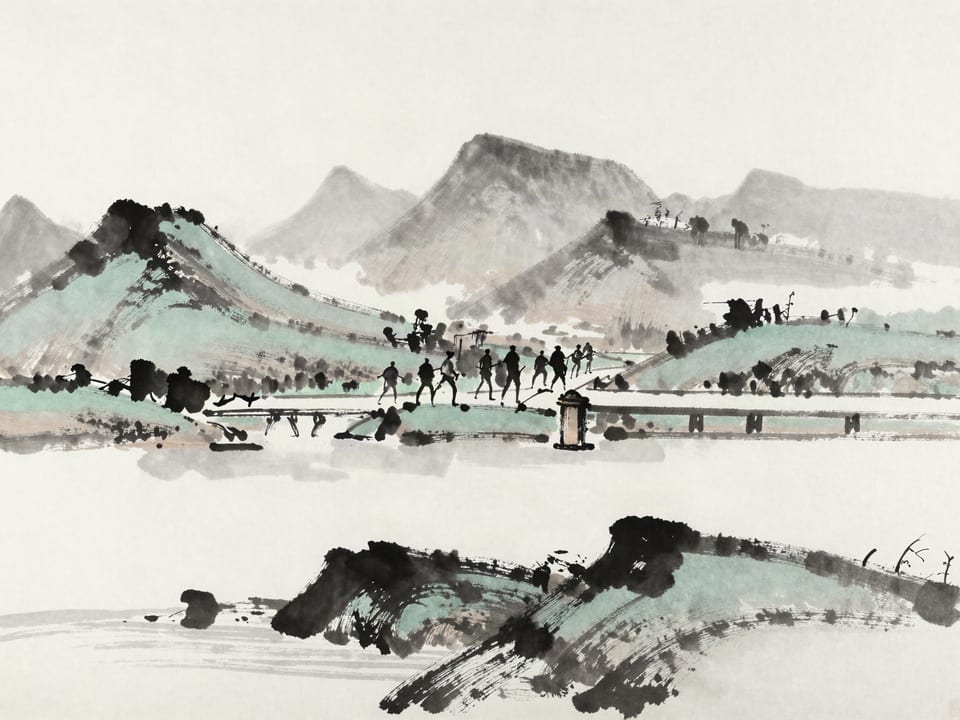
Ink wash painting: A column already miles beyond a river, marching into the hills, the crossing abandoned behind them.
Break contact with the barrier.
What it means

Once across, distance yourself from the river; lingering at the bank invites disaster from both sides.

Where this sits in the chapter

Chapter 9’s river rules start with the aftermath: after crossing a river, you should get far away from it. The insight is that transitions leave residue — a force on the bank is neither fish nor fowl, committed to the crossing but not yet to a position. Sun Tzu treats the river’s edge as the most dangerous ground on the march, precisely because it feels like arrival.

A modern example

A company completes its cloud migration — the crossing — and then lives for a year in the landing zone: dual systems kept "just in case," the legacy team half-dissolved, the architecture half-modern. Every one of those halves is a bank position, and the costs compound monthly. The firms that got far away — one heroic decommissioning month, then fully in the new world — cross the same river once, not forever.

The common misreading

Getting clear does not mean burning the boats reflexively — Sun Tzu keeps bridges when the strategy needs retreat options, and the following verses assume armies cross back. The discipline is against residency: making operational decisions from the threshold, quarter after quarter, because the threshold feels safer than the far bank. Cross, then commit to ground.

Use it todayFinish crossing your transition and move clear of the threshold.
Today’s questionAm I lingering at the crossing instead of getting clear?
Play the principle

Take the Better Ground

Six units, three lanes — hill, plain, and marsh. Ground multiplies force. Place your units, then advance against a hidden rival.

Prefer a longer war? Play The Campaign — today’s map is the same for every reader.

XFacebookWhatsAppShare today’s Sun Tzu
Tomorrow: Strike at the vulnerable middle. — “It will be best to let half the army get across, and then deliver your attack.”

Come back tomorrow. Browse past days →

What are you dealing with?

Pick what fits and read a short, practical Sun Tzu take on it.

Sun Tzu Daily brings you a fresh sun tzu quote of the day, every day. Each daily lesson pairs a verbatim passage from The Art of War — in the classic Lionel Giles translation — with the strategic principle behind it and one concrete way to apply it before the day is over.

These sun tzu daily quotes are not decoration. They are a working toolkit for people who face competition, negotiation, leadership, and decision-making under pressure: founders, managers, investors, and anyone who wants to think more strategically about the situations they are already in.

The site is organized by the problems people actually search for — Sun Tzu for business, for investors, for entrepreneurs, and on competition, negotiation, leadership, timing, positioning, risk, and decision-making — so ancient Chinese strategy is never more than one click from the problem you are facing today.

Frequently asked questions

What is Sun Tzu Daily?

Sun Tzu Daily is a free daily strategy lesson from Sun Tzu’s The Art of War. Each day you get one verbatim passage, the strategic principle behind it, a plain-English interpretation, one concrete way to use it today, and a one-minute mini-game that lets you play the principle instead of just reading it.

Who was Sun Tzu?

Sun Tzu was a Chinese general and military strategist, traditionally dated to the 5th century BC, credited as the author of The Art of War (孫子兵法). His thirteen chapters on strategy, positioning, deception, and winning without fighting have influenced military doctrine, business strategy, sports, and negotiation for over two thousand years.

Which translation of The Art of War do you use?

Every quotation on Sun Tzu Daily is drawn verbatim from the Lionel Giles (1910) translation, the standard public-domain English translation of The Art of War. The original classical Chinese appears alongside the quotation where it is accurately known, and all interpretation is clearly separated from the historical text.

Is The Art of War still relevant today?

Yes — The Art of War is less about war than about making good decisions with imperfect information: sizing up competitors, choosing your ground, timing your move, and winning in ways that preserve your resources. That is why each daily lesson ends with one concrete modern application for business, investing, negotiation, leadership, or everyday decision-making.

How often is a new Sun Tzu quote published?

One new Sun Tzu quote of the day is published every day, rotating deterministically through all 13 chapters and 242 lessons of the library. Every visitor around the world sees the same daily quote on the same day, and every past lesson stays permanently available in the daily archive.

Is Sun Tzu Daily free to use?

Yes. All 242 daily lessons, the strategy category guides, the chapter library, and the strategy mini-games are completely free, with no account required.

What is the best way to use this site?

Start with today’s lesson — it takes about a minute — then play its mini-game to make the principle stick. If you have a specific problem in front of you, browse the strategy categories (competition, negotiation, leadership, risk, timing, positioning, and more) to go straight to the lessons that speak to it.

Browse Sun Tzu strategy by category →

Browse by strategy

Explore the library