“In dry, level country, take up an easily accessible position with rising ground to your right and on your rear.”
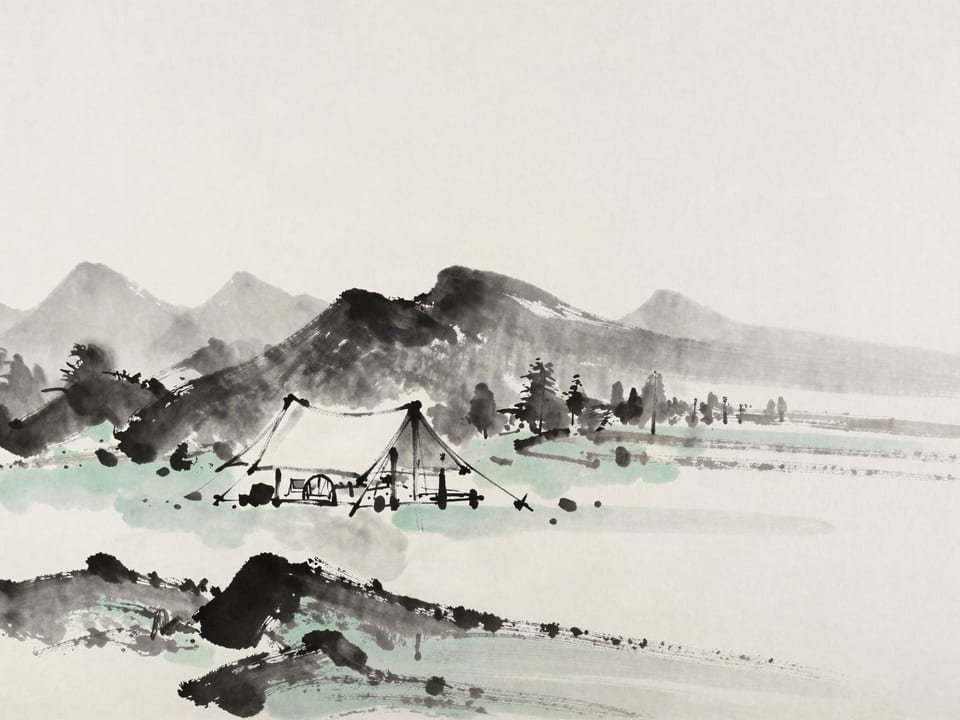
On open ground, arrange so threats face you and refuge is at your back; orientation is everything.
Chapter 9 completes its terrain survey with open country: in dry, level country, take up an easily accessible position with rising ground to your right and rear. The instruction is orientation itself — on featureless ground, you manufacture the terrain by facing. Danger to the front where you can see it, elevation behind where you can fall back and regroup: the arrangement is the camp.
A product team orients its roadmap with the risk at its back — competitive threats land in the backlog behind "our vision," unseen until they arrive in the quarterly review. The reorientation is literal: competitive releases face the front of the board, where every sprint looks at them, while the vision docs sit behind as the high ground the team retreats to for coherence. Same flat country; the difference is which way the org is facing.
Danger in front does not mean fear in front — the facing is observational, not emotional. You point the organization at the risk so the risk is watched, resourced, and met early, with your substance (the rising ground) protected behind. Companies that reverse it — protecting their plans from bad news — have simply camped facing away, and Chapter 9’s quiet warning is what then arrives from behind.