“Energy may be likened to the bending of a cross-bow; decision, to the releasing of the trigger.”
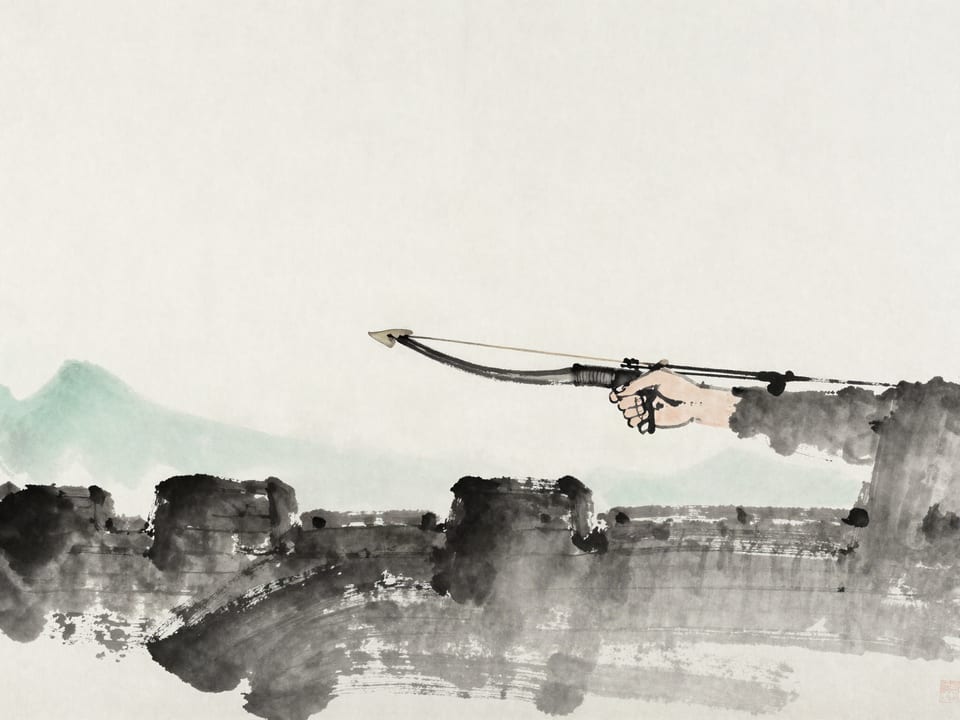
Accumulate potential quietly and release it in a single clean act; do not release before the draw is full.
Chapter 5’s most quotable machine metaphor: energy is the bending of the cross-bow, decision the releasing of the trigger. Sun Tzu separates what strategy writing usually blends — the accumulation of capacity and the commitment to use it — and assigns them different disciplines. The bow cannot be hurried; the trigger should not be delayed. Most failure is a mismatch: released triggers on half-drawn bows, or fully-drawn bows no one will fire.
A startup announces its platform six months before the API exists — the trigger pulled on an undrawn bow, and the market’s attention arrives to find nothing to strike. Its rival says nothing for a year while integrations quietly accumulate, then opens with twenty partners live on day one. The public mistake is reading the second company as lucky; the private truth is that they were drawing while everyone watched the other’s misfire.
The metaphor splits two acts, not two personalities — the same strategist draws and releases. Teams that institutionalize the split (a "planning group" that never fires, an "action group" that never draws) get the crossbow’s worst property: enormous stored tension with no disciplined release. Sun Tzu’s general holds both because only the drawer knows when the draw is full.