“When he has penetrated into hostile territory but to no great distance, it is facile ground; on facile ground, halt not.”
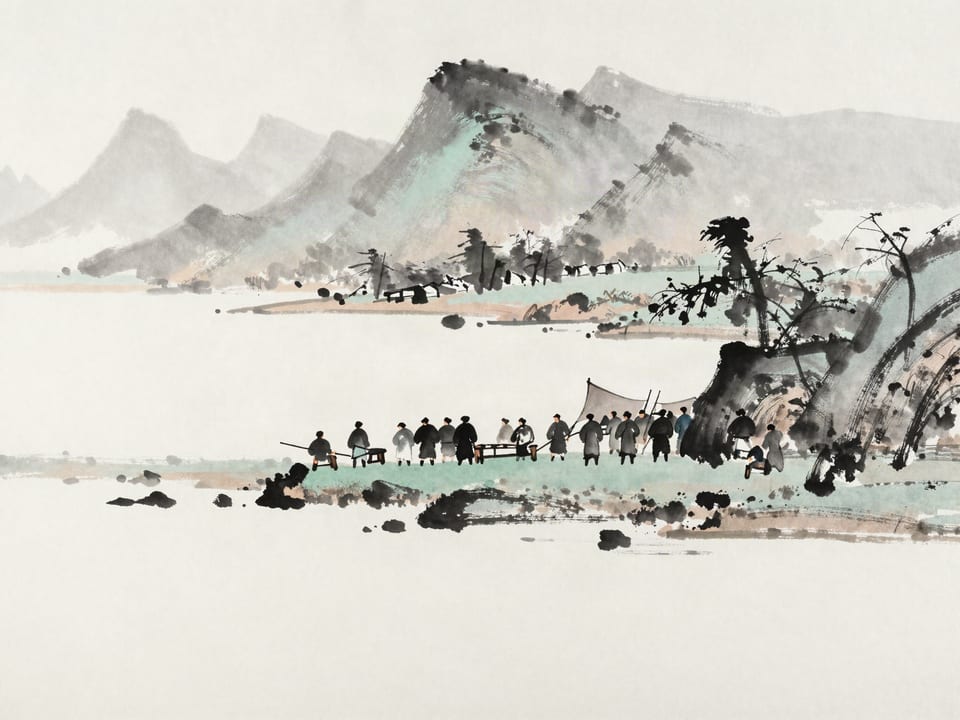
Light penetration tempts a halt that invites counterattack; push through or withdraw cleanly.
Chapter 11’s second ground: penetration into hostile territory, but to no great distance — facile ground, and on facile ground, halt not. The shallowness is the trap. Close enough to home to retreat, established enough to feel like an achievement, and fatally exposed to the counterattack that shallow incursions invite. Sun Tzu’s rule is binary precisely because the middle is the danger.
A software firm enters a new vertical with one client, one productized offering, and a part-time team — a shallow incursion that feels like a beachhead. It rests there for two years: too committed to leave, not committed enough to win, and finally dislodged by a competitor who entered deep (five clients, dedicated team, vertical-specific product) in eighteen months. The beachhead was the mistake; beaches are for crossing, not camping.
Halting not does not forbid staging bases — Sun Tzu’s armies secure ground continuously as they go. What facile ground forbids is treating the first step as a destination. The test is trajectory: is this position a platform for the deeper push, or is the push an excuse for having stopped?