“A victorious army opposed to a routed one is as a pound's weight placed in the scale against a single grain.”
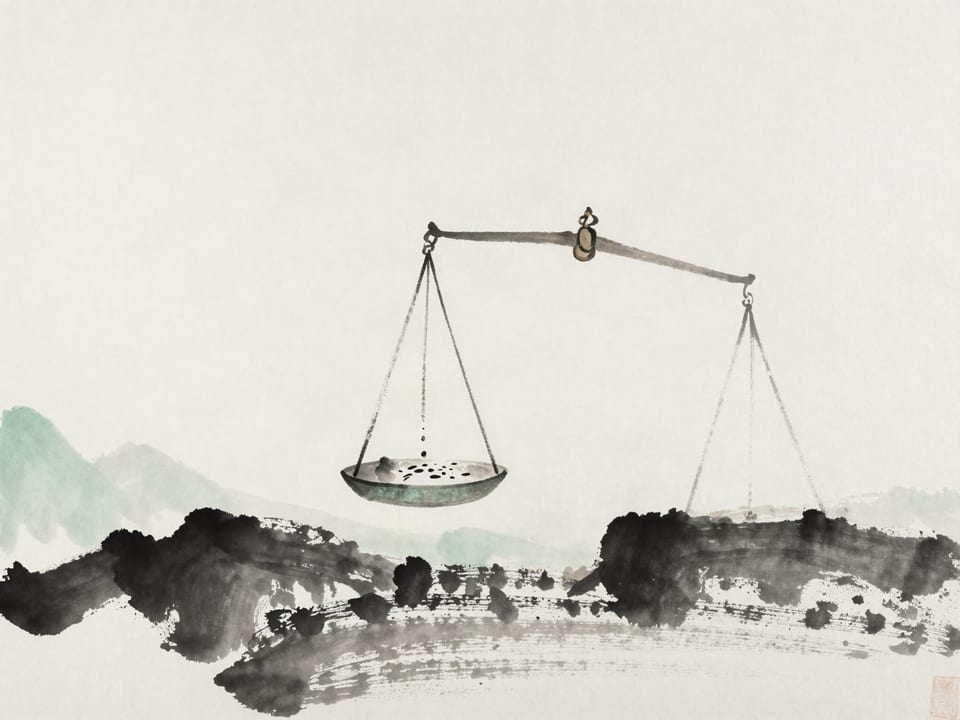
Overwhelm at the point of contact; a small force absolutely concentrated beats a large one spread thin.
Chapter 4’s closing movement turns from sequence to magnitude: a victorious army opposed to a routed one is as a pound’s weight against a single grain in the scale. Sun Tzu’s point is not that big armies beat small ones — it is that the ratio at the point of contact is a choice. A force spread evenly meets every local enemy at parity; the same force concentrated meets each at a pound-versus-grain.
A marketing team spreads a fixed budget across nine channels "for coverage" — and wins nowhere, losing each channel to rivals who spend only there. The same budget concentrated into two channels, chosen for winnability, produces two dominant positions and a halo that leaks into the other seven for free. Nothing about the total resources changed; only the scale pan did.
Concentration means accepting losses elsewhere — the seven unresourced channels will underperform, visibly, and that must be defended internally. The common failure is the hedge: strong-ish everywhere, pound-nowhere. Sun Tzu’s scale is honest about the trade; a pound on one pan is made of the grains you declined to spread.