“When the general is weak and without authority; when his orders are not clear; when there are no fixed duties; the result is utter disorganisation.”
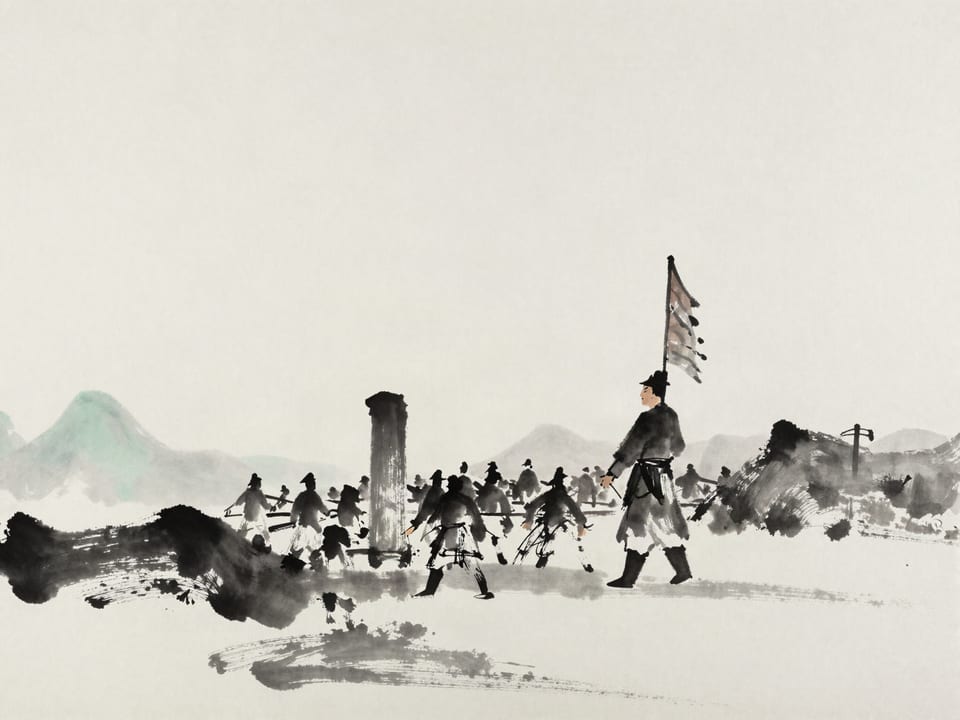
Vague authority and unclear orders dissolve the force; command must be real and specific.
Chapter 10 names the disorganisation calamity’s cause precisely: when the general is weak and without authority; when his orders are not clear; when there are no fixed duties — utter disorganisation. Three causes, all belonging to command. The verse is the diagnostic behind a hundred "culture problems": what looks like a chaotic team is usually an unstructured command that never specified who owns what.
A product org with three overlapping "heads of" produces exactly what the verse predicts: orders that contradict weekly, duties that overlap or gap, decisions relitigated in every meeting. The reorganization that works is not cultural but structural — one owner per surface, orders written before spoken, and the general actually holding authority delegated in writing. The "disorganized team" was never the team.
Strong command is not volume or dominance — the verse’s weak general may be loud. What it specifies is authority (decisions actually binding) and clarity (orders that survive being written down) and fixed duties (an owner for each thing). Weakness is the absence of those three, however confident the tone that replaces them.