“In war, the general receives his commands from the sovereign, collects his army and concentrates his forces.”
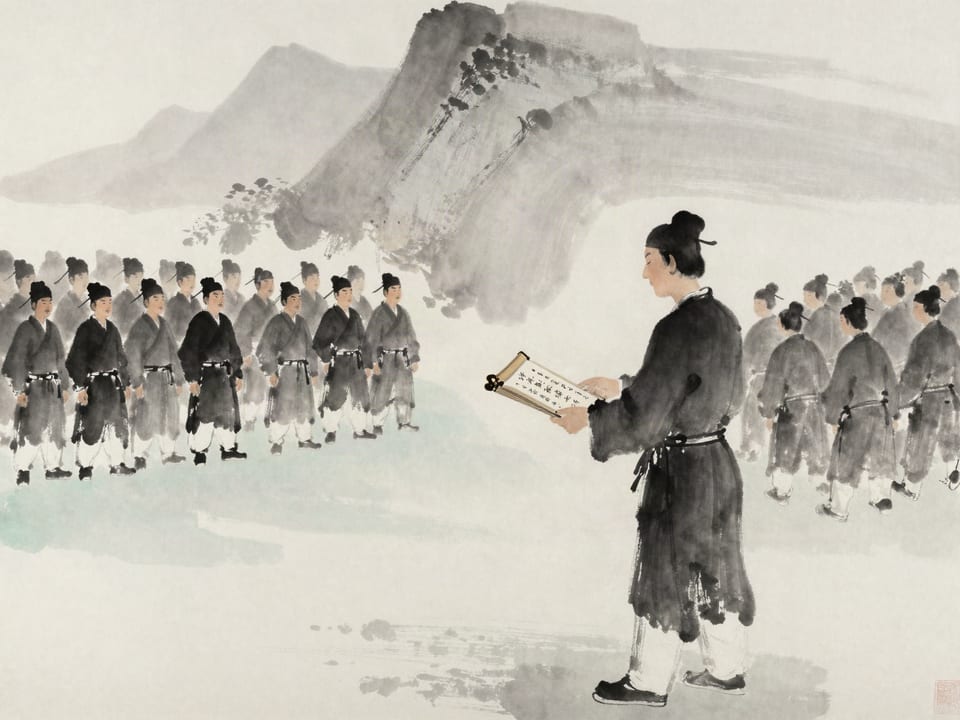
All action starts with receiving the mandate and unifying the force; nothing follows without this first consolidation.
Chapter 8 opens with procedure: in war, the general receives his commands from the sovereign, collects his army, and concentrates his forces. Three verbs before any tactics — mandate, collection, concentration. Sun Tzu begins the chapter on variation with the unvarying prerequisite, because varied tactics applied to a scattered force produce varied disaster.
A new CEO arrives with a mandate and immediately begins maneuvering — three strategy pivots in two quarters. What never happens is the boring first act: the talent audit, the consolidation of six overlapping product lines, the single roadmap. Every pivot is executed by a force that was never concentrated, so each produces a different fragment moving in a different direction. The board eventually identifies the failure precisely: brilliant variations on an army that was never collected.
Concentration is not centralization — the general concentrates forces and then divides them deliberately (Chapter 5’s division doctrine). What precedes division is wholeness: knowing what you have, where it stands, and who commands it. The misreading skips gathering for the glamour of maneuver, which is exactly the sequence the verse forbids.