“There are five ways of attacking with fire: burn soldiers, burn stores, burn baggage-trains, burn arsenals, and hurl dropping fire amongst the enemy.”
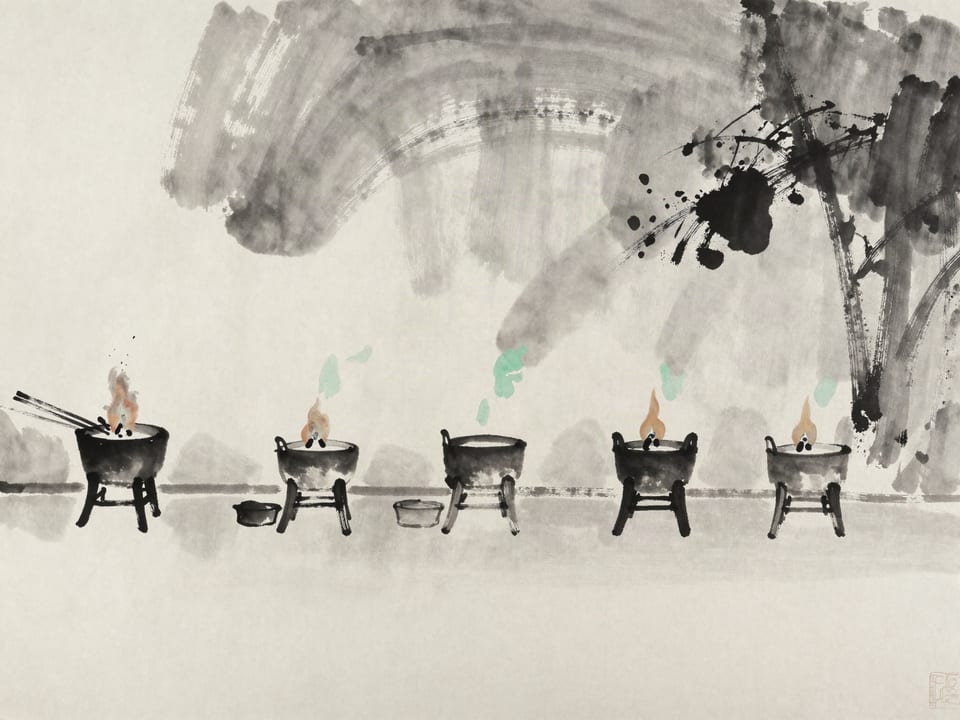
Fire has five distinct targets; pick the one that strikes the real weakness, not just the visible one.
Chapter 12 opens with an unlikely weapons taxonomy: five ways of attacking with fire — burn soldiers, burn stores, burn baggage-trains, burn arsenals, hurl dropping fire. Sun Tzu’s fire chapter is really about leverage: the same agent (fire, or any concentrated force) produces five different effects depending on what it touches. The list trains the commander to choose the target that serves the war, not the target that is nearest.
A challenger "attacks" the incumbent with a better product — burning soldiers, the direct confrontation that flatters both pride and press coverage. The incumbent barely notices. The productive levers from the list are elsewhere: burn stores (the incumbent’s funding, via the investors’ risk models), burn baggage-trains (the partner integrations its roadmap depends on), burn arsenals (the data moat, via open standards). The war turned when the attack finally touched something the incumbent could not easily replace.
Choosing the effective lever is not choosing the most destructive one — Sun Tzu’s own doctrine elsewhere prefers intact victories and short wars. The five-ways list is about mechanism, not cruelty: which target, if touched, changes the opponent’s ability to continue? Sometimes that is a supply line; sometimes it is a single contract clause. Precision, not arson, is the chapter’s actual weapon.