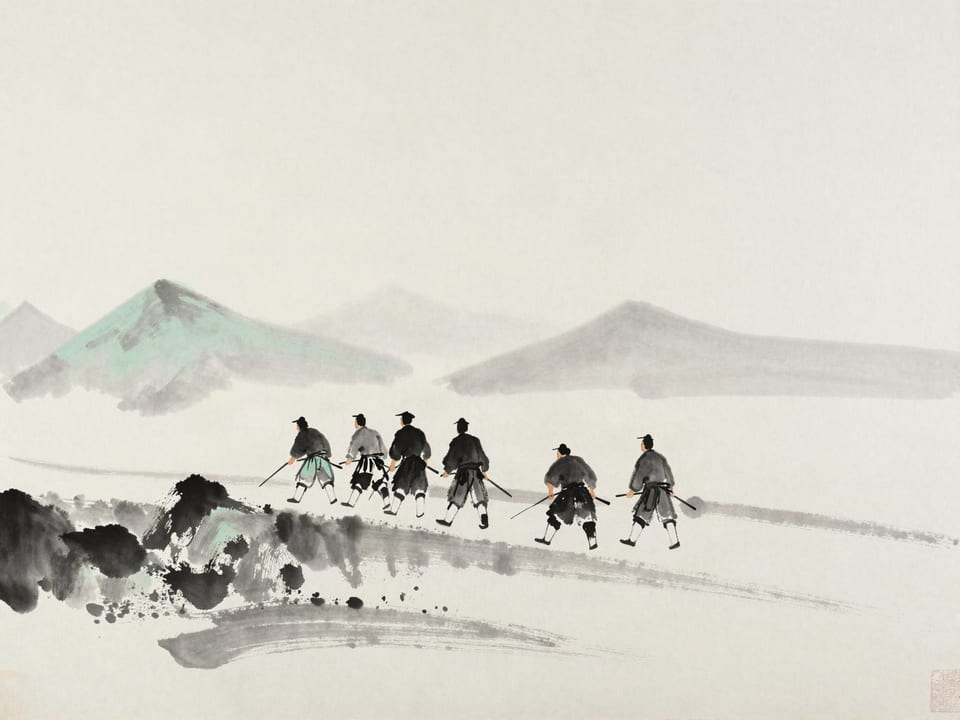
“When some are seen advancing and some retreating, it is a lure.”
Sun Tzu · The Art of War · Chapter 9: The Army on the March
What it means
A mixed advance-and-retreat is designed to pull you in; recognize the lure and do not bite.
Where this sits in the chapter
Chapter 9’s catalogue of signs includes manufactured confusion: when some are seen advancing and some retreating, it is a lure. The mixed signal exploits a commander’s pattern-matching — half the picture reads as collapse, and collapse invites pursuit. Sun Tzu’s rule inverts the instinct: incoherent movement at your front is not weakness, it is a performance staged for your interpretation.
A modern example
A public company’s stock wobbles as insiders sell modest amounts while the company simultaneously beats guidance — advancing and retreating in the same frame. Two acquirers read it. One sees disarray and moves; the acquisition discovers the "disorder" was a consolidation of shares ahead of a strategic process, and the buyer is now inside someone else’s timeline. The other waited for coherent movement and read the actual play.
The common misreading
Not all mixed signals are lures — organizations genuinely are incoherent sometimes, and Chapter 9 assumes you have watched long enough to know their baseline. The tell is efficiency: a real retreat is expensive and consistent; a lure is cheap theater with the retreat and the advance oddly balanced for your benefit. When confusion seems staged for an audience of exactly you, you are the audience.
Use it todayDecline the lure of a partial, confusing movement.
Today’s questionAm I being drawn in by a movement meant to lure me?
Partial movement is a lure. This Short reads the Chapter 9 warning that an advance and a retreat shown at the same time is staged confusion — and applies it to why you should never chase a movement without first asking what that movement wants you to do.
What does "it is a lure" actually mean outside a battlefield?
It means a movement is a designed distraction. Chapter 9 describes seeing some troops advance and others retreat at the same time: a picture of confusion designed so that you will act on the picture instead of on the substance. In business the equivalent is a partial move — a product line discontinued in one market, a team "restructured", a price cut in one segment — announced loudly enough to pull your attention while something else is being built.
How do I tell a real retreat from a staged one?
Look at what costs the other side money and cannot be called back. Real retreats unwind commitments: contracts ended, engineers let go, leases closed, capital redirected. A staged retreat keeps spending — hiring, buying, shipping — while producing the appearance of retreat. The verbose signal is the distraction; the quiet expenditure is the truth.
Should I always chase a competitor who appears to be pulling back?
No. Chasing is what the lure is designed to produce. The chapter advises reading the movement for what it wants you to do before responding, because a bait is most valuable when it triggers a commitment from you. If you cannot name what the other side gains from your reaction, you are the one being positioned.