“If those who are sent to draw water begin by drinking themselves, the army is suffering from thirst.”
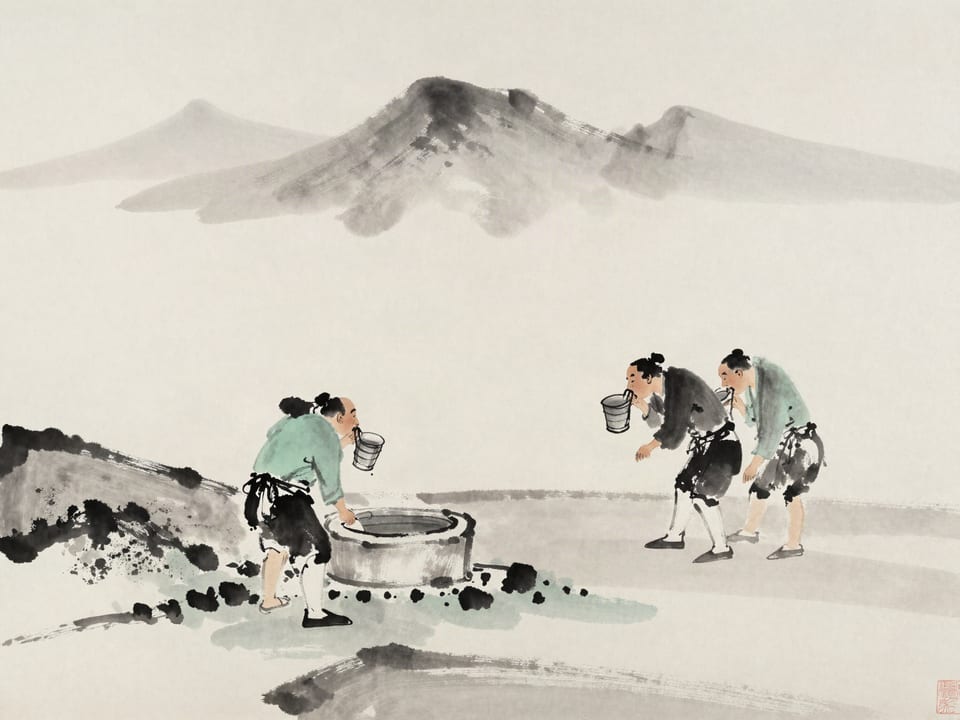
The first men to the well drinking first betrays a thirsty army; tiny behaviors expose large conditions.
Chapter 9’s most humane intelligence cue: if those sent to draw water begin by drinking themselves, the army is suffering from thirst. The logic scales — the water-carriers are the lowest-stakes observers of the whole force’s true state, because their small selfish act reveals the aggregate condition no report would carry. Sun Tzu reads armies through the margins of behavior, where nobody thinks to perform.
A CEO wants to know how the restructuring really landed. The engagement survey says "fine." The tell is elsewhere: the senior engineers who used to argue in design review now just attend; the managers who once booked skip-levels have stopped requesting them. Nobody is lying on the survey — but the water-carriers stopped drinking first, and the army is thirstier than any dashboard shows.
Small-behavior reading is diagnosis, not surveillance — the point is noticing the human margins where truth lives, not monitoring individuals for deviation. And one behavior is a symptom, not a verdict; the verse’s water-carriers matter because thirst is corroborated by a hundred other small facts. Read the margins for questions worth asking directly, then ask them.