“Ponder and deliberate before you make a move.”
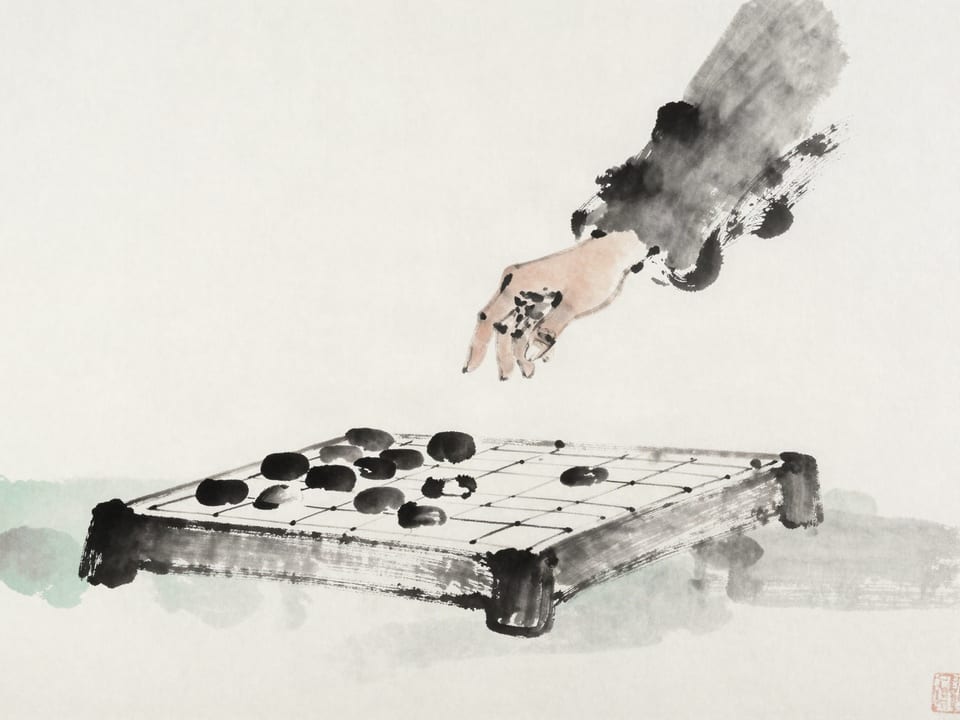
Thought before movement prevents the errors that speed causes; plan, then strike.
Chapter 7 drops its shortest verse between the maneuvering doctrine and the closing cautions: ponder and deliberate before you make a move. Four words in Giles’s rendering, doing structural work — the chapter that demands speed (wind, fire, thunderbolt) plants a speed bump at its own heart. Sun Tzu’s tempo is fast execution of slow judgment, never fast judgment.
Two teams respond to a competitor’s surprise launch. One ships a counter-announcement within the week — activity, relief, applause in the all-hands. The other spends three days pondering deliberately: what does the launch reveal about their strategy, which segment does it actually threaten, what do we believe they will do next? Its counter-move, arriving later, doesn’t rebut the announcement — it preempts the sequel nobody else had thought to expect.
Pondering is not the permission slip for infinite meetings — the verse sits inside a chapter about moving decisively, and its deliberation has the battle as its deadline. The misreading institutionalizes the pause into a committee and calls it prudence. Real deliberation is bounded, quiet, and ends in a committed move; anything else is delay with a philosophy degree.