“For it is the soldier's disposition to offer obstinate resistance when surrounded, to fight hard when there is no alternative, and to follow the leader when he is in earnest.”
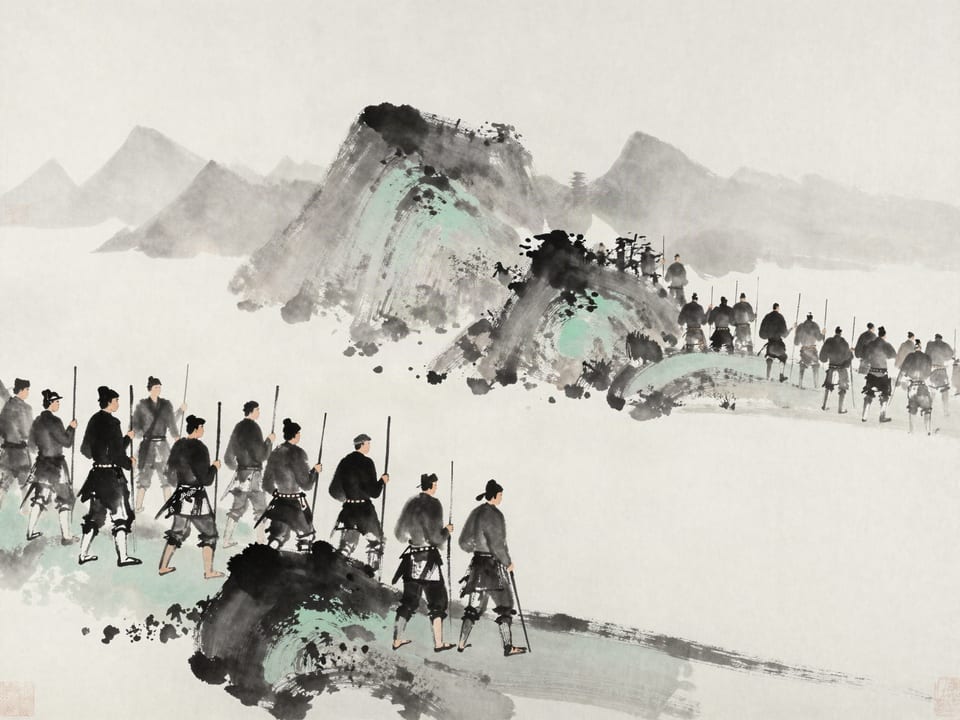
Cornered men resist; leaderless men drift; earnest leaders are followed. Use all three knowingly.
Chapter 11 distills its psychology of commitment into a single verse: it is the soldier’s disposition to offer obstinate resistance when surrounded, to fight hard when there is no alternative, and to follow the leader when he is in earnest. Three conditions — necessity, enclosure, and sincerity — none of them monetary. Sun Tzu closes the grounds with a leadership claim: earnestness is load-bearing.
Two firms endure the same market crash. At the first, the CEO’s all-hands is clearly scripted — the retention messaging, the performed optimism, the careful hedging; the team hears the hedge and updates résumés. At the second, the founder says plainly what she is risking personally, what she believes, and why staying is worth it — no script, visible stakes. Same severance policies, same uncertain odds. One workforce turned over; the other did the best work of its life. The disposition was the difference, and the disposition was earned by earnestness.
Earnestness cannot be performed — that is definitional, not merely difficult, and teams calibrate to authenticity with brutal accuracy. What the verse offers is not a communication technique but a constraint on leaders: be actually in earnest, or expect actually conditional loyalty. Surrounding and no-alternative can be arranged; sincerity must be real.