“Let your plans be dark and impenetrable as night, and when you move, fall like a thunderbolt.”
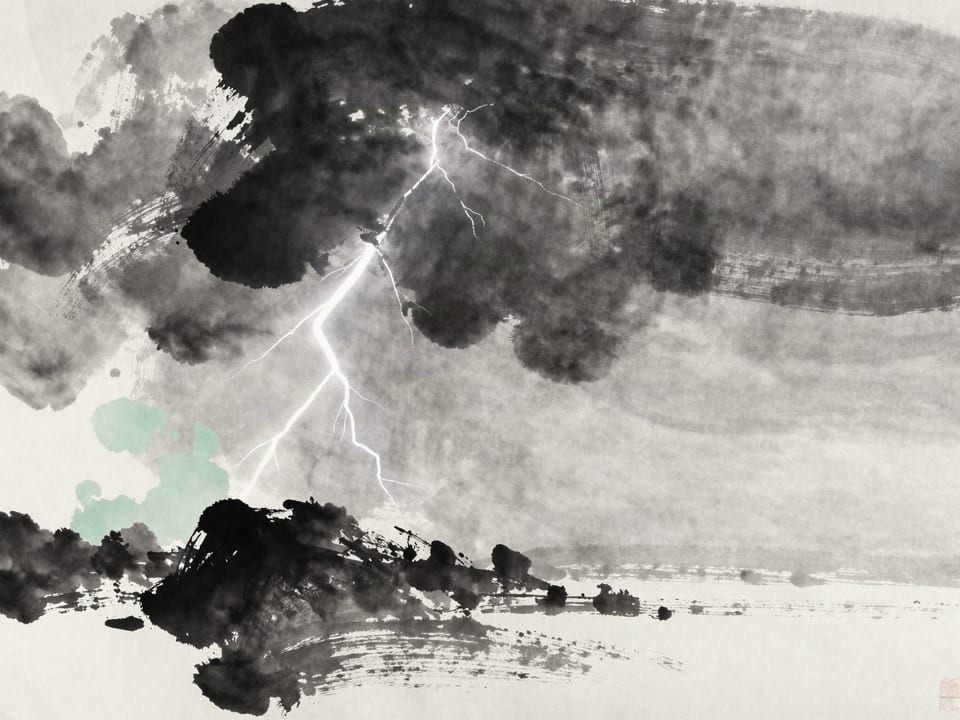
Hide the plan in darkness and execute with sudden violence; the gap between is the shock.
Chapter 7 compresses its deception doctrine into thunder: let your plans be dark and impenetrable as night, and when you move, fall like a thunderbolt. The pairing is the whole teaching — darkness exists for the strike, and the strike exists because of the darkness. A visible buildup cannot thunder no matter how large; a dark reserve that never strikes is just an unused investment.
A telecom spends years quietly buying dark fiber — unlit, unremarked, an accounting line analysts dismissed as over-caution. The market reads its "failure" to compete on streaming as weakness. Then the switch is thrown: one quarter, the fiber lights, the service launches nationwide, and the incumbents’ price umbrella collapses in a week. The night lasted years; the thunderbolt, days.
Thunder is the release of stored advantage, not shock for its own sake — companies that announce loudly without having built anything are lightning without a storm. And the darkness must have a horizon: fiber bought and never lit is simply dead capital. Sun Tzu’s verse is about conversion — night into bolt — and the misreading forgets either half.