The campaign of the sleepless year

Sun Tzu for New Dads

Nobody warns you that the first year of fatherhood is a military campaign: night maneuvers, a tiny opposing commander with unlimited morale, supply lines measured in ounces, and an army of two (or three) that must move as one. Sun Tzu, it turns out, wrote a parenting book by accident.

These nine passages are the field manual. Some are almost funny in how literally they apply — one is literally titled “spoilt children.” All of them honor the same truth: you can’t control the baby, only your preparation, your energy, and your steadiness.

9 lessons · every passage with its ink illustration · or read the whole thing →

1

Sun Tzu says it outright: treat them as your children and they follow you anywhere. The deep-valley kind of loyalty — the 2 a.m. kind — is earned by visible care long before it’s needed. There is no shortcut and no substitute.

“Regard your soldiers as your children, and they will follow you into the deepest valleys; look upon them as your own beloved sons, and they will stand by you even unto death.”
Loyalty is earned by care, not commanded.

Authority without care produces compliance, not loyalty. Sun Tzu’s advice is that people will follow through hardship when they feel genuinely cared for. Leadership is a relationship of trust, not just the issuing of orders.
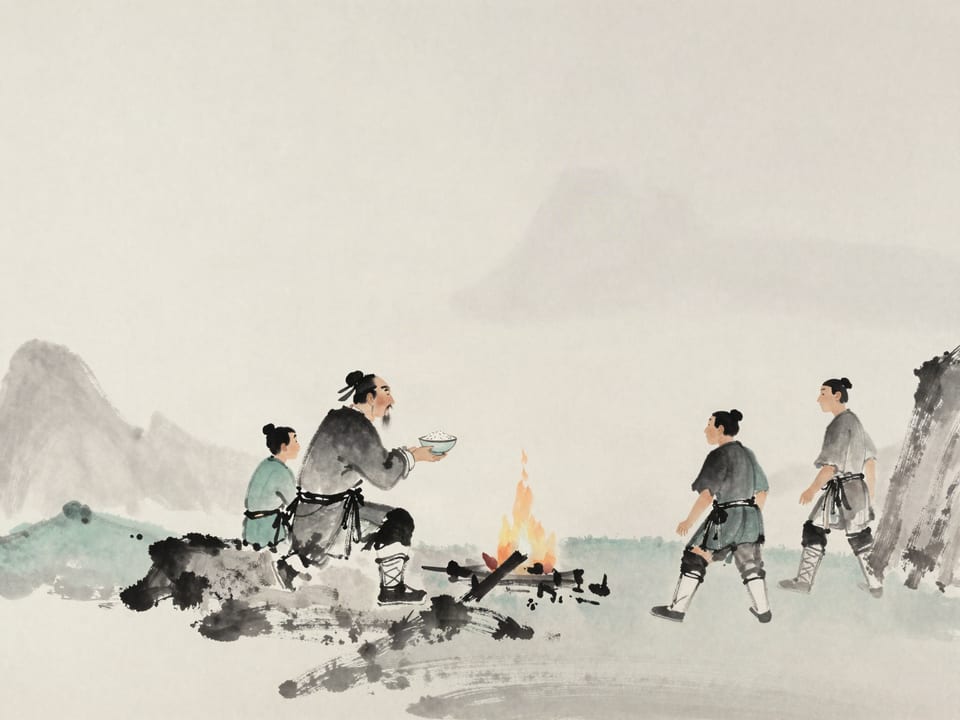
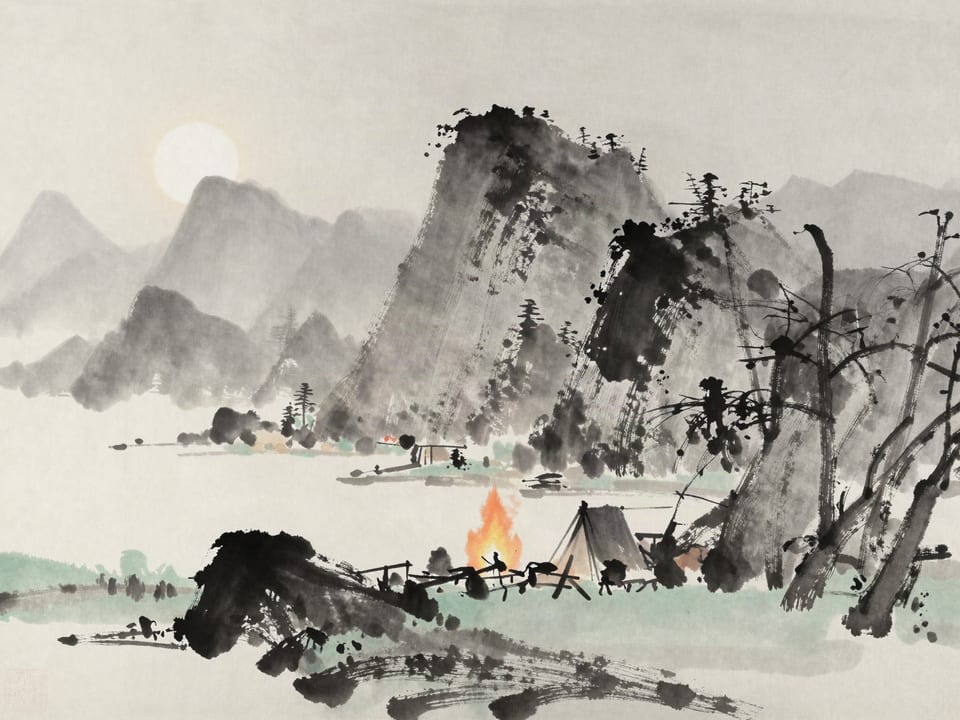
Ink wash painting: An old general sharing rice from his own bowl with a young soldier beside a small evening fire.
This lesson, in full →
2

Your peak is whenever the baby sleeps — guard it like ammunition. The nap window is not for chores; it’s for the one thing that actually needs the sharpest version of you. Everything else can wait; that can’t.

“A soldier's spirit is keenest in the morning; by noonday it has begun to flag; in the evening, his mind is bent only on returning to camp.”
Strike on the rising spirit.

Force has a rhythm; engage when your spirit is high and the opponent's is low.

Ink wash painting: A camp at first light, energy rising with the sun; evening would find the same fires burning low.
This lesson, in full →
3

“Camp on hard ground” is sleep hygiene, 500 BC. Your own rest, your own food, your own load-bearing sanity — the quiet stuff that prevents the slow collapse. The campaign is long; disease loses more campaigns than battles do.

“If you are careful of your men, and camp on hard ground, the army will be free from disease of every kind, and this will spell victory.”
Care prevents the silent losses.

Small cares — health, ground, rest — prevent the quiet attrition that loses wars; tend them.

Ink wash painting: A camp on drained high ground, wells covered, latrines ordered, hard earth swept clean.
This lesson, in full →
4

Be ready before the wake-up. The bottle made, the bag packed, the clothes laid out — arriving fresh at 3 a.m. instead of stumbling is the whole advantage. Preparation is the only thing standing between you and the dark.

“Whoever is first in the field and awaits the coming of the enemy will be fresh for the fight; whoever is second will arrive exhausted.”
Arrive first, fight fresh.

The side that waits on its own ground meets a tired opponent; readiness is a quiet advantage.

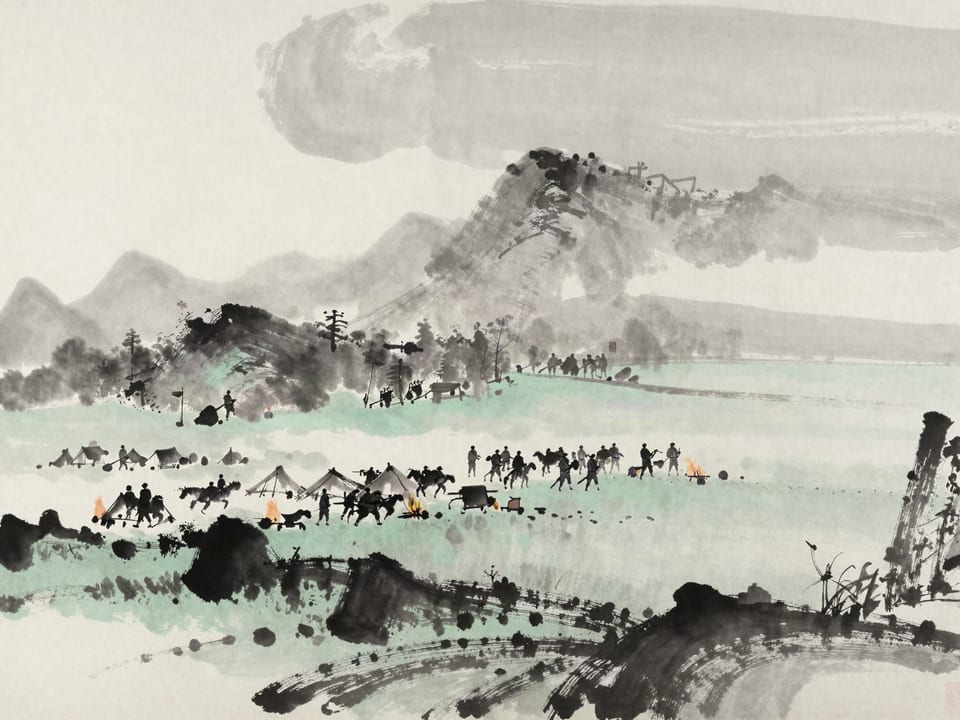
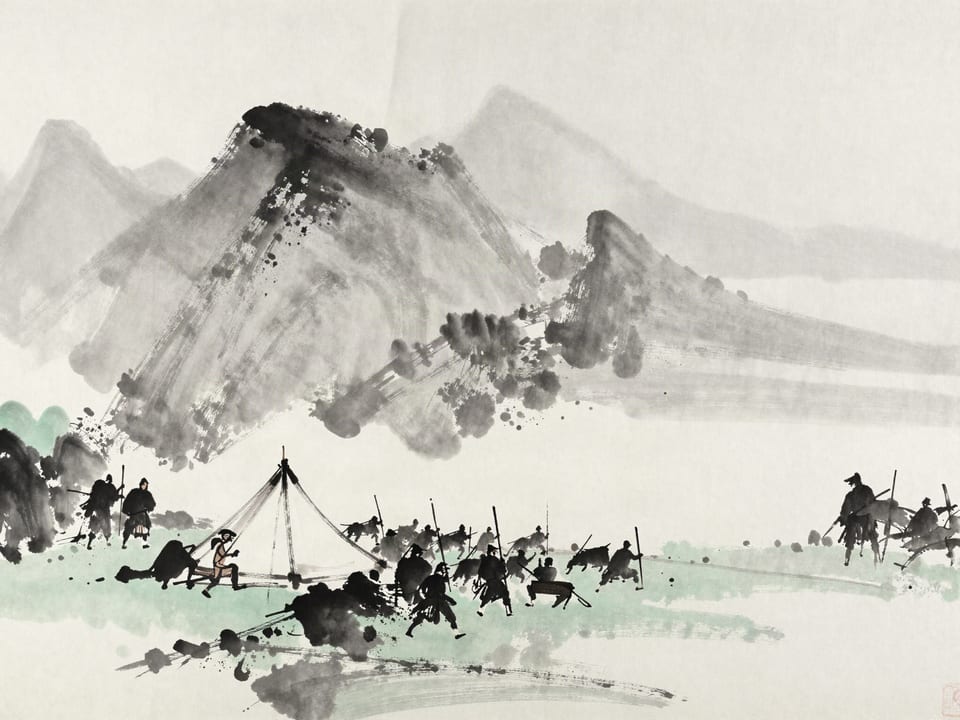
Ink wash painting: An army camp already raised in a meadow at dawn, campfires lit, while a distant column still marches in.
This lesson, in full →
5

The forced march claims the leaders first. Sun Tzu is precise: unsustainable pace doesn’t wear evenly — it takes exactly the people carrying the most. You are those people now. Halting is a command decision, not a failure.

“If you order forced marches without halting, covering double the distance, the leaders of all your divisions will fall into the enemy's hands.”
Haste sacrifices the command.

Over-speed destroys the structure; pushing too hard loses the very leaders who matter.

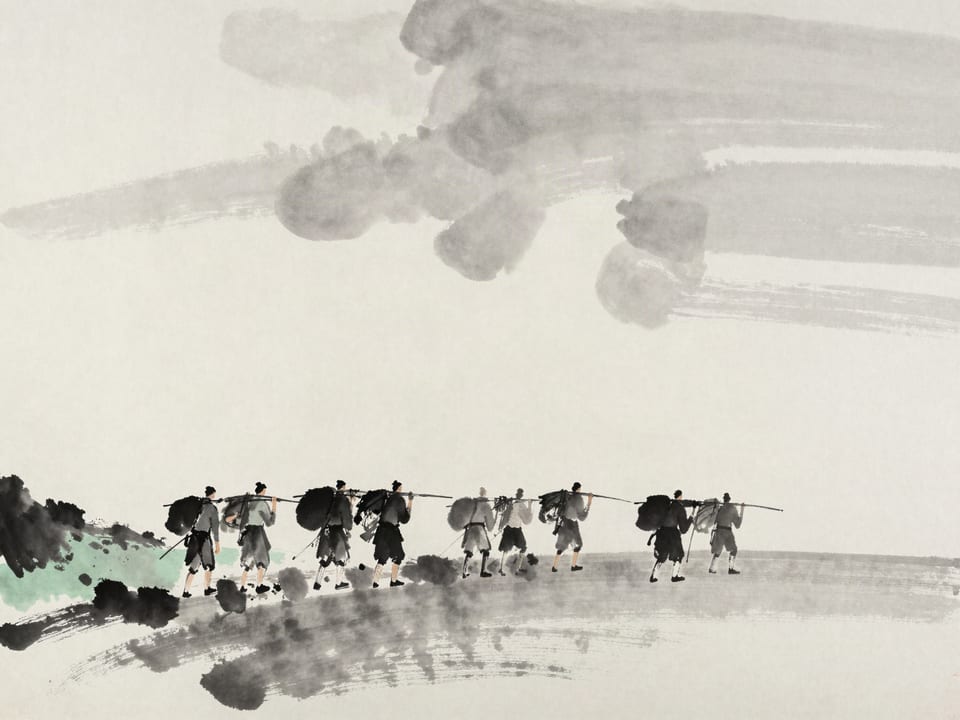
Ink wash painting: Exhausted soldiers on a road at dusk, the strongest lagging first under the weight they carry for others.
This lesson, in full →
6

Leave the toddler an exit. A cornered commander fights at maximum cost — so does a cornered two-year-old mid-meltdown. The visible way out (“you can’t have it now, but you can choose the banana or the cup”) converts battle into retreat. This works on the toddler, the partner, and also you.

“When you surround an army, leave an outlet free. Do not press a desperate foe too hard.”
Give the cornered a way out.

A trapped foe fights hardest; leave an exit and he chooses flight over frenzy.

Ink wash painting: Beaters leaving one gap in the brush as they close the circle, game flowing toward it.
This lesson, in full →
7

Constraint forges steadiness. The dads who’ve done six months of night feeds discover something the well-rested never learn: you can function, even be calm, at hours you didn’t know existed. The desperation is also a training program.

“Soldiers when in desperate straits lose the sense of fear; when there is no place of refuge they stand firm.”
Desperation dissolves fear.

Cut off from safety, men stop fearing and simply stand; crisis can create steadiness.

Ink wash painting: A soldier at peace in the storm’s worst hour, past fear, steady as the rock he leans on.
This lesson, in full →
8

Yes, there’s a passage literally about this: indulgence without authority produces children “useless for anything.” Love and limits arrive together or not at all. The line you hold at bedtime tonight is the same line that makes the love real.

“If you are indulgent but unable to make your authority felt, your soldiers must be likened to spoilt children; they are useless.”
Care without authority spoils.

Affection without enforceable authority produces useless dependence; both must coexist.

Ink wash painting: A field marshal’s tent in disarray, privileges scattered, the army beyond in disorder.
This lesson, in full →
9

The household moves as one body or not at all. Sync the schedules, the standards, the response to crying — one system, two parents. When the unit is unified, no single bad night can break it.

“The host thus forming a single united body, it is impossible either for the brave to advance alone, or for the cowardly to retreat alone.”
Unity removes freelancing.

A truly unified force cannot have heroes or deserters act alone; the body moves as one.

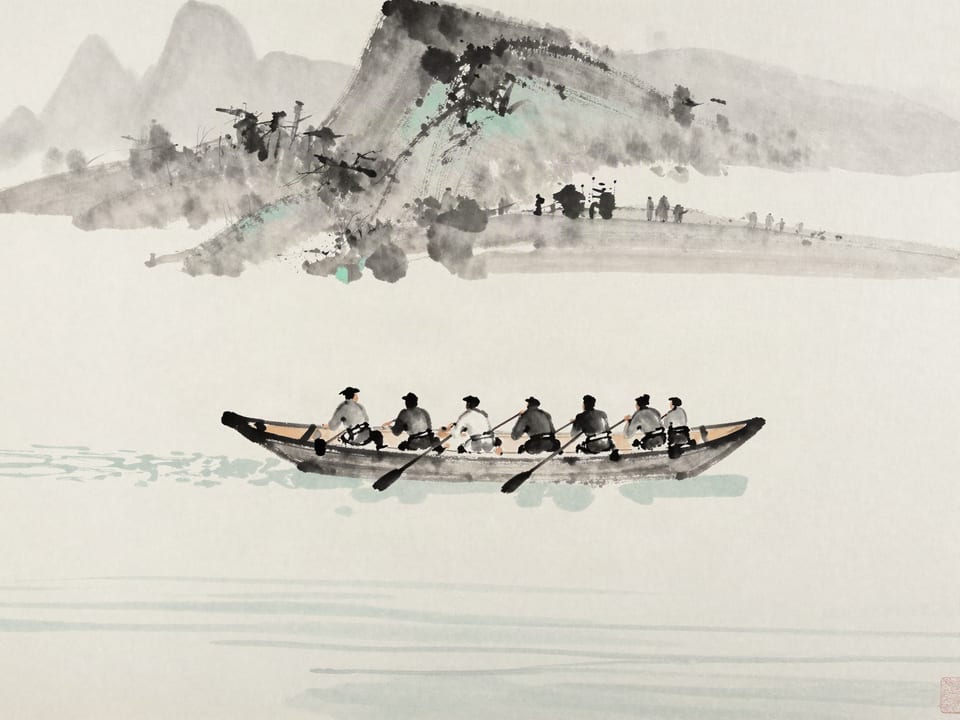
Ink wash painting: A crew of rowers pulling in perfect unison, the longboat leaping forward as one creature.
This lesson, in full →

Another path through the book